Bulls-eye in the desert: The Richat Structure from above



 Follow Earth on Google
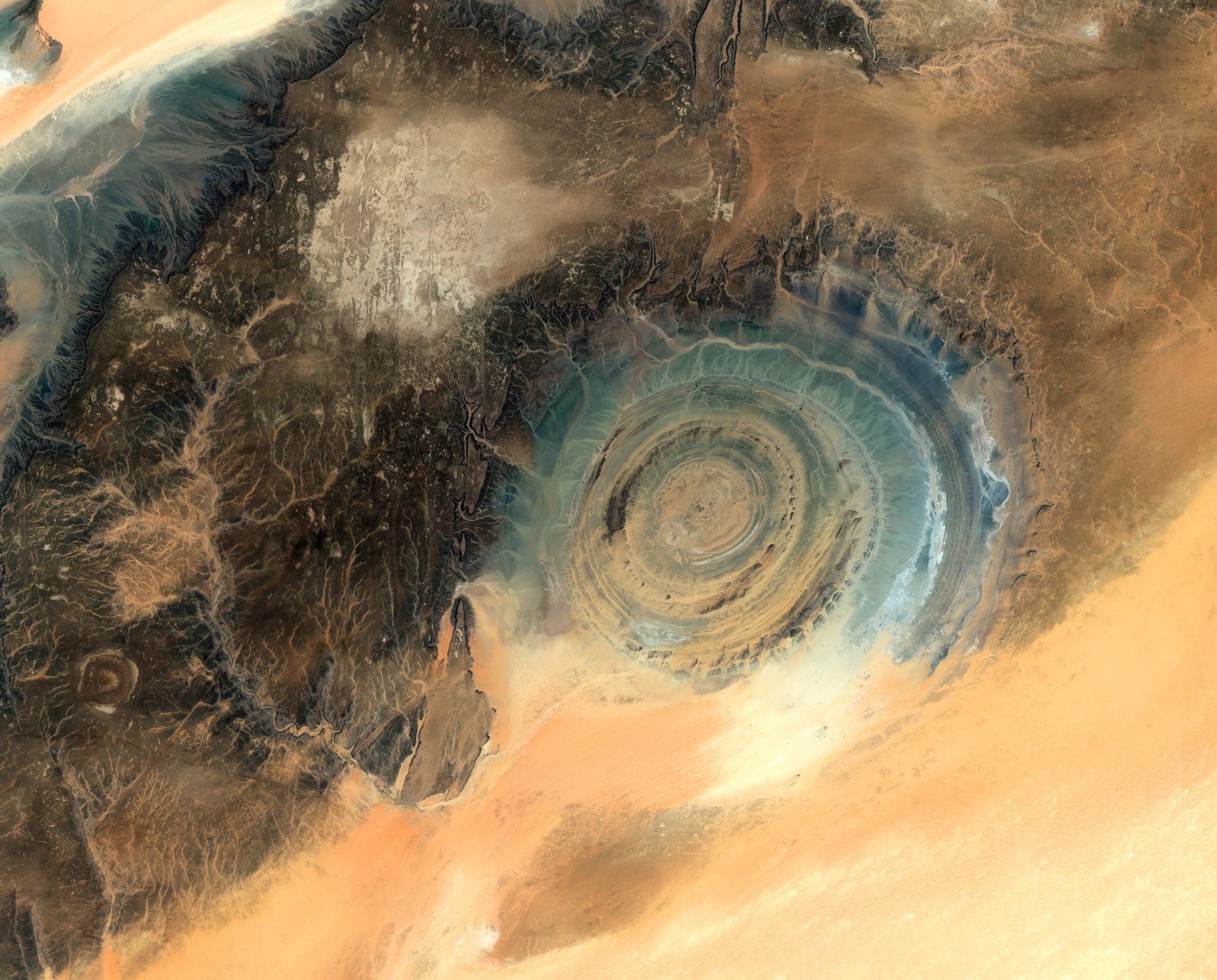
Today’s Image of the Day from the European Space Agency features a distinctive circular pattern in the Sahara Desert that has sparked curiosity for many years.
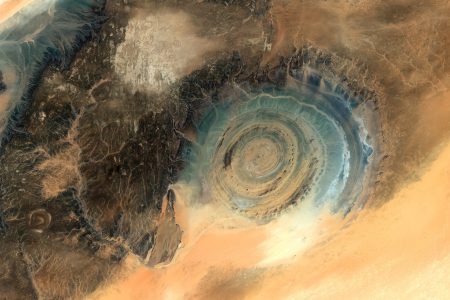
The formation, known as the Richat Structure or the eye of the Sahara, appears as a wide ringed mark in northern Mauritania. It is located in the Adrar Region, a dry and wind-shaped landscape.
People once suspected a meteor carved the rings into the ground, but studies eventually shifted to a different explanation.
Evidence now points to the uplift of a dome of molten rock that later eroded in uneven ways, leaving tougher layers standing while softer ones wore down. The result is a broad set of rings that can still be seen today.
A new look at the Richat Structure
The latest image was captured in September 2025 by the Copernicus Sentinel-2 mission. The spacecraft often helps researchers track changes in land surfaces and environmental conditions around the world.
Crews in orbit have noted that the full shape of the Richat Structure is easier to understand from above than from ground level. Its span of about 31 miles makes it too large to take in from any single spot on the desert floor.
The dark stretch that surrounds the structure is part of the Adrar plateau, a raised block of sedimentary rock standing roughly 656 feet above the surrounding sands.
Beyond that plateau sits the Erg Ouarane, one of the major sand expanses in the region, spreading for hundreds of miles toward Mali.
Erosion patterns revealed
The natural-color image shows hints of how the rock layers shape the rings. The tougher quartzite sandstones form the outer rings and the ridges inside the structure, while the darker areas mark zones of softer rock that wear down more quickly.
Near the center, the rings rise to about 262 feet. Those inner rocks are older than the ones along the edges, helping researchers understand how the uplift took place over time.
Sand continues to move into the feature from the south. Small trees and bushes, which appear as tiny dots, outline a dry riverbed in that area.
A window into the past
Geologists estimate that the Richat Structure is at least 100 million years old. It formed through a mix of heat, pressure, and erosion that unfolded over long stretches of time.
The rings serve as a window into the past, exposing layers that mark different stages in the region’s geological timeline.
The European Space Agency noted that the formation resembles a bull’s eye from space. Because of its size and clarity, it has served as a recognizable landmark for astronauts since the earliest human spaceflight missions.
A landscape shaped by time
Although the site attracts researchers, it also sparks interest from people who simply enjoy unusual natural features. The circular form, the changing colors, and the sharp boundaries between layers make it stand out.
The desert surrounding the Richat Structure adds even more contrast. The image shows how erosion has carved the region over millions of years.
The Adrar plateau and the vast Erg Ouarane sand sea help frame the structure within a larger landscape. Both areas shift with wind, temperature changes, and seasonal patterns.
Sand drifts continue to adjust the edges of the rings, shaping a scene that remains active even under an intense desert sun.
Satellite views from space
Satellite images like those from Sentinel-2 help people understand how Earth’s surface changes. They also show how many clues lie hidden in places that seem quiet on the surface.
Each survey adds another layer of information, letting researchers compare features from year to year.
The Richat Structure sits far from crowded areas, yet it remains one of the most recognizable features in the Sahara. Its wide rings, exposed layers, and weathered ridges reflect the power of natural processes.
The new Sentinel-2 views offer a close look at these details, reminding viewers that even in the most remote landscapes, Earth continues to reshape itself in surprising ways.
Image Credit: Copernicus Sentinel data (2025), processed by ESA
—–
Like what you read? Subscribe to our newsletter for engaging articles, exclusive content, and the latest updates.
Check us out on EarthSnap, a free app brought to you by Eric Ralls and Earth.com.
—–