Million-year-old starburst shines with extreme stellar activity



 Follow Earth on Google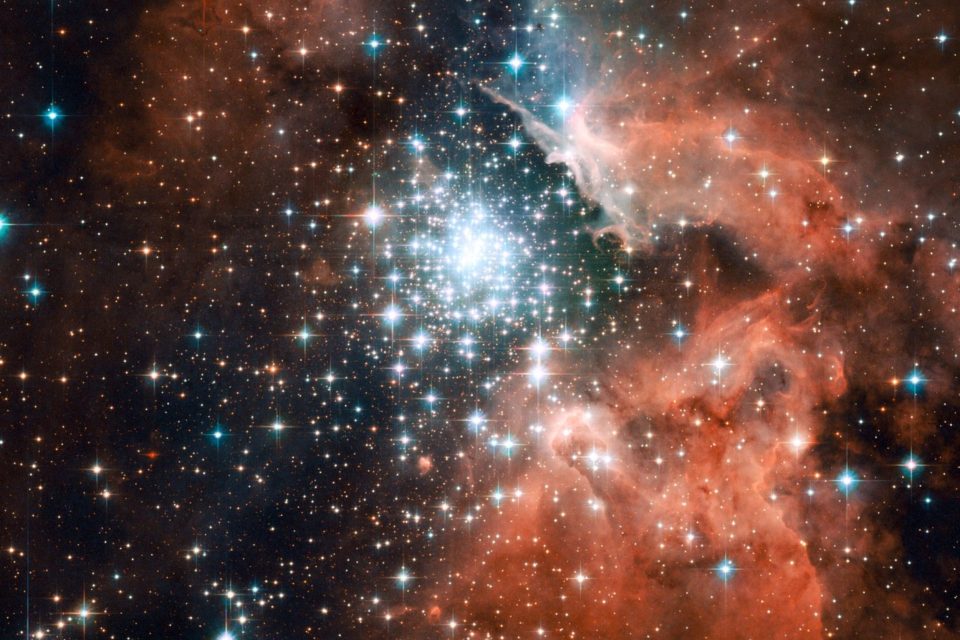
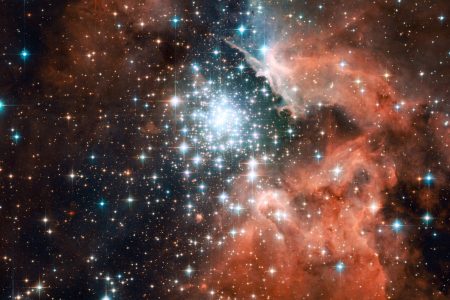
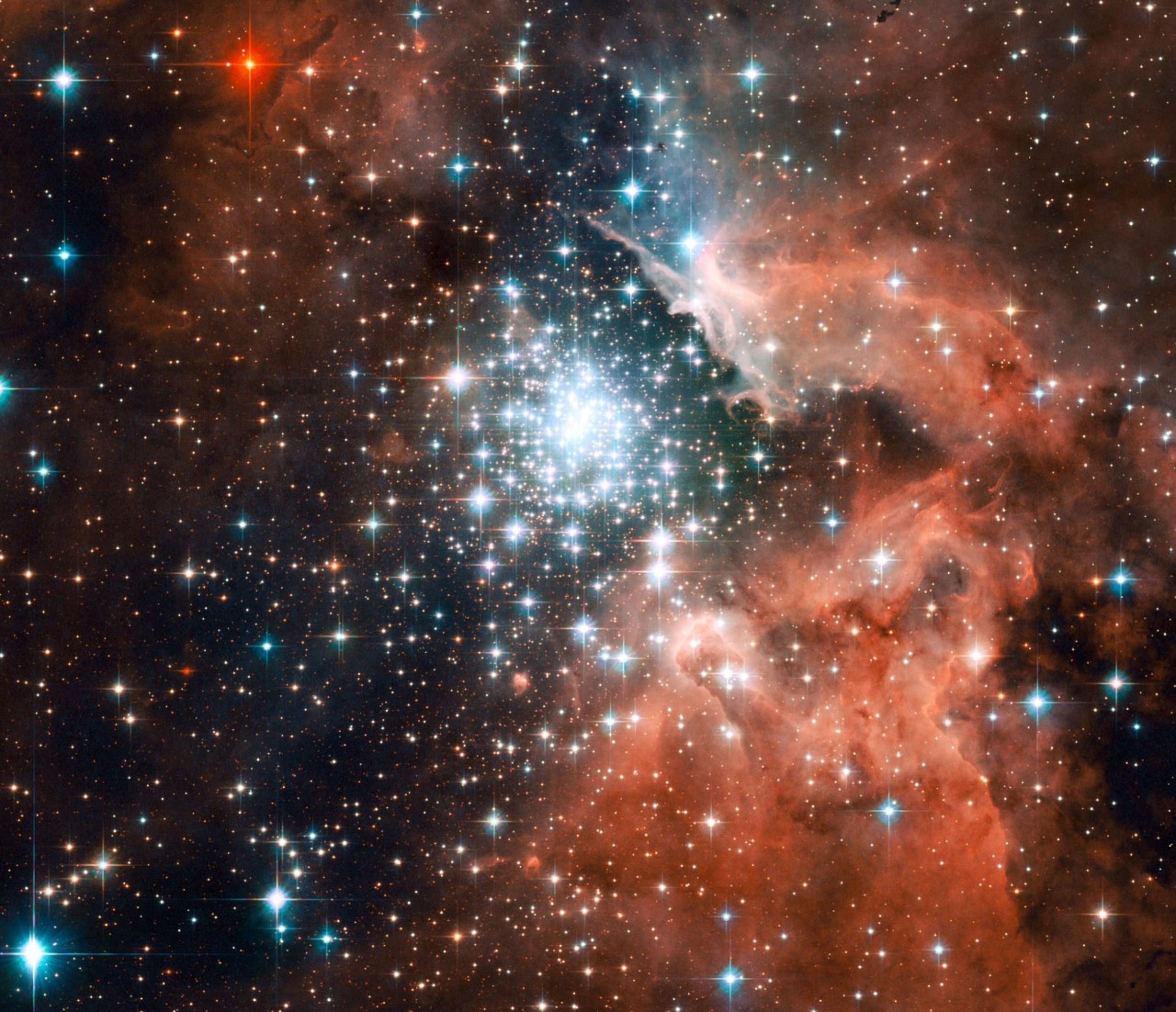
Today’s Image of the Day from the European Space Agency features a bright, bustling scene inside NGC 3603, a star-forming region packed with energy.
The Hubble image brings this corner of the Milky Way into sharp focus, revealing clouds of gas, clusters of young stars, and a sense of motion that feels almost alive.
The cloud is about 20,000 light-years away, yet the activity inside of it seems much closer. It’s a place where stars are born in enormous numbers.
The Hubble view pulls back the curtain on a process that has been unfolding for about a million years, as the cluster pushes and sculpts the gas around it.
Massive young stars in the Milky Way
The central focus is a dense group of hot, blue stars that formed during a short burst of star formation.
These stars are carving out a huge hollow inside the surrounding gas, leaving a sweeping cavity near the middle of the cloud.
The light from these stars is strong enough to reshape their surroundings – and the gas and dust around them glow in response. It’s a vivid reminder of how much change can happen inside active regions like this.
After decades of studies, scientists continue to focus on places like NGC 3603 because the environment is rich with clues about how stars emerge and grow.
The cluster inside NGC 3603 is one of the most massive young groups of stars in the Milky Way, so researchers frequently turn to it when trying to understand how large groups of stars come together so quickly.
The cloud is also wrapped in dust, which helps preserve the evidence of how these stars formed.
A close look at a busy neighborhood
Regions like NGC 3603 often become crowded as stars form in rapid succession. The gas inside the cloud collapses under its own weight, and once the first stars ignite, they pump out radiation that changes the space around them.
This radiation stirs the cloud, creating pockets where new stars can form and others where the gas gets pushed aside. The action inside NGC 3603 fits this picture.
The huge cavity seen in the Hubble image is a direct result of powerful starlight streaming from the cluster’s young, massive stars.
The stars here are extremely hot, which means they shine with an intense blue light. They burn through their fuel quickly and have strong stellar winds.
The winds push against the gas in the cloud, leaving behind shapes that twist and ripple. Areas around the cavity contain knots of denser gas where future stars may still be forming.
Even though the main burst of star formation in NGC 3603 happened about a million years ago, slower activity might still be ongoing.
What lies ahead for this region
Over time, the cavity inside NGC 3603 will probably grow larger. As the massive stars inside the cluster continue to burn, they will push more material outward.
The cloud around the cluster may eventually disperse. When that happens, the stars will still remain as a tight group, but the bright gas will fade.
For now, the combination of fresh starlight and glowing gas offers a rare look at a moment in the life of a young cluster.
NGC 3603 is often compared with even larger star-forming regions farther away, but its proximity makes it especially valuable. The image shows how much is happening in this part of the galaxy.
Evolution of young star clusters
The image of NGC 3603 captures a complex, crowded place where stars shape their surroundings in visible ways. The activity here highlights how busy the Milky Way can be.
Regions like this help explain how stars form, how they influence the space around them, and how young clusters evolve as their brightest stars begin to shine.
The gas and dust tell a story of change, pressure, and motion that continues today.
Image Credit: NASA, ESA and the Hubble Heritage (STScI/AURA)-ESA/Hubble Collaboration
—–
Like what you read? Subscribe to our newsletter for engaging articles, exclusive content, and the latest updates.
Check us out on EarthSnap, a free app brought to you by Eric Ralls and Earth.com.
—–