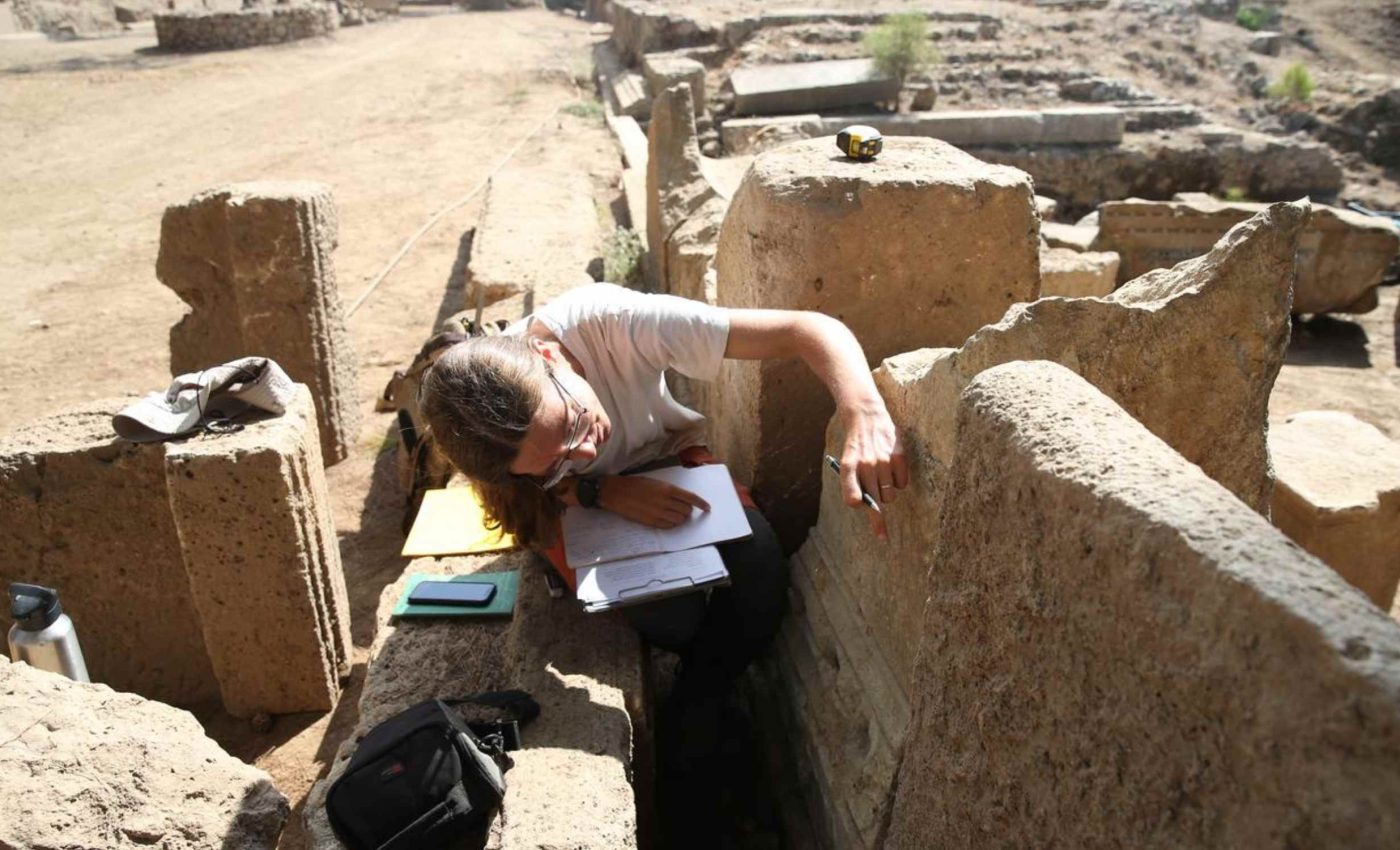
1,800-year-old Roman stadium looks like the work of modern engineers



 Follow Earth on Google
Archaeologists have uncovered a Roman sports stadium nearly 1,800 years old in the ancient city of Syedra on Turkiye’s Mediterranean coast. It hugs the rocky hillside in a smooth curve, with stonework so precise that it feels eerily modern.
Archaeologists revealed the structure in 2025 during ongoing excavations at Syedra, a hilltop settlement overlooking the Turkish resort town of Alanya.

Early measurements suggest the stadium once held a few thousand spectators gathered for athletic contests and public ceremonies.
The city of Syedra
The work was led by Associate Professor Ertug Ergurer at Alanya Alaaddin Keykubat University (AAKU). His research focuses on mapping Syedra’s streets, monuments, and gathering places to understand how the ancient city functioned as a whole.
Archaeologists trace Syedra to the 9th century BC, with layers from Greek, Roman, Byzantine, and Anatolian Seljuk periods.
That deep timeline means the new stadium is only one chapter in a city that kept reinventing itself for more than two millennia.
The main ruins sit on Asar Tepe, high above the Mediterranean and roughly 12 miles from modern Alanya.
Archaeologists estimate that up to 5,000 people once lived between the fortified hilltop neighborhood and the harbor quarter spread out on the slopes below.
Finding Syedra stadium
During recent seasons the team cleared brush and rubble from a long, narrow terrace along the hillside. Only then did the outline of the playing field and seating rows emerge with any clarity.
Archaeologists had seen parts of the seating before, but the full outline of the stadium remained unclear. As the team cleared the steep terrace, they followed cuts in the bedrock to pinpoint the structure’s edges.
Once cleared, the arena measured around 650 feet, about 200 meters, long and 52 feet wide, with stone rows stepping up from the track.
Based on those tiers, engineers estimate that between 2,000 and 3,000 people could watch races, wrestling bouts, and boxing matches from the stands.
Reading Syedra’s athletic scoreboard
Scattered across the city are nearly 40 honor inscriptions that celebrate winners in events like wrestling and boxing.
Studying this carved epigraphy, the written record preserved on stone, helps researchers match the texts to the stadium’s newly exposed layout.
Inscriptions and architectural clues suggest the arena also supported religious festivals and imperial events that linked Syedra to the wider Roman world.
One researcher noted that the presence of such a stadium points to a city that enjoyed prosperity and a notable position in the region.
Historians describe Syedra as a harbor between Pamphylia and Cilicia, linking Cyprus and Mediterranean trade routes. That context helps explain why a sports venue here mattered so much to the city.
Layout of Roman stadiums
Across the Greek and Roman world, stadiums were long, U-shaped arenas built for running races and other athletic contests rather than gladiator fights. Many classical tracks stretched close to 600 Greek feet, roughly 185 to 200 meters.
Syedra’s version follows that basic plan, but builders carved its seating and track directly into the hillside instead of constructing massive freestanding walls.
The result is a compact venue whose topography, the detailed shape of the ground, controlled everything from sightlines to how crowds entered and left.
Archaeologists see chisel marks and notches showing that lower tiers were built from finely cut blocks while upper benches probably used wood now gone.
That mix of stone and timber appears in other Roman venues and shows how builders balanced durability, cost, and the risk of supporting crowds.
Life around Syedra stadium
For visitors at Syedra today, the stadium sits beside a colonnaded street, a large bath complex, a council hall, and stairways connecting steep terraces.
Mosaics showing episodes like the Twelve Labors of Heracles and statues of the goddess Nike hint at how much art once filled these spaces.
An intricate network of channels and underground cisterns, large storage tanks for fresh water, kept residents supplied during dry summers.
The stadium’s uphill location may have given athletes and spectators sweeping views over these city blocks and the harbor, turning competitions into powerful theaters.
A recent study of 35 terracotta loom weights from Syedra shows how carefully even household tools were shaped, measured, and classified by archaeologists.
Finds like these reveal weaving as an important activity in the city and suggest that families cheering in the stands spun and wove clothing.
Lessons from Syedra stadium
The Syedra stadium pushes researchers to think harder about sports in everyday provincial life instead of only in famous capitals like Rome or Athens.
A carefully engineered arena in a mid-sized city shows how far athletic ideals and imperial ceremonies spread across the empire.
Future work will move beyond the dramatic rows of seats to study soil layers and small finds from beneath and around the track.
By combining stratigraphy, the reading of earth layers, with inscriptions and architecture, teams can track how the venue changed from peak use to abandonment.
Syedra is becoming more accessible to visitors as Turkiye’s Heritage for the Future project preserves archaeological sites and opens them to careful tourism.
Standing in the newly cleared stands, people can see how Roman engineers shaped stone for sport, politics, and community life in a different age.
—–
Like what you read? Subscribe to our newsletter for engaging articles, exclusive content, and the latest updates.
Check us out on EarthSnap, a free app brought to you by Eric Ralls and Earth.com.
—–