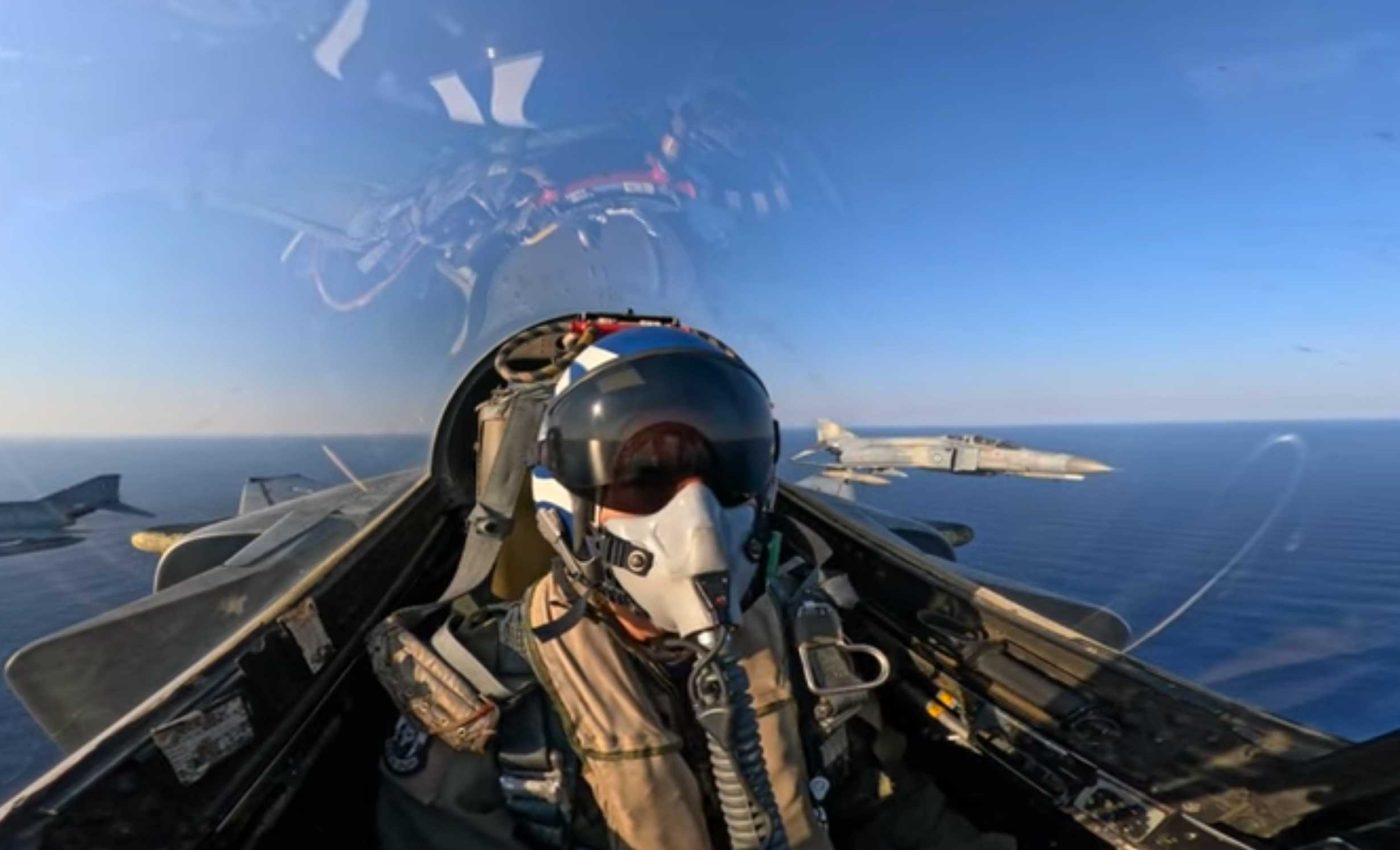
ASW aircraft are experiencing huge growth thanks to high-tech sensors



 Follow Earth on Google
Anti-submarine warfare (ASW) – the collection of tools that navies use to find and stop submarines – is shifting rapidly into the skies.
Aircraft built for this mission are now the fastest growing part of the effort to track and deter submarines at sea.

Analysts expect spending on anti-submarine warfare to rise from about 14 billion dollars in 2024 to nearly $23 billion by 2034.
Much of that money is driven by big naval powers in North America, Europe, and the Asian Pacific that are worried about stealthy submarines.
Why anti-submarine aircraft?
Compared with ships and submarines, aircraft can sweep huge areas of ocean in hours instead of days. Market researchers now expect the aircraft segment of anti-submarine warfare to grow at about 6.2 percent a year, faster than any other platform type.
Recent thinking about these airborne systems builds on work by L. J. Coy, a researcher in science and engineering at Massachusetts Institute of Technology (MIT).
The research examines how new designs of magnetometer – instruments that measure tiny changes in magnetic fields – could change long-range submarine detection from aircraft.
Navies like aircraft because they can be based on land, surge quickly toward a suspected contact, and then return to be refueled and rearmed without exposing crews to torpedoes.
They also offer a flexible place to host new sensor packages, since pods and racks can be swapped out faster than refitting a warship.
Another advantage is that many allied countries already operate maritime patrol planes and anti-submarine helicopters for search and rescue, border patrol, and disaster response.
Adding more advanced submarine hunting kits to those airframes is often cheaper and quicker than building brand new warships from scratch.
Advantages from magnetometry
At the heart of the aircraft boom is magnetometry, the technique of mapping magnetic fields to spot hidden metal objects.
Submarines made of steel disturb Earth’s magnetic field slightly, and sensitive instruments on aircraft can sense that from hundreds of feet above the waves.
Older magnetic anomaly detection systems were so bulky that they usually fit only on large maritime patrol airplanes.
Newer gear like the CAE MAD XR package, is more compact and lighter, so it can fit on helicopters, unmanned aircraft, and smaller planes.
“CAE MAD-XR is a highly sensitive magnetometer,” explained Joe Armstrong, vice president, business operations at CAE.
That kind of sensitivity lets aircraft pick up the faint magnetic signature of a submarine once it has already been narrowed down by other sensors.
The US Navy is also rolling out digital magnetic anomaly detection kits, a new generation of magnetic sensors that send their data into modern mission computers instead of analog gauges.
These devices are compact enough to live in the tail of MH 60R Seahawk helicopters and flag tiny magnetic shifts as pilots fly patterns over suspected tracks.
Some scientists are even testing quantum magnetometers, devices that exploit atomic quantum states to push sensitivity beyond older sensors.
Early analyses suggest they could help aircraft pick out weaker submarine signals in cluttered waters, but they are unlikely to magically reveal every submarine on Earth in a single scan.
Passive sensors listen harder
The other big leap for aircraft is in passive sensors, systems that listen for sound or energy without sending out their own signals.
This gear lets crews track submarines more quietly, because the aircraft do not shout into the water with loud pings the way active sonar does.
Sonobuoys are small, expendable floats with underwater microphones and radios. They can be dropped in patterns from aircraft to create temporary underwater microphone fields.
They beam acoustic data back to onboard processors that try to sort out submarine noises from waves, merchant ships, and marine life.
Anti-submarine buoys
Companies are pushing higher resolution acoustic arrays and digital processing inside each buoy so fewer drops can cover the same patch of ocean.
The French Navy recently selected the SonoFlash sonobuoy, which it describes in a Thales overview as “combining active and passive features for enhanced acoustic sensor capabilities against evolving submarine threats.”
Airborne processors now fuse these acoustic feeds with radar, infrared cameras, and magnetic data. This reduces the risk of false alarms and keeps operators from chasing dolphins or cargo ships.
This fusion is important because the quieter modern submarines become, the more each separate sensor risks either missing them or triggering too many false tracks.
Crowded ocean, rising budgets
These sensor upgrades are happening in a world where more and more countries are developing submarine fleets.
An analysis by the International Institute for Strategic Studies (IISS) estimated that around 502 submarines were in service worldwide in 2024, with many more planned or under construction.
Much of the growth is in diesel electric boats that are hard to hear in coastal waters, and in nuclear powered submarines that can travel far from home ports without surfacing.
This spread of undersea forces drives interest in sensors that can still work when submarines hug the sea floor, hide under busy shipping lanes, or move under polar ice.
Global military budgets are also climbing, which gives navies room to buy more advanced aircraft and sensors.
According to a SIPRI analysis, world military expenditure reached about 2.44 trillion dollars in 2023. This marks the ninth straight year in which worldwide military expenditure has increased.
Major powers, such as the United States, China, and their allies, are pouring much of this money into modern naval fleets, and anti-submarine warfare aircraft draw a noticeable share.
Defence planners see them as quick-moving connectors that can link ships, submarines, and unmanned vehicles into a single picture of what is happening under the waves.
Future of anti-submarine tech
Even as aircraft and sensors race ahead, their price tags remain a major brake on how fast fleets can grow. Each new submarine-hunting helicopter or patrol plane carries not just engines and airframes but also racks of specialized electronics that take years and large investments to design, test, and certify.
The most advanced magnetometers, acoustic processors, and electronic warfare systems rarely appear on open export brochures.
These tools are used to sense and control signals in the spectrum, and they are guarded by strict national security rules.
Such controls make it harder for smaller navies to buy the same tools, and they also limit how much companies can reuse one design across different countries.
There is also the basic scientific limit that the ocean is noisy and messy, so no sensor will ever be perfect.
Engineers can reduce false alarms and stretch detection ranges, yet submarines will keep changing their hull shapes, coatings, and tactics to stay one step ahead.
The big story is not that aircraft will completely replace ships and submarines. Rather, they are becoming the most flexible link in the anti-submarine warfare chain.
For now, there is continued research into magnetometry, passive acoustics, and quantum sensing – the use of quantum effects to measure tiny signals.
Future patrol crews may spend less time staring at raw data and more time deciding how to respond to a submarine that has already been found by their software.
Information from L. J. Coy’s thesis in partial fulfilment of a Bachelor of Science in Engineering.
—–
Like what you read? Subscribe to our newsletter for engaging articles, exclusive content, and the latest updates.
Check us out on EarthSnap, a free app brought to you by Eric Ralls and Earth.com.
—–