Archaeologists find the first Roman basilica under a modern office building



 Follow Earth on Google
Nearly 2,000 years after Roman officials argued over laws in Londinium, their old town hall has turned up beneath a modern office block. Archaeologists have uncovered the city’s earliest known civic basilica, a large Roman public hall used for meetings and courts, below 85 Gracechurch Street in the City of London.
Archaeologists from the Museum of London Archaeology made the find while checking the site before a new tower is built.

The building belongs to the first generation after Rome took control of Britain and served as London’s main civic meeting place.
Finding a lost town hall
The work was led by Sophie Jackson, Director of Development at the Museum of London Archaeology (MOLA), who coordinates major excavations across central London.
Her research focuses on how large building projects can reveal early public buildings and the growth of the Roman city.
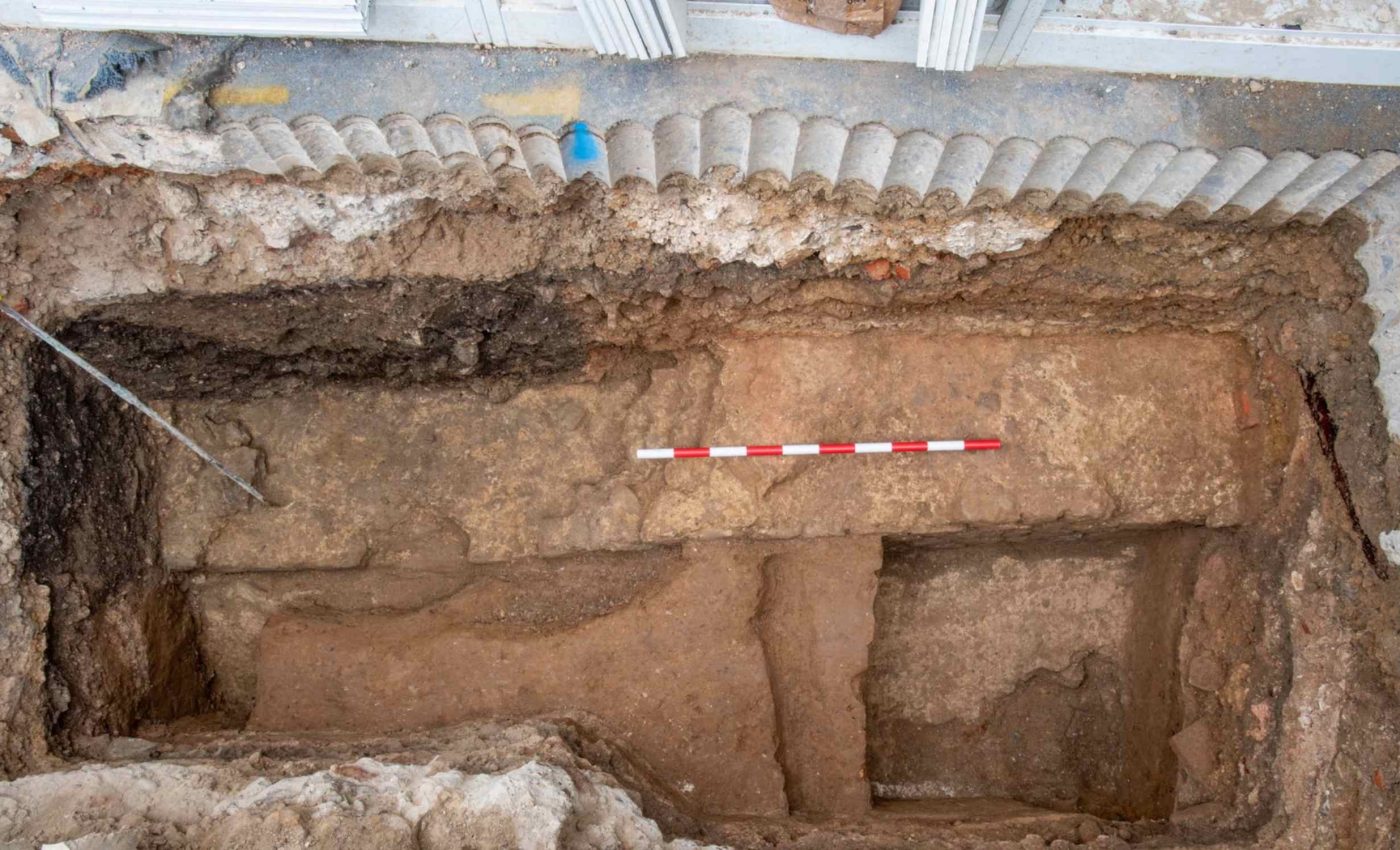
Excavation in the basement exposed thick walls and foundations made from flint, ragstone, and recycled roof tiles that had not seen daylight since antiquity.
The newly uncovered structure includes part of the raised tribunal, a high platform inside the hall where magistrates sat to hear cases and debate local policy.
“This is one of the most significant discoveries made in the City in recent years. It’s like discovering the Speaker’s Chair and chamber of the House of Commons, 2,000 years into the future,” said Jackson.
Archaeologists report that some stretches of wall run over 30 feet in length, are roughly 3 feet wide, and drop about 13 feet below the modern floor level.
Those dimensions match the scale expected for the main civic building of an ambitious new Roman provincial capital.
What is a Roman basilica?
The basilica formed one side of the wider forum, the central square of a Roman town where people shopped, did business, attended legal hearings, and heard official announcements.
In front of the hall lay an open courtyard about the size of a soccer field that acted as the outdoor stage for markets and public ceremonies.
Historians place the construction of this complex in the late first century, during the period when governors backed a major rebuilding program across Roman London.
An enclosed forum and basilica created the proper setting for provincial administration, anchoring a city whose growth drew merchants, officials, and craftspeople from across the empire.
The newly uncovered basilica is also the earliest civic building of its kind yet identified in Roman Britain. That status makes it a key piece in showing how Roman ideas of law, trade, and urban life were planted in the province.
Inside the tribunal zone, Roman leaders once decided court cases, set local rules, and managed the city’s finances. Decisions made in this space helped shape how London grew from a frontier port into a long lasting center of power.
History under Gracechurch Street
Archaeologists have suspected for more than a century that this corner of the City hid Rome’s first forum.
Late 19th century work to build Leadenhall Market exposed massive Roman walls, and excavations in the 1980s at nearby Leadenhall Court mapped a later second basilica and traces of an even earlier civic center below it.
Those earlier digs showed that the same spot carried formal government buildings for generations.
The new Gracechurch Street discoveries now pinpoint the northern end of that sequence and, for the first time, give archaeologists a close look at the first monumental hall raised after Boudicca’s revolt.
The tribunal foundations sit within a tight maze of later activity, from Roman rebuilding to medieval markets and modern office basements.
Careful study of the stratigraphy, the stacked layers of soil and debris that build up over time, lets researchers separate these phases and place each wall in its correct century.
Finds from the dig are expected to add detail about who used the basilica, what materials they favored, and how they repaired or altered the building as London’s status rose.
Even small clues, such as mortar recipes or reused tiles, help trace how builders sourced materials and organized labor.
Symbol of Roman power
The first forum’s courtyard and basilica stood on a high point in the town, making the complex a visible symbol of Roman power.
Its two storeys and long colonnades announced that Londinium was now a planned administrative center, not just a jumble of warehouses by the river.
Within about two decades, engineers wrapped a much larger second forum around the first, almost five times the size of the original and with a courtyard comparable to a major modern city square.
That expansion reflected a city whose population and trade networks were growing fast, along with Rome’s investment in the province’s capital.
When the larger complex was finished, workers demolished much of the first forum and basilica. Little direct evidence for the interior of that earlier hall survived, which is why the preserved tribunal under Gracechurch Street has such high research value today.
Across the wider city, other grand public buildings emerged during the same period, including an amphitheatre and temples near key road junctions.
Together, these monuments turned London into a showcase of Roman urban planning and ceremony.
Lessons from this Roman basilica
The discovery has forced the developer, Hertshten Properties, to rethink its plans for the new tower on the site. Updated designs now keep the basilica walls preserved in their original place and wrap a public exhibition and event space around them in the basement.
Plans describe a visitor route that will bring people down to the level of the tribunal foundations. There, large digital projections and careful lighting will help explain how the courtyard and basilica once looked and how they fit into the street grid of Roman London.
The exhibition is being developed with London Museum as cultural partner, using lessons from earlier projects that opened up sites like the Roman amphitheatre beneath Guildhall Yard.
Curators want visitors to walk above the ruins on platforms, see the stonework at close range, and follow the story of the city from Roman times to the high rise skyline outside.
If planning approvals stay on track, the new space is expected to open to the public around the end of the decade.
Tourists will then be able to stand where Roman magistrates once sat, in a basement that quietly holds the secret courtyard of ancient London beneath the rush of Gracechurch Street.
—–
Like what you read? Subscribe to our newsletter for engaging articles, exclusive content, and the latest updates.
Check us out on EarthSnap, a free app brought to you by Eric Ralls and Earth.com.
—–