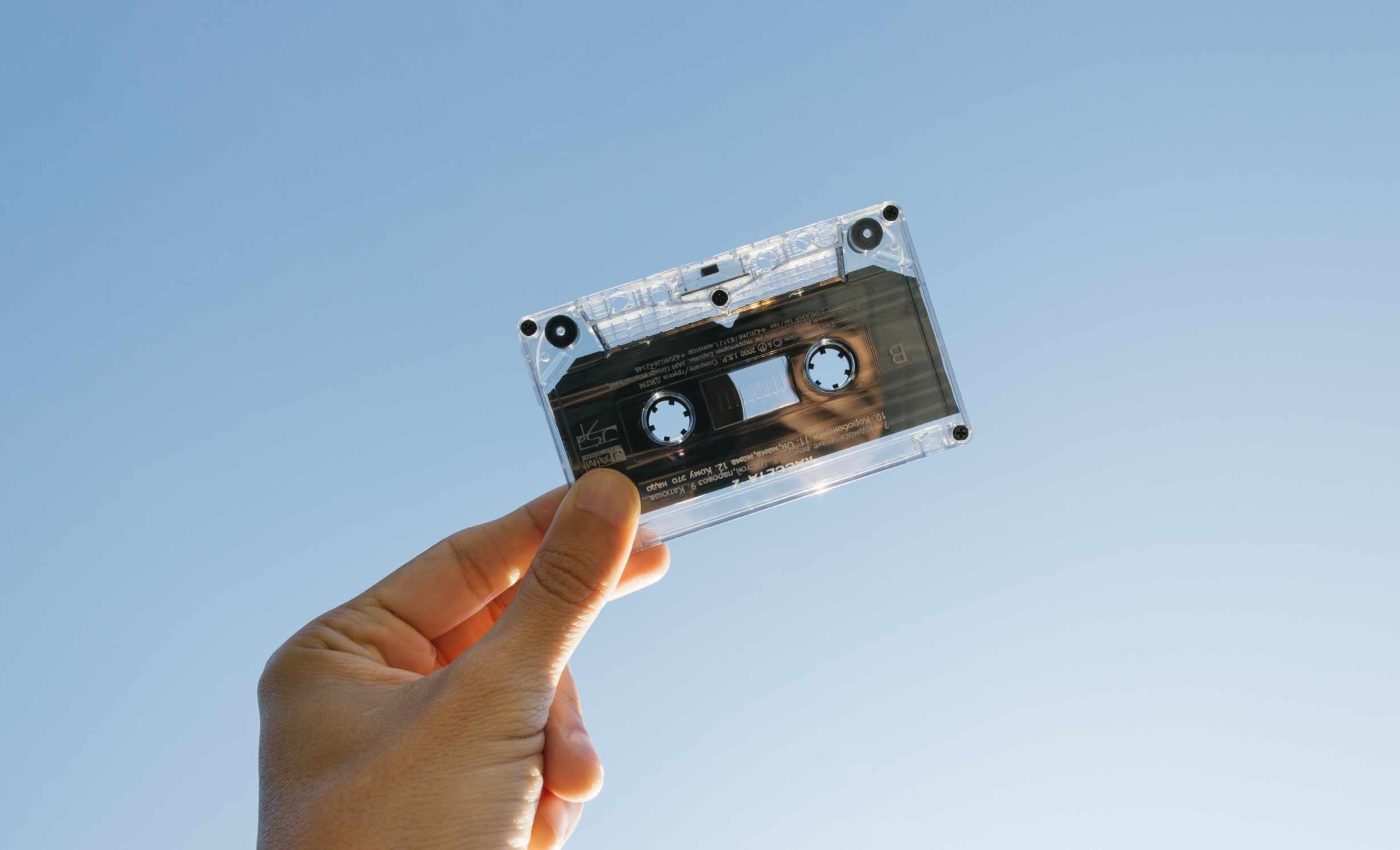
Scientists create a 'cassette tape' made of DNA that's capable of storing every song ever written



 Follow Earth on Google
Researchers in Shenzhen, China, have built a “cassette tape” that stores digital data as DNA strands on a thin plastic tape. A single prototype holds 36 petabytes, which is about one million gigabytes of information, enough to hold more than three billion songs.
Digital files in this system are turned into sequences of A, T, C, and G, the four DNA letters that store genetic information. Those sequences then stand in for the zeros and ones that computers use.

The team prints short synthetic DNA strands as tiny spots onto a flexible plastic film. They then cut and roll that film into a slim tape that can move smoothly between reels.
The work was led by Xingyu Jiang, a biomedical engineer at the Southern University of Science and Technology (SUST) in Shenzhen.
His research focuses on building DNA based devices that can store information and carry out useful molecular tasks.
The group wanted the cassette to fit with the DNA machines that labs already use. That meant designing the tape so that standard DNA writing instruments and sequencing tools can interact with each section in turn.
Storing data on DNA
Along the tape, blocks of white space soak up DNA solution. Black stripes coated with water repelling ink stop the liquid from spreading sideways.
Each white block holds a separate chunk of DNA, creating a tiny partition, a small separate storage section on the tape.
Across a tape a little over half a mile long, the researchers calculate that there are about 550,000 of these file slots.
A small optical scanner watches the barcodes as motors spin the tape, picking out the right partition as soon as its pattern appears.
In tests, the system could locate about 1,570 different file positions every second along the moving tape.
Benefits of storing data in DNA
Global digital data is growing quickly as more people stream media, shop online, and connect devices to the internet.
One industry analysis predicts that the total volume of stored data could reach around 175 trillion gigabytes in the mid 2020s.
Keeping all of those bits online chews through electricity in huge warehouse sized data centers, buildings packed with servers that run day and night.
A recent Department of Energy report found that data centers already use about 4.4 percent of United States electricity.
DNA as a material can in principle pack enormous amounts of data into a tiny mass. The cassette team notes that a single gram of DNA can store about 455 exabytes, roughly a billion gigabytes each.
Studies of ancient bones show that DNA strands slowly break apart over centuries. From those measurements, researchers estimated a DNA half life, the time for half the molecules to break, of around 521 years in buried samples.
Reading and rewriting the cassette
Inside the drive, reels and motors move the tape while a small controller keeps track of each file location. When a file is chosen, the machine brings the right partition into a tiny reaction chamber filled with liquid.
A mild chemical base pulls one strand of the double stranded DNA off the tape and into the solution. That free strand is then read by DNA sequencing, a process that determines the order of DNA letters one by one.
Because one strand stays on the tape, the system can use it as a template to rebuild the double stranded DNA after each read.
In experiments, the team repeatedly recovered the same file ten times from a single tiny patch without losing the ability to decode it.
To erase data, an enzyme snips the attached DNA at a chosen site so that the strand detaches and washes away. The empty handle can then capture a new DNA sequence, and tests showed that roughly 99.9 percent of the original information was replaced.
Protecting DNA for centuries
To keep the DNA safe, the researchers coated partitions with a crystal shell made from a metal organic framework that blocks water and enzymes.
Earlier work showed that DNA sealed inside silica based materials can preserve digital information for centuries even at elevated temperatures.
By heating coated tapes for weeks and tracking damage, the team estimated that the DNA could last more than three centuries at room temperature.
They also calculated that in cooler environments, such as high mountain ranges, the DNA might remain readable for tens of thousands of years.
DNA, data storage, and the future
Despite the huge capacity, the cassette is very slow compared with familiar storage devices. In the demonstration, copying data to and from the tape took tens of minutes for a file only a few hundred kilobytes in size.
Synthesizing large pools of DNA strands is still expensive, and many sequencing machines are bulky instruments that sit in specialized labs.
The researchers hope that as biotechnology costs drop and faster chemistry appears, cassette style DNA storage will become a practical way to archive data.
For now, the DNA cassette is a careful laboratory prototype that shows how molecular storage might eventually handle the flood of digital files.
If the chemistry and hardware catch up, future versions could turn cassette style DNA cartridges into long lived vaults for music, movies, and archives.
The study is published in Science Advances.
—–
Like what you read? Subscribe to our newsletter for engaging articles, exclusive content, and the latest updates.
Check us out on EarthSnap, a free app brought to you by Eric Ralls and Earth.com.
—–