Coral reefs have regulated Earth's climate for millions of years



 Follow Earth on Google
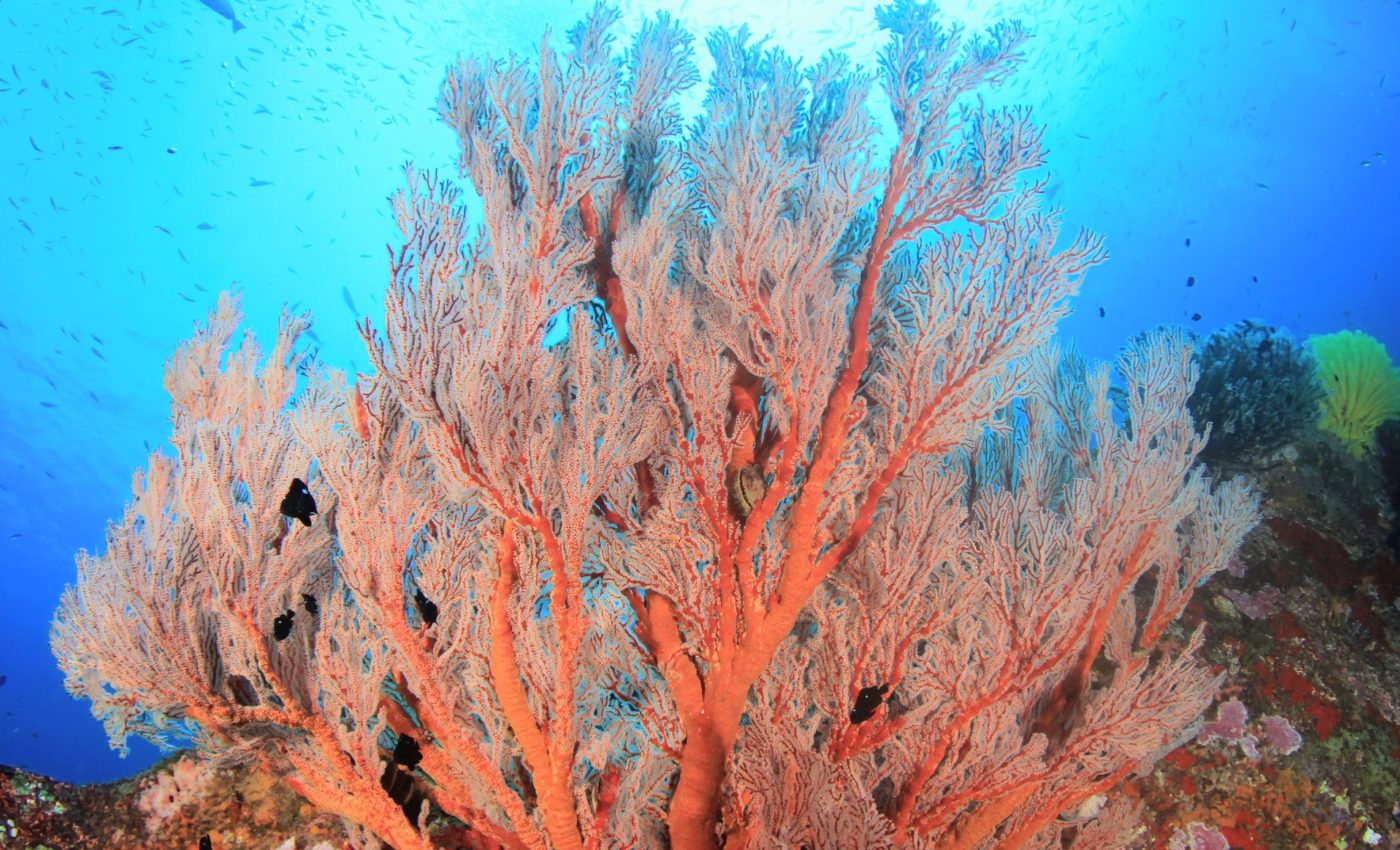
For centuries we’ve treated coral reefs as nature’s busy marketplaces: dazzling, dense hubs of biodiversity. A new study argues they’ve also been Earth’s metronome, setting the pace of carbon cycling and climate recovery for more than 250 million years.
The research shows that the waxing and waning of shallow water reefs didn’t merely mirror global change, but helped regulate how fast the planet bounced back from massive surges of atmospheric CO2.
Shifting the planet’s recovery speed

The team identifies two distinct operating modes for Earth’s long term carbon cycle. In one mode, tropical continental shelves are broad, reef habitat is abundant, and shallow seas churn out carbonate sediments.
That shallow water carbonate factory reduces chemical exchange with the deep ocean, weakening the marine “biological pump” that normally helps move carbon from the surface into depth.
The knock-on effect is slower recovery after carbon shocks like large igneous province eruptions.
In the other mode, reef real estate collapses due to sea level change, tectonic reshaping of coastlines, or both. With fewer shallow platforms to trap carbonates, calcium and alkalinity accumulate in the ocean, shifting carbonate burial into the deep sea.
That change boosts nanoplankton productivity, strengthens the biological pump, and speeds climate recovery.
“These switches profoundly alter the biogeochemical equilibrium,” said co-lead author Laurent Husson. “The big expansion of planktonic life happened exactly when shallow reefs were ‘turned down’ by the Earth system.”
How coral reefs control the climate
To reveal these gears in action, researchers from the University of Sydney and Université Grenoble Alpes stitched together several lines of evidence. First, they reconstructed plate tectonics to map where tropical shelves existed through time.
Then, they designed global surface process models to track erosion and sediment supply and climate simulations to set temperature and ocean chemistry.
Finally, through ecological modeling, they tried to estimate how much carbonate reefs could produce under those conditions.
The synthesis reaches back to the Triassic, when modern-style reef ecosystems began re-establishing after the end-Permian mass extinction.
Across this deep time canvas, the pattern is consistent: when shelves were wide and reef habitat thrived, shallow carbonate burial dominated and Earth’s CO2 drawdown mechanisms dulled.
When those shelves shrank, the balance tipped toward deep sea burial and a more vigorous carbon pump. These findings help explain major evolutionary transitions in plankton and background shifts in ocean chemistry.
Coral reefs as climate regulators
Traditionally, shallow water carbonate systems have been read as passive logs of environmental change: they grow when seas are warm and stable and drown when conditions sour.
This study reframes them as active modulators that alter the ocean’s buffering capacity.
By controlling where carbonates get locked away – in sunlit platform tops or in the deep ocean – reefs effectively tune how quickly excess CO2 can be drawn down after global perturbations.
That mechanism also feeds back on life. When deep sea burial intensifies, plankton that precipitate tiny carbonate shells can flourish, reinforcing the biological pump and changing the composition of the ocean’s carbon reservoir.
What the past says about our future
The modern story is sobering. Today’s reefs are shrinking under warming seas, acidification, and local stressors.
In theory, a large-scale retreat of shallow water carbonate factories could shift burial toward the deep ocean, nudging the system into the faster recovery mode.
But there’s a catch: the very calcifying plankton and organisms that drive deep sea burial are themselves vulnerable to acidification and continuing CO2 emissions. Any long-term stabilizing effect would likely arrive only after severe ecological damage.
“From our perspective on the past 250 million years, we know the Earth system will eventually recover from the massive carbon disruption we are now entering. But this recovery will not occur on human timescales. Our study shows that geological recovery requires thousands to hundreds of thousands of years,” Salles warned.
If reefs help set the beat of Earth’s long-term carbon cycle, protecting them is about more than safeguarding biodiversity.
It’s about preserving a control knob in the climate system – one that, when turned down by widespread collapse, risks triggering a mode of recovery that exacts a devastating ecological toll before any planetary benefit arrives.
The study’s deep time perspective highlights a simple, urgent priority: cut emissions quickly to keep reefs in play, maintain the ocean’s living carbon machinery, and avoid forcing the Earth system to “switch gears” in ways that our descendants would experience only as loss.
The study is published in the journal Proceedings of the National Academy of Sciences.
—–
Like what you read? Subscribe to our newsletter for engaging articles, exclusive content, and the latest updates.
Check us out on EarthSnap, a free app brought to you by Eric Ralls and Earth.com.
—–