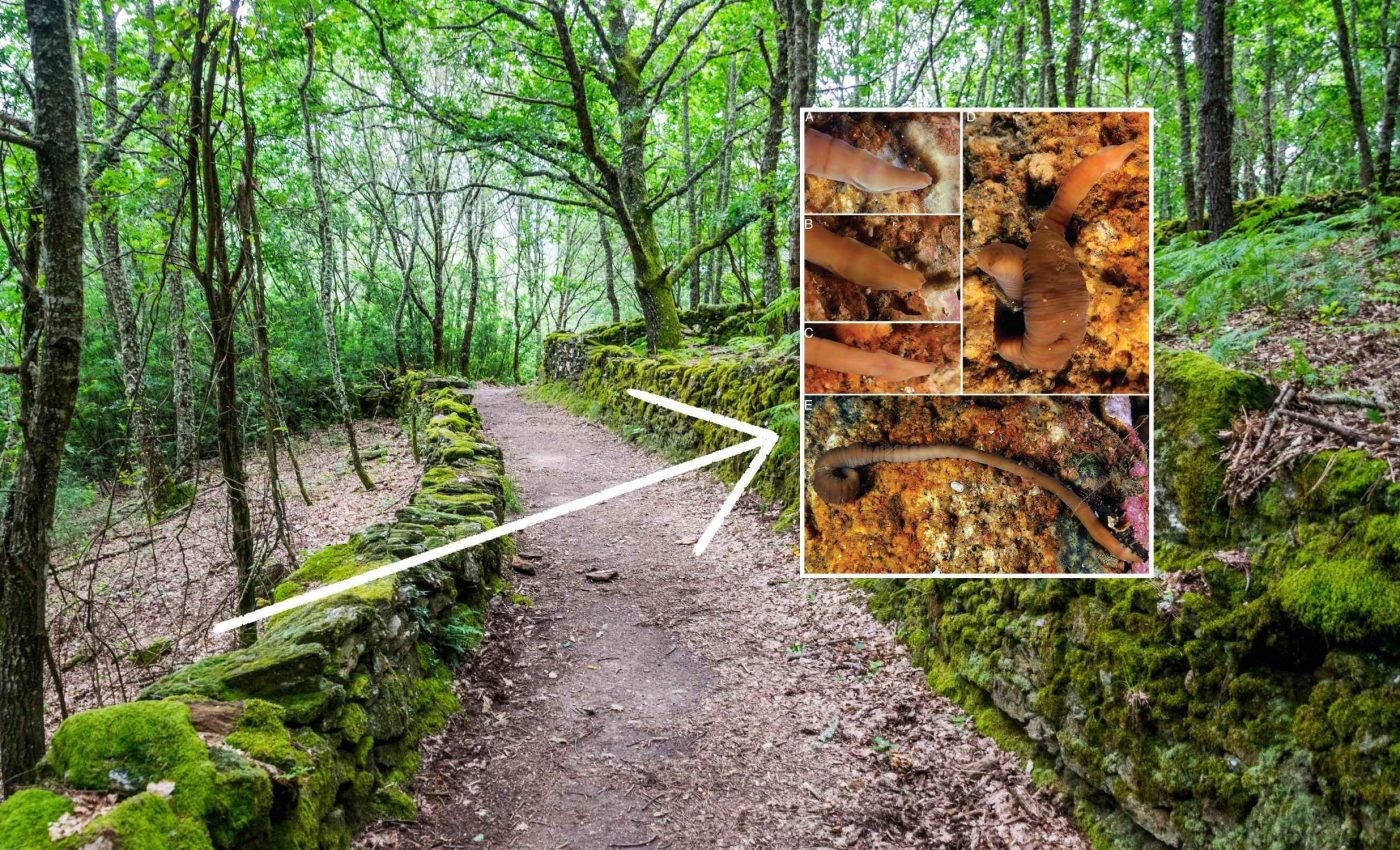
First images of a new ribbon worm species that contorts its body like an accordion



 Follow Earth on Google
A long, thin ribbon worm from the coast of Spain can scrunch itself down to about one-fifth of its normal length, then stretch back out as if nothing happened.
That party trick, plus a strange pattern of body rings, helped scientists realize they were looking at a species that no one had ever named before.

Only six individuals have been found so far, living under rocks roughly 100 feet beneath the surface near the Ría de Arosa in Galicia, on Spain’s northwest coast.
A research team from Spain, Guam, and the United States showed that this animal is not just another worm but a completely new genus and species in a poorly known group called ribbon worms.
Meet the accordion ribbon worm
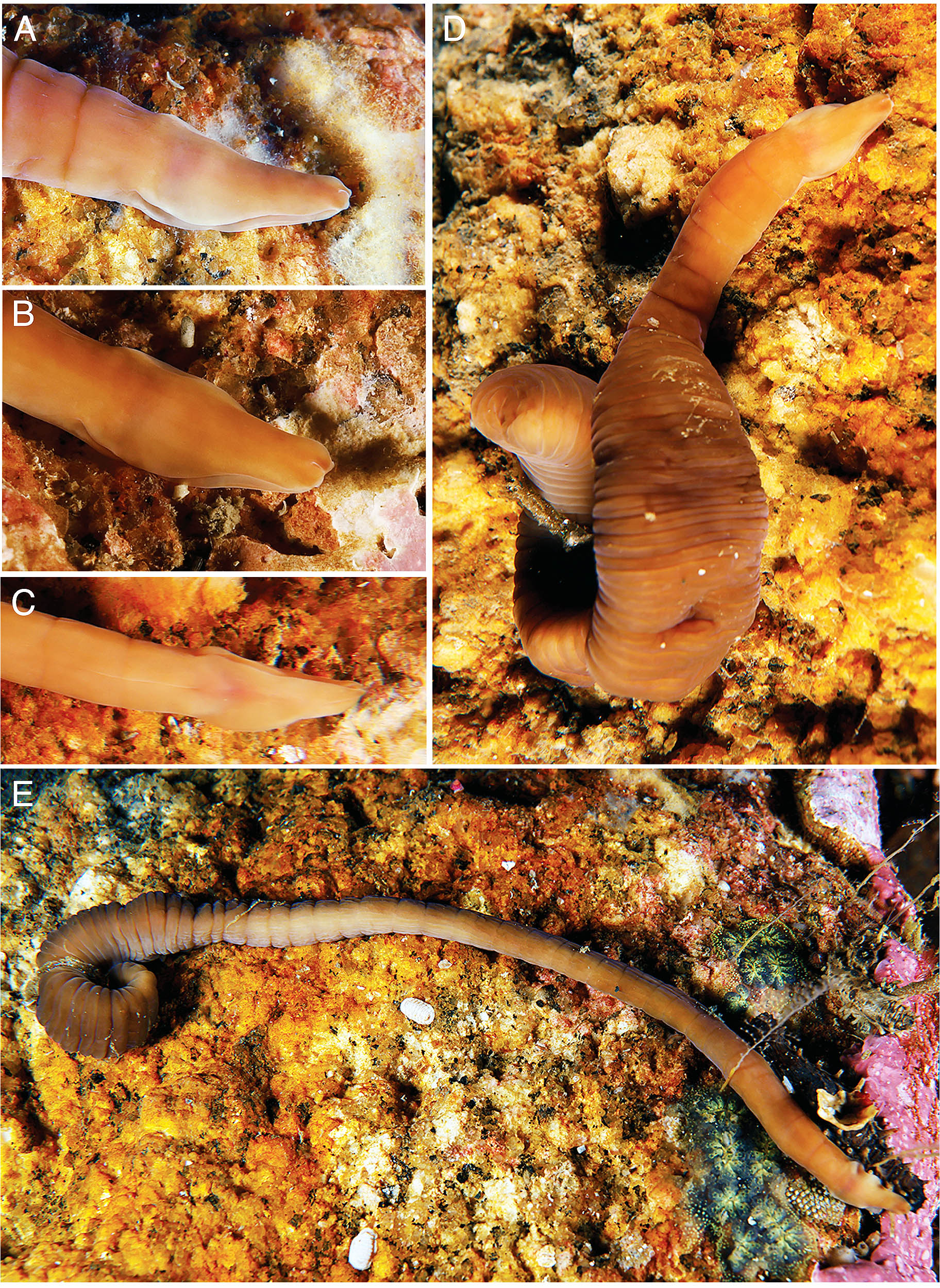
In normal, relaxed moments the new species is a long brown to dark green ribbon, just a few millimeters thick but several inches long.
The body carries a series of darker rings along its length that are easiest to see when the animal is crawling across the rock.
When the worm is startled, its body shortens quickly and those rings tighten into deep, regular folds that resemble the bellows of an accordion.
Even when it stretches back out, the folds remain as shallow grooves, and the largest known specimen carries about 60 of these ring marks along its body.
The work was led by Aida Verdes, a marine biologist at the National Museum of Natural Sciences (NMNS) in Madrid.
Her research focuses on the diversity, evolution, and venoms of ribbon worms, especially how different species use toxins for hunting and defense.
The species has been given the scientific name Pararosa vigarae, often shortened to P. vigarae. That name nods to the local estuary where it lives and honors the wife of the senior author as a gift for their fiftieth wedding anniversary.
Understanding ribbon worms
Ribbon worms belong to the phylum Nemertea, a group of unsegmented animals with an extendable hunting organ called a proboscis, that live mostly in the sea and prey on other invertebrates. Most species sit hidden in mud, under stones, or in seaweed mats until they sense a nearby meal.
Many ribbon worms are active predators that use the proboscis to inject venom into prey and defend themselves with toxic slime on their skin, a strategy described in detail in a recent toxin study.
This research has shown that different ribbon worm lineages mix their toxins in distinct ways, suggesting that their chemistry evolves quickly as they adapt to different prey.
Scientists now recognize a little more than 1,300 named ribbon worm species worldwide, yet they suspect that many more remain hidden.
Some, like the Antarctic species Parborlasia corrugata, can reach about 6 feet long in icy southern waters, according to a broad survey of these animals, while others are barely longer than a fingernail.
For most people, ribbon worms stay out of sight and out of mind because they are small, soft bodied, and usually live on the seafloor.
Educational resources from major museums emphasize that they are mainly marine predators that tuck themselves into mud flats, under rocks, or along the edges of tide pools, with a wide range of body sizes and colors.
Pararosa vigarae was hard to classify
Taxonomists, the scientists who study taxonomy, the science of naming and grouping living things, have long struggled with ribbon worms because many species look frustratingly similar from the outside.
Colors fade in preserved specimens, and there are only a few obvious external traits, such as head shape and position of head slits, to work with.
For much of the last century, specialists sliced worms into hundreds of thin sections to map their internal organs, then compared these features between species.
A detailed methods paper explains how descriptions relied on long checklists of internal characters, but also warns that many of those traits are vague or hard to score in the same way for every specimen.
That approach is slow and limited, especially when researchers want to describe many new species from remote coasts. It also fails when two species share almost identical internal anatomy but differ strongly in their DNA.
Pararosa vigarae sits right in the middle of this problem. Its basic body plan and head shape resemble other long, smooth ribbon worms, so older methods might easily have lumped it into an existing genus.
DNA untangles the knots
To avoid mislabeling the new worm, the team combined careful imaging with molecular markers, short gene sequences used as ID tags to compare related organisms.
They sampled several genes from the back end of each worm and then built a family tree to see where those sequences belonged relative to other known ribbon worms.
That analysis showed that all six specimens form their own distinct branch within a larger group called the Lineidae family.
The branch did not match any known genus, which is why the authors had to create the new genus Pararosa as well as the new species name.
Because the worms were kept alive for photography before freezing, the researchers could connect living traits, such as ring patterns and head shape, directly to the DNA results.
The regular ring folds that inspired the accordion nickname appear as true constrictions in the skin, not just temporary wrinkles, and those features help set the species apart from its closest relatives.
This mix of external traits and genetic data fits a wider shift in ribbon worm research. Modern taxonomists increasingly treat DNA sequences and photographs as the main evidence for describing species, with internal anatomy used more selectively than in earlier work.
Lessons from a ribbon worm
Pararosa vigarae adds just one name to the official list of ribbon worms, yet it hints that many more species may lurk in places that divers and scientists rarely sample.
The fact that all six known specimens were found together, crowded under a single shell and another stone at around 100 feet deep, suggests there could be entire patches of seafloor where this worm is common but unnoticed.
Ribbon worms as a whole seem to be a classic example of life that is abundant but under described.
The accordion worm shows how much information a single small creature can carry when scientists document it with both cameras and gene sequences.
It also shows that even in a well visited European estuary, there are still animals strange enough that no one quite knew where to put them until now.
The study is published in Royal Society Open Science.
—–
Like what you read? Subscribe to our newsletter for engaging articles, exclusive content, and the latest updates.
Check us out on EarthSnap, a free app brought to you by Eric Ralls and Earth.com.
—–