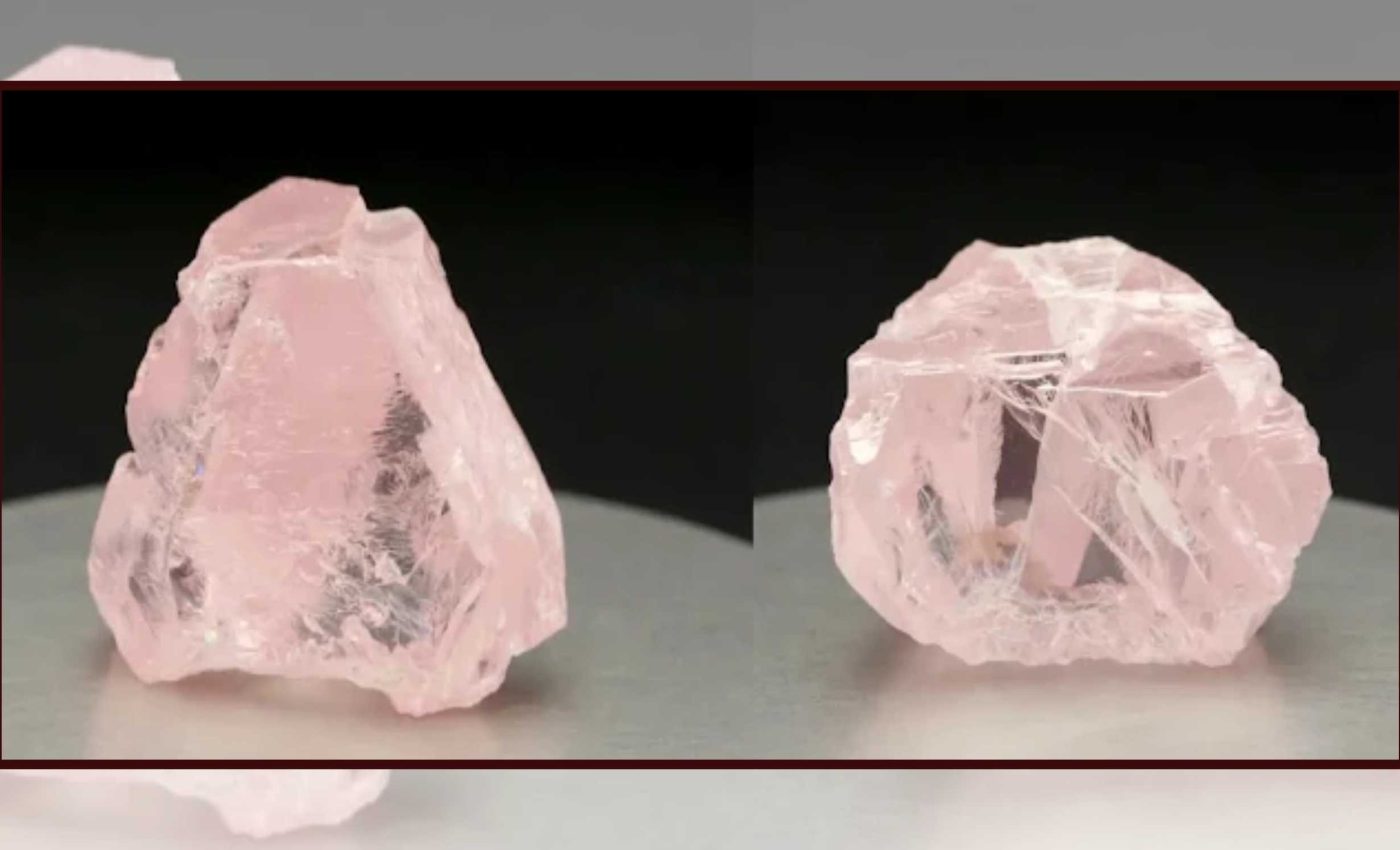
Giant pink diamond from Lesotho is among the largest ever found



 Follow Earth on Google
A giant pink diamond has been pulled from deep underground at the Kao mine in the mountain kingdom of Lesotho, Southern Africa. Industry coverage reports that the rough stone weighs 108.39 carats. This makes it one of the largest pink diamonds ever documented from any mine.
The rough diamond carries enough mass to cut several important stones, each one capable of anchoring a high-end necklace or ring. Experts predict that, with its intense pink color and rare internal purity, it may fetch tens of millions of dollars.
Lesotho pink diamond find

The work was led by Storm Mountain Diamonds, the company that operates the Kao diamond mine in northern Lesotho where the stunning pink jewel was found. Its team focuses on finding rare, colored stones in this high-altitude open pit, while keeping the operation commercially viable.
Scientists have classified the stone as a Type IIa diamond, a category of diamonds with almost no measurable chemical impurities.
Educational guidance from the Gemological Institute of America (GIA) notes that these stones are among the purest natural diamonds known.
Its color grade is fancy intense, meaning that it has a vivid, strong hue. That mix of saturated color and high clarity helps explain why collectors compete so fiercely for pink diamonds at major auctions.
Earlier discoveries at Kao include stones nicknamed Pink Eternity, Pink Dawn, Pink Palesa, and Rose of Kao. Each one is notable for its vivid color and large size.
The new diamond now tops that list, continuing a pattern that has turned this marginal mine into a notable source of rare, colored gems.
How pink diamonds turn pink
Most natural diamonds form from carbon buried more than 90 miles (145 kilometers) deep underground. This is where heat and pressure allow atoms to lock into a dense crystal formation.
Pink diamonds are unusual because their color comes not from chemical impurities but from tiny distortions inside that crystal structure.
Detailed studies of natural pink diamonds show narrow color bands created by plastic deformation, a permanent change in a crystal’s internal structure.
These bands follow specific directions in the crystal. They reveal where intense stress squeezed and stretched the lattice, long after the diamond first formed.
In some stones the colored bands alternate with nearly colorless zones, giving cutters a challenge when they plan where to place facets.
The Lesotho pink diamond appears evenly colored, which makes it easier to design polished gems that look uniformly intense from every angle.
Because the color is tied to the crystal structure itself, it cannot simply fade away with cleaning or normal wear. That stability is one reason that natural pink diamonds hold such appeal for both jewelers and scientists who study how minerals record conditions deep underground.
History of the Kao deposit
The Kao deposit lies inside a kimberlite pipe, a type of volcanic rock that often hosts diamond deposits. Company history notes that Colonel Scott and his exploration team confirmed its diamond-bearing potential in the mid 1950s.
For many years artisanal miners and village cooperatives extracted low-grade diamonds from the area. Commercial operators tried to scale up but struggled to make money because the early grades and prices were not good enough.
Today the Kao mine sits more than 8,000 feet (2,400 meters) above sea level, making it one of the highest gemstone operations in the world.
Working at that elevation means colder temperatures, thinner air for workers and engines, and steep slopes that make every haul of rock harder.
A new operator took over the mining lease and reorganized the site with updated equipment and fresh capital. That change cleared the path for steady production and the series of notable pink diamonds that has since drawn global attention to Kao.
Lesotho diamond businesses
Diamond mining is now a major pillar of Lesotho’s economy, even though the country is small and landlocked. An economic report described the diamond sector as an increasingly important contributor to growth and foreign earnings.
Several mines in the country produce modest volumes of diamonds annually. However, these stones often sell for some of the highest average prices per carat worldwide.
Large, high quality gems from operations such as Kao can move national export figures and government revenues with a single sale.
That national stake helps explain why leaders reacted so strongly when the new pink stone was announced. The country’s Minister of Natural Resources described it as one of the most significant diamonds ever found in Lesotho.
Pink diamonds already command remarkable prices at auctions. A fresh supply of these valuable stones can shift expectations in the market significantly.
Auction records show that collectors will study each detail of this Lesotho gem, from its weight and shape to the final design chosen.
What happens next?
Diamond mining has often drawn criticism because it can damage landscapes. In some regions, it has also been tied to human rights abuses.
Those concerns push many buyers to ask questions about the origin of their stones. They want to know how miners are treated, and what happens to the surrounding communities.
Storm Mountain Diamonds belongs to the Responsible Jewellery Council (RJC), an industry group that sets ethics standards for the jewelry trade.
It calls itself the standards-setting body for the watch and jewelry industry and promotes sustainable business practices.
As this pink giant moves from rough crystal to polished diamonds and eventually to a private collection, it will carry more than beauty.
It reflects a complicated story about geology, economics, and ethics, all centered on a single stone lifted from the mountains of Lesotho.
Information from a press release by the International Gemological Institute.
—–
Like what you read? Subscribe to our newsletter for engaging articles, exclusive content, and the latest updates.
Check us out on EarthSnap, a free app brought to you by Eric Ralls and Earth.com.
—–