Spacecraft snaps incredible photo of Earth before crashing into the Moon


 Follow Earth on Google
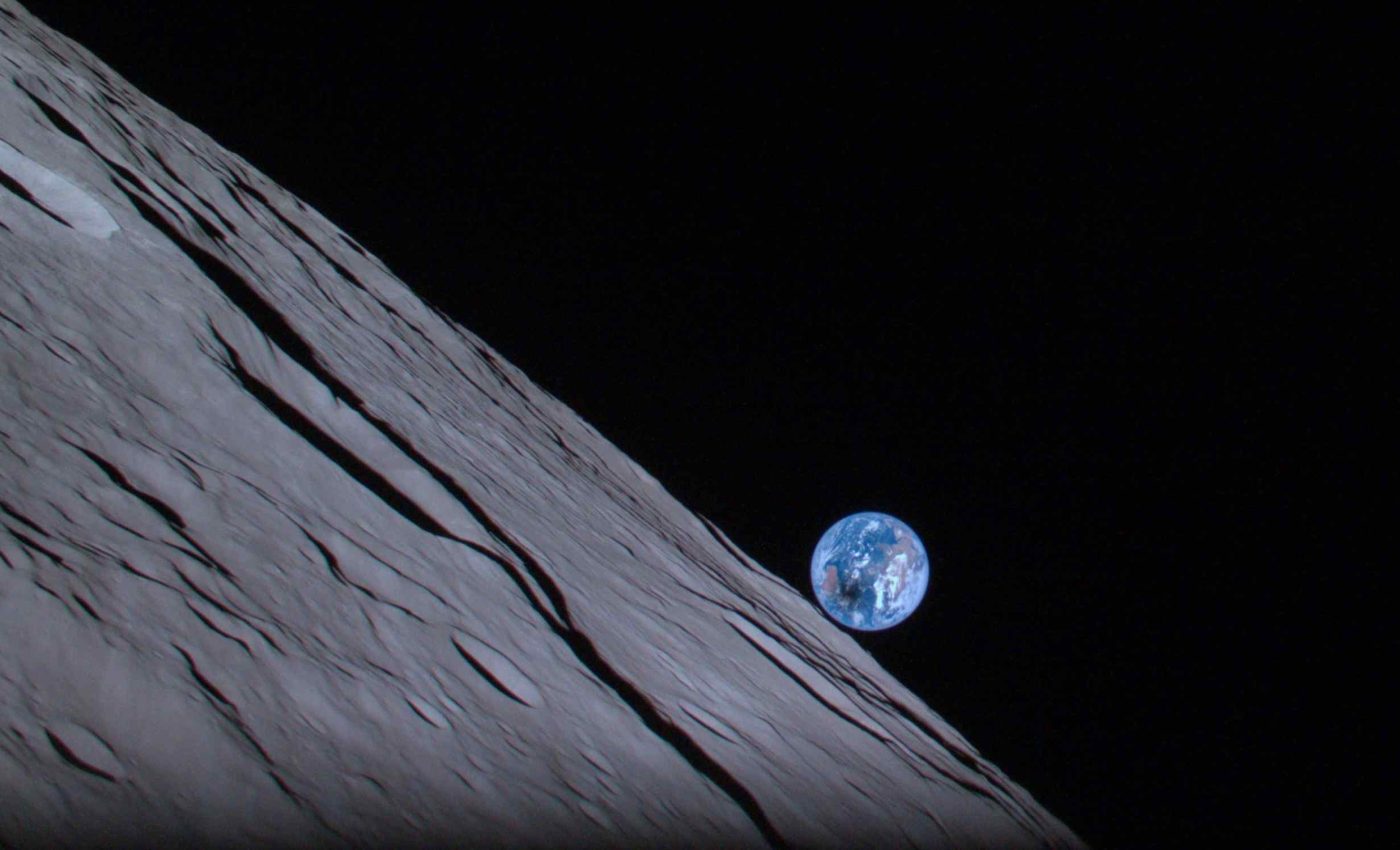
Days before the Japanese lunar lander Hakuto-R crashed into the Moon, its camera snapped an incredible photo of Earth. Seen here, our beautiful blue marble was captured rising above the gray lunar horizon during a total solar eclipse, when the Moon completely blocks the Sun for parts of the planet.
Hakuto-R is a small robotic lunar lander built to land on the Moon. At that moment it was circling about 60 miles above the surface, operated by Tokyo based company Ispace.
Hakuto-r’s Earth photo

Hakuto-R’s camera looked back toward Earth and recorded our planet perched just above the curved lunar horizon.
In the image, the Moon‘s shadow appears as a dark blot over Australia, captured in a widely-shared photo that traces the path where the eclipse turned day briefly to twilight.
Mission leadership came from Japanese entrepreneur Takeshi Hakamada, founder and CEO of Ispace.
His team set out to show that a private company could deliver hardware and data to the Moon, opening a new route for regular commercial transport between Earth and its neighbor.
How Hakuto-R tried to land
Hakuto-R left Earth on a SpaceX Falcon 9 rocket and followed a looping route through cislunar space, the region of space between Earth and the Moon.
This low energy path saved fuel at the cost of taking several months to reach lunar orbit and test its systems.
Once in orbit, the lander rehearsed its braking burns, then lined up a landing attempt near Atlas Crater on the Moon’s northeastern near side.
During the final descent in late April 2023, controllers in Tokyo watched the streaming telemetry, the data signal that shows speed, orientation, and system status, until the connection suddenly went silent.
According to a later report, a sensor software glitch made the lander think it was higher than it really was after it passed a large lunar cliff.
With its computer waiting for a ground contact that never came, Hakuto-R kept firing its last propellant, fuel used to change speed, until the tanks were empty and it dropped the final few miles to the surface.
Why soft landings are so hard
Landing safely on the Moon sounds straightforward, yet the physics fight every move a spacecraft makes. A soft, successful landing demands precisely-timed engine burns on a world with no air to help slow the fall.
NASA planners outline these challenges in a recent whitepaper on future Artemis missions, stressing how crucial accurate altitude sensing, hazard detection, and automatic course corrections are near the ground.
If any of those pieces fail, a lander can come in too fast, touch down at the wrong angle, or strike a hidden obstacle that tips it over or cracks its legs.
One recent study of robotic lunar landers found that unstable landing legs, faulty laser range finders, and software glitches appear again and again in mission failure reports.
Researchers concluded that lunar landing techniques are still maturing, and that careful testing of landing gear, sensors, and control software remains vital for keeping success rates climbing.
Eclipses and Hakuto-R’s Earth photo
Beyond its drama, Hakuto-R’s eclipse image is scientifically useful because it records the Moon‘s shadow on Earth from outside our atmosphere.
Scientists can compare the shape and position of that dark path with predictions from eclipse models to check how well their simulations.
Images like this also show Earth as a single, fragile looking world with swirling weather systems and bright polar ice caps.
Seen from lunar distance, the atmosphere’s thin blue shell and the contrast between land and ocean stand out clearly, helping researchers study how light reflects from our planet as a whole.
Similar views from other missions, such as Apollo 8’s famous Earthrise and several deep space probes, help calibrate instruments that search for Earth like planets around distant stars.
By adding a rare eclipse geometry from lunar orbit, Hakuto-R’s snapshot gives scientists one more data point for understanding how a living planet looks when it briefly falls into shadow.
Where lunar missions go next
Despite the crash, ispace has kept its schedule for follow up missions that aim to carry rovers and science packages to the Moon for customers, including government agencies and private companies.
Each attempt adds experience in navigation, landing algorithms, and surface operations, knowledge that will feed into future commercial cargo runs and support for astronaut missions.
Lessons from Hakuto-R also feed into the wider push for lunar exploration, where national space programs and private firms now share risks and data as they prepare for sustained activity on and around the Moon.
—–
Like what you read? Subscribe to our newsletter for engaging articles, exclusive content, and the latest updates.
Check us out on EarthSnap, a free app brought to you by Eric Ralls and Earth.com.
—–