New fairy lantern species discovered that is already critically endangered



 Follow Earth on Google
Botanists in Malaysia have just described a new species of fairy lantern, a tiny forest plant called Thismia selangorensis.
Because a recent taxonomic study found fewer than 20 of these plants in the wild, conservationists regard it as rare.

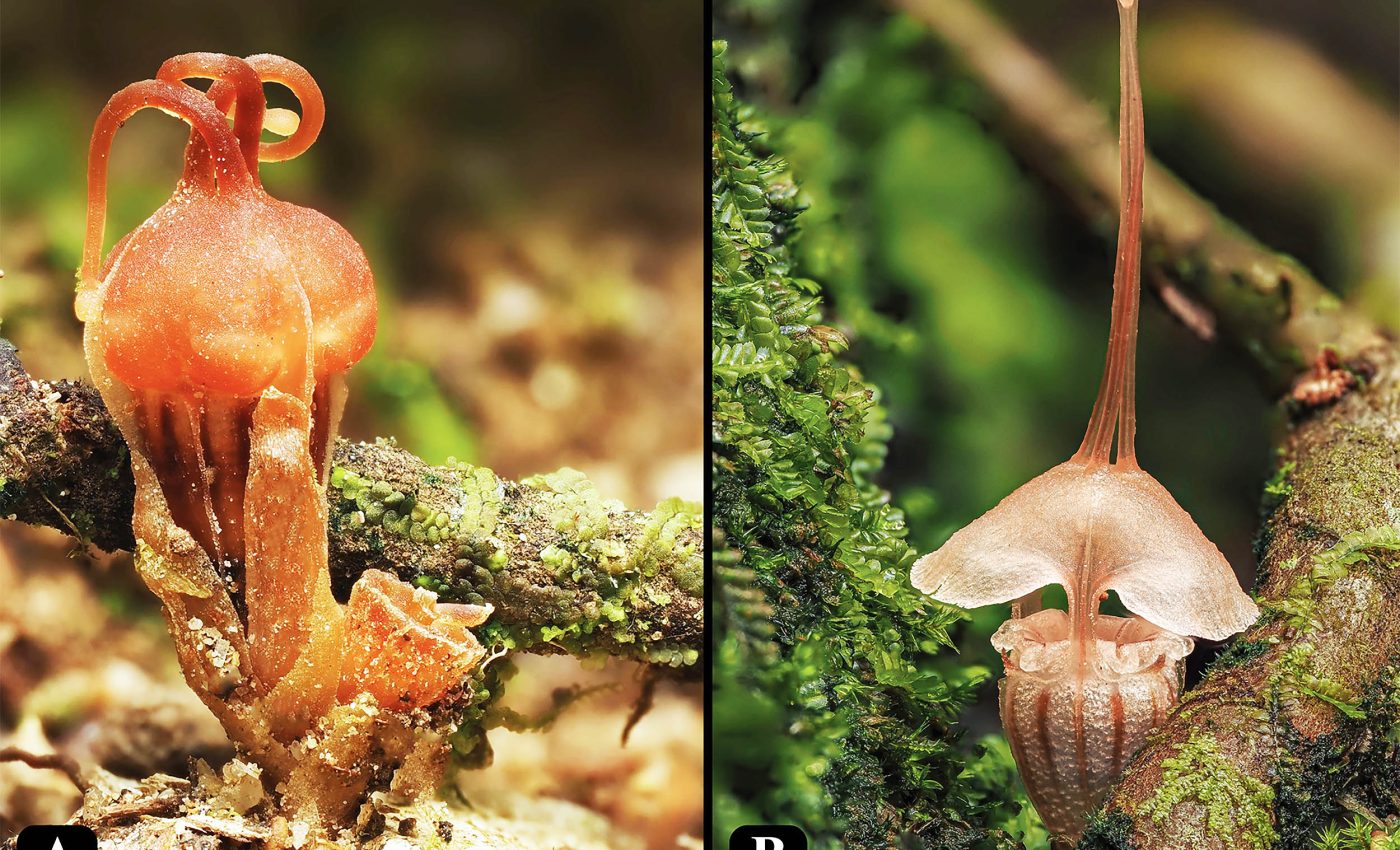
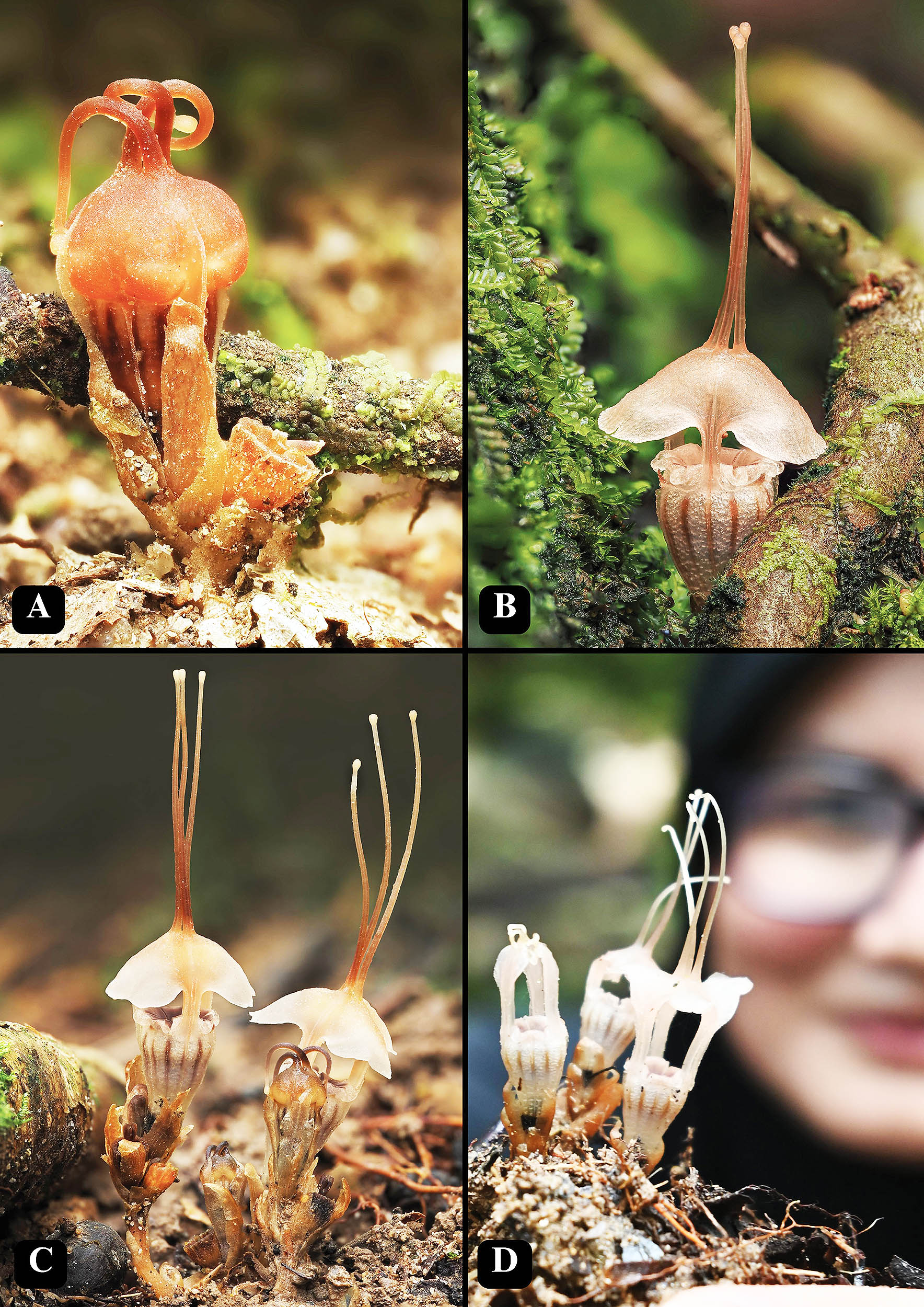
The plant is of modest size, standing just about 4 inches (10 centimeters) tall, and was found on a riverbank in Selangor. It has a peach-pink flower that rises from the leaf litter.
Thismia selangorensis is among a little-known group of plants that never make their own food.
Finding Thismia selangorensis
In November 2023, naturalist Tan Gim Siew noticed the bloom during an outing in Taman Eko Rimba Sungai Chongkak, a forest outside Kuala Lumpur.
It was growing among damp leaf litter near the buttress roots of a riverside tree. This location was right beside footpaths that local families use every weekend.
The work was led by Siti-Munirah Mat Yunoh, a botanist at the Forest Research Institute Malaysia (FRIM). Her research focuses on rare Southeast Asian plants that depend on underground fungi rather than sunlight for survival.
“This discovery shows that significant scientific finds are not limited to remote jungles,” said Mat Yunoh. Her team now has to study a species that lives right beside picnic tables and campgrounds, rather than in far-off wilderness.
All known plants of this species grow in a small patch of lowland forest along a river valley. The area where they occur is roughly one and a half square miles (3.9 square kilometers).
Some individuals sit tucked into tree hollows, while others stand near buttress roots, close to riverside campsites and picnic spots.
Why this fairy lantern looks different
Thismia selangorensis is mycoheterotrophic, meaning that it gets all its food from parasitizing fungi, instead of using sunlight to make its own food.
Unlike most plants, it has coral shaped roots and scale like leaves. Three slender clubs cap its single flower. The flower tube opens into a broad, umbrella-like cap called a “mitre,” – a hood-like flower roof seen only in some fairy lanterns.
In Thismia selangorensis, that cap starts out convex and later flattens and splits into irregular lobes as the flower matures.
Inside the floral tube, the pale peach tissue carries fine, translucent ridges called reticulation. The net-like pattern is unique to this species.
The stamens also show a distinct central rib – a structural ridge that is found in a small cluster of related Malaysian fairy lanterns.
Flowers are present only between October and February, and each shoot produces a single bloom that may last a few days.
If visitors arrive outside that window, the entire population can sit underground and invisible, so even careful surveys may miss it completely.
Life support from fungi
Plants like Thismia selangorensis plug into underground fungal networks, and take carbon that fungi have secured from nearby trees and shrubs.
Work on other fairy lantern species shows that many depend on a narrow set of fungi and insect pollinators.
Thismia selangorensis is completely achlorophyllous – it lacks green pigment entirely, and is thus unable to use light for energy.
That dependence on fungi makes the plant a kind of parasite, but also ties its fate to the health of the forest soil community.
Fragile plants reveal forest health
Because the plants cannot photosynthesize, they survive only where their fungal partners and suitable host trees share the same soil.
That tight dependence helps explain why fairy lantern species often turn up as tiny, localized populations that disappear again between flowering seasons.
For conservation biologists, mycoheterotrophs act as sensitive indicators of mature forest. They vanish quickly when soils dry, become compact, or lose fungal diversity.
Finding a species like Thismia selangorensis in a recreation forest suggests that pockets of relatively undisturbed lowland habitat still survive close to the city.
Lessons from Thismia selangorensis
The research team assessed Thismia selangorensis as Critically Endangered, a label used for species facing a high risk of extinction.
They based this on the IUCN Red List criteria, which highlight the plant’s tiny recorded range and signs of habitat decline.
All recorded individuals form a single population, right next to recreation facilities. This means that a local flood or development decision could erase the entire species. The plants are small enough to be crushed under a single boot along a riverbank path.
An analysis of similar species in parks in Sardinia found that trampling by visitors can threaten plant numbers. Visitors who stray off trails can affect population numbers and flowering success.
The team is urging local authorities to manage access around known sites and to monitor the population while surveys explore nearby forests.
“Understanding its presence is the first step toward ensuring that this extraordinary plant is not lost,” said Mat Yunoh.
The study is published in the journal PhytoKeys.
Photo credit: Gim Siew
—–
Like what you read? Subscribe to our newsletter for engaging articles, exclusive content, and the latest updates.
Check us out on EarthSnap, a free app brought to you by Eric Ralls and Earth.com.
—–