Rare creature with long and sharp spines is found to be a new species



 Follow Earth on Google
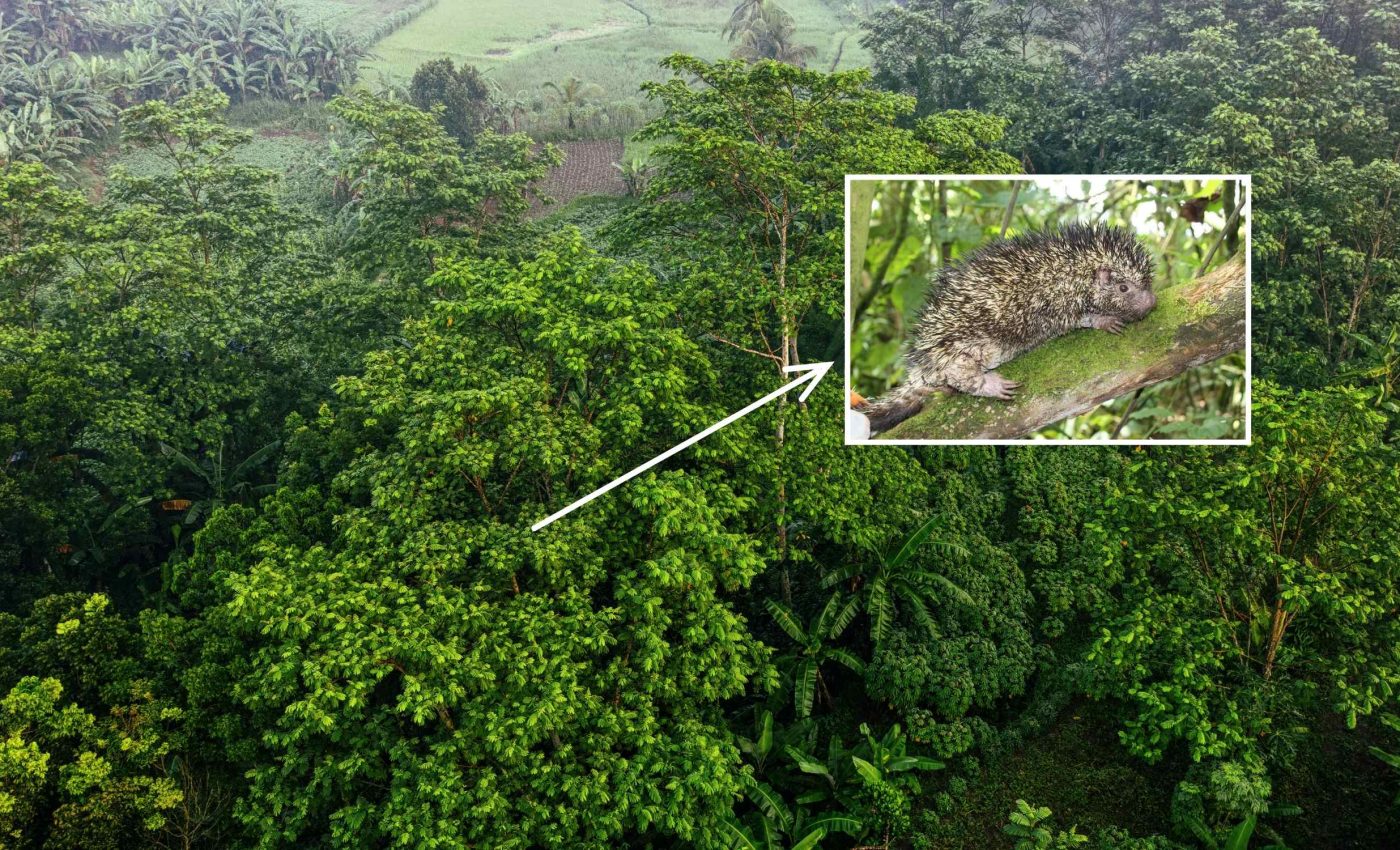
In the forests of central Colombia, a roughly 2-foot long, quill-covered mammal has finally been recognized as new. It is a tree-climbing porcupine now named Coendou vossi, long mistaken for a common relative that lives nearby.
The animal lives in humid and dry forests along the Magdalena River valley and Caribbean foothills of Colombia. By reexamining old museum skins, checking field photos, and collecting new specimens, researchers showed it is not just a local variant.
Piecing together a spiny mystery

Colombia is famous for wildlife, yet many of its small mammals remain, in one researcher’s words, “little studied”. That gap in knowledge set the stage for the porcupine mystery in the country’s central mountains.
The work was led by Héctor E. Ramírez-Chaves, a biologist and associate professor at the University of Caldas in Colombia. His research focuses on mammalogy, the branch of biology that studies mammals.
Looking through records, the team noticed that some specimens of porcupine species, considered to be widespread, inhabited only in a specific part of Colombia. Intrigued, they decided to study that population.
Records of these porcupines were scarce, so the team had to hunt for clues in places most people forget. They searched museum drawers, combed through blurry trail camera photos from farmers, and made night expeditions along muddy forest tracks.
Meet Coendou vossi
The animal that emerged from this detective work is medium sized, with a body that can reach about 2 feet from nose to tail. Its back looks “completely spiny” because soft fur is sparse and thick quills cover the body in creamy, brown, and black bands.
The new porcupine has a small head and surprisingly long prehensile tail, a tail that curls to grip branches tightly. Unlike some relatives whose tails end in bare pads, this tail is completely clothed in multicolored quills.
Voss porcupines are mainly nocturnal and usually rest in tree cavities or small caves during the day. At night they move through the canopy in search of fruit, which makes up most of their diet.
Records show the species is not rare in remaining forest patches, but its quiet behavior makes it hard to spot. It appears to be endemic, found only in Colombia’s inter Andean forests between the Central and Eastern ranges.
Proving Coendou vossi was different
At first, biologists filed these animals under the Quichua porcupine, a widespread species known from Colombia, Ecuador, and Panama.
The puzzle only became clear when they asked if the animals might be a cryptic species, a distinct species that looks almost identical externally.
The team compared skull shape, body size, and tail length among porcupines from museums and recent field collections across the species’ range.
They also sequenced a mitochondrial gene, a genetic barcode found in the cell’s energy making structures, to measure how different the lineages were.
From that paper, the team reports that Magdalena and Caribbean porcupines differ by about 3 percent in that gene sequence from close relatives.
Differences of that size match or exceed gaps seen between other recognized Coendou species, so the genetic evidence strongly backs a separate name.
The researchers also used ecological niche modeling, a computer method that predicts where species can live from climate and habitat data.
Their models confirmed three lineages in the Quichua porcupine complex and showed Coendou vossi restricted to forests of Colombia’s Magdalena valley and Caribbean region.
Forests that still hide new mammals
The discovery sits in one of Colombia’s busiest regions, where farms, oil palm, and cattle ranches have replaced much of the original forest.
Camera trapping research in the central Magdalena River valley recorded 17 mammal species in two working landscapes of fields and scattered trees.
Conservation groups describe the Middle Magdalena Valley as a biodiversity hotspot, an area with many unique species under severe threat.
Tropical dry forest there has been reduced to scattered fragments, making every surviving patch important for animals like Coendou vossi.
Globally, biologists agree that the catalog of mammal life is still incomplete despite centuries of collecting and naming.
One modeling analysis estimates that about 5 percent of mammal species worldwide remain undescribed, waiting in overlooked regions or museum drawers.
Northern South America, with its steep mountains and complex river valleys, is one of the places where those hidden mammals are likely to persist.
Each newly described mammal like Coendou vossi sharpens that global picture and shows where scientists should focus future surveys.
Why this discovery matters
Porcupines may not be as eye catching as jaguars, but they quietly help keep forests functioning. By chewing open fruits and carrying seeds on their fur or in their droppings, they help trees spread into gaps and along forest edges.
They also sit in the middle of food webs as prey for owls, large snakes, and wild cats such as ocelots. When medium sized animals vanish from a landscape, ecosystems can shift quickly as seed dispersal slows and predators lose part of their diet.
The story of Voss porcupine also highlights the hidden power of museum collections and local knowledge.
Without century old skins, blurry photographs from farmers, and workers who noticed something odd, modestly common species like this might never receive formal names.
“For me, it is interesting that there is a huge part of the biodiversity of Colombia that is understudied,” said Héctor E. Ramírez-Chaves.
He has spent years documenting little known mammals in his country and hopes finds like Coendou vossi will inspire more surveys in working landscapes.
The study is published in the Journal of Mammalogy.
—–
Like what you read? Subscribe to our newsletter for engaging articles, exclusive content, and the latest updates.
Check us out on EarthSnap, a free app brought to you by Eric Ralls and Earth.com.
—–