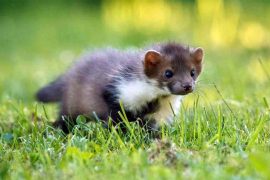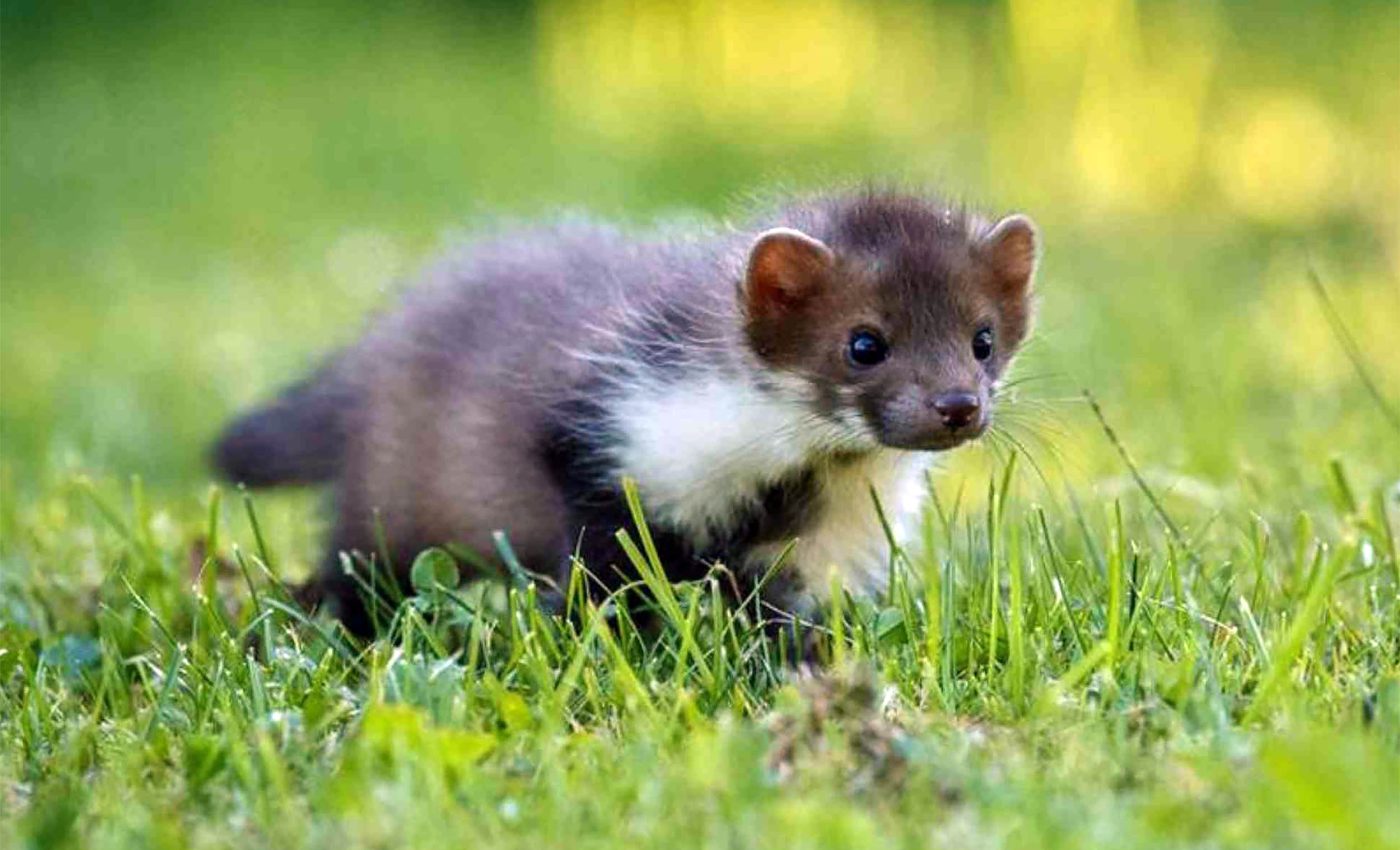
Routine expedition ended with the discovery of a unique animal with a secret ability



 Follow Earth on Google
On a routine wildlife survey in a forest reserve in southwest China, scientists caught a weasel that turned out to be a species no one had recorded before. The animal, now named Mustela mopbie, is the newest member of a famously elusive group of small carnivores.
The discovery happened in the Meigu Dafengding National Nature Reserve (MDNNR), tucked into the Hengduan Mountains of Sichuan Province, where steep forested slopes can rise more than 6000 feet from river valley to ridge over short distances.

In this maze of cliffs, gullies, and dense trees, the new weasel adds one more player to an already crowded cast of wild mammals.
Finding Mustela mopbie
The survey was led by zoologist Qiu Jin Wei of the Chinese Academy of Sciences (CAS). His research focuses on how weasel lineages diversified across Eurasia and how new species can be recognized using both DNA and physical traits.
The team set live traps along forest trails and stream banks to check which small mammals lived in Dafengding.
Among many rodents and shrews, three weasel sized animals stood out because their fur pattern and skull proportions did not match any species known from China.
Back in the lab, the researchers carefully measured the animals, from the length of their bodies and tails to the exact shape of their skulls and teeth.
These measurements suggested a close resemblance to familiar small weasels, but several numbers fell outside the ranges published for any described species.
The scientists wanted to be sure the animals were not just unusual individuals of a known weasel.
They compared the new specimens of Mustela mopbie with museum collections and field guides, looking for any match in color, body proportions, or skull features, and still found that the Dafengding animals did not quite fit.
Miniature hunter with secret skills
Compared with other Asian weasels, Mustela mopbie has a shorter body, a lighter frame, and a very narrow head, which together give it an unusually slim profile.
Those proportions are not just cosmetic, they let the animal move through cracks and tunnels that would stop many other carnivores.
Its tail is shorter relative to its body than in similar species, and the fur shows a distinct pattern that does not match the coats of mountain or least weasels in neighboring regions.
The original description notes that the tail and body coloration together help separate it from other small members of the genus Mustela found in China.
Field notes show that the new weasel can force its way into narrow rock crevices and abandoned rodent burrows in search of prey.
That secret ability allows it to hunt insects and small rodents that hide deep inside the forest floor, where many larger predators cannot follow.
By hunting insects and small rodents, Mustela mopbie fits into the center of the forest’s food network. It feeds on animals that eat seeds and vegetation, and it may itself be taken by larger carnivores or raptors in the reserve.
Genomes, skulls, and speciation
To test whether the Dafengding animals really represented a new species, the team combined traditional measurements with modern genomic, full sets of DNA in an organism, data.
They sequenced complete mitochondrial genomes and large sets of nuclear genes, then compared those sequences with data from other weasel species across Eurasia.
The genus, a group of closely related species, Mustela has long been described as containing around seventeen weasel species worldwide, divided into smaller and larger forms based on skull and tooth details.
These earlier studies already hinted that small weasels form their own clusters within the genus, separate from bulkier polecats and mink-like species.
The new analysis uses tens of thousands of genetic markers to place Mustela mopbie close to the mountain weasel Mustela altaica and the least weasel Mustela nivalis, even though its outward appearance overlaps with the yellow bellied weasel Mustela kathiah and M. nivalis.
The researchers also found that gene trees built from mitochondrial DNA did not perfectly match trees built from nuclear genes, a pattern known as introgression, long term gene flow between related species.
That mismatch suggests that Mustela mopbie or its ancestors may have interbred with nearby weasels in the past, leaving a trace of mixed ancestry in its genome even as it evolved its own distinct body plan.
Lessons from Mustela mopbie
Small carnivores like Mustela mopbie often respond quickly to changes in prey numbers, forest structure, or human disturbance, because they reproduce fast and use relatively small home ranges.
Ecologists sometimes treat such species as indicator organisms, whose population trends can reveal early warning signs in the wider ecosystem.
In the Hengduan Mountains, small mammals have already been used to estimate how much mercury larger predators ingest each day.
One recent analysis calculated daily mercury intake for more than twenty carnivore species in the region and showed that mustelids generally receive lower doses than big cats and bears, but still carry measurable contamination in their tissues.
Because Mustela mopbie lives in rocky slopes and burrows where pollutants and climate stress can accumulate, tracking its genetics and population size over time could reveal how mid-sized predators cope with warming temperatures and changing land use.
Its position between insect eating shrews and top predators also makes it useful for understanding how energy and contaminants flow through this mountain ecosystem.
Taxonomists see another benefit in discoveries like this one. Each newly described species adds a clear label and genetic reference point that helps other researchers interpret camera trap images, environmental DNA samples, and fossil remains from across Asia.
—–
Like what you read? Subscribe to our newsletter for engaging articles, exclusive content, and the latest updates.
Check us out on EarthSnap, a free app brought to you by Eric Ralls and Earth.com.
—–