Biologists find the evolutionary explanation for why some fish change sex



 Follow Earth on Google
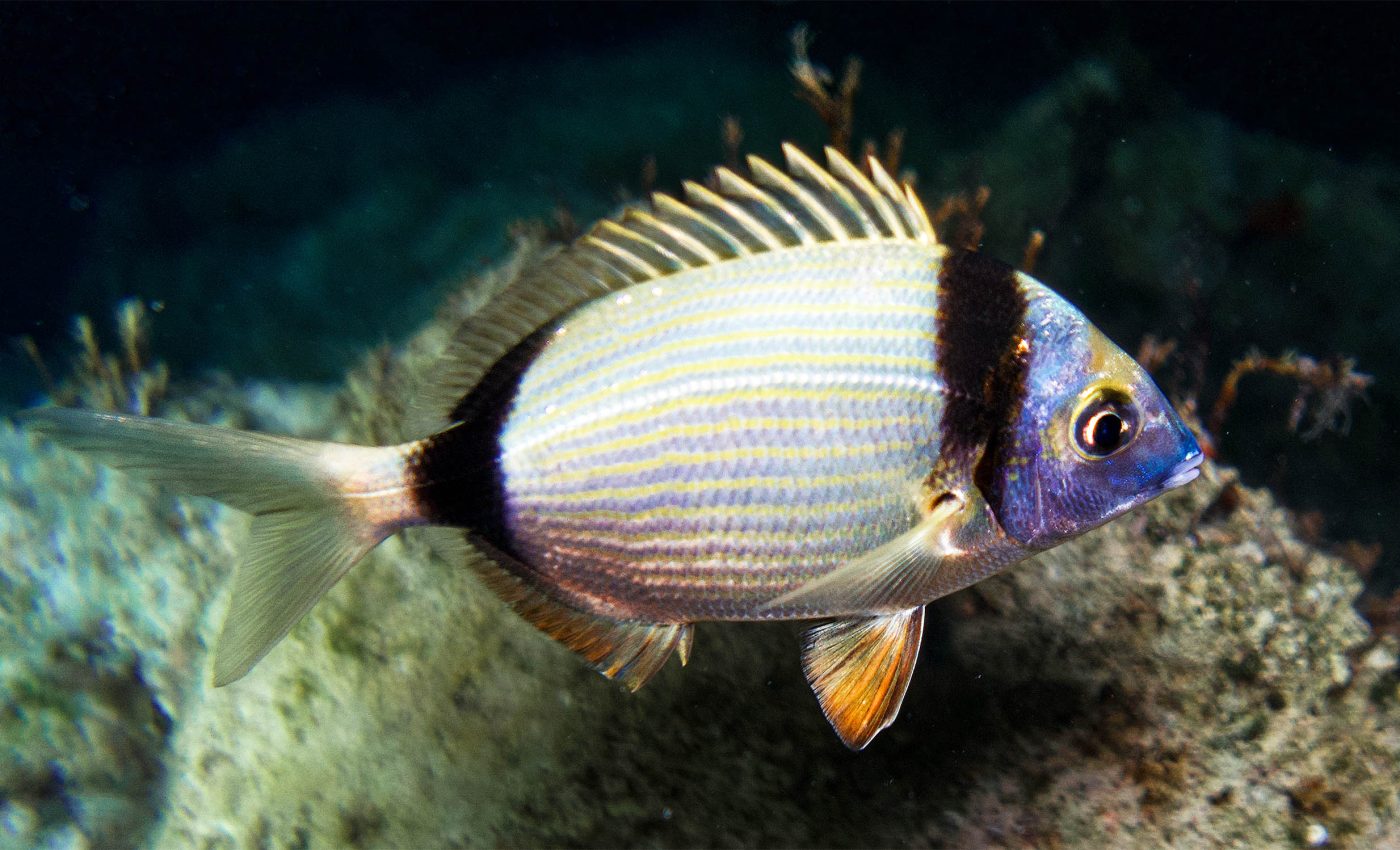
Some seabreams start life as one sex and finish as the other, using sex change as part of their normal growth. In a study of 68 seabream species, researchers uncovered how this switch evolved and why one path demands extra sperm.
Their work follows family trees of these coastal fish across deep time, tracing how different sex strategies first appeared.

It also measures how much body weight males devote to their reproductive organs, offering clues about how fiercely they compete to fertilize eggs.
Why seabream fish switch sex
The work was led by Susanna Pla, a biologist at the Institut de Ciències del Mar of the Spanish National Research Council in Barcelona.
Her research explores how sex change, sex determination, and environment interact to shape fish reproduction in both wild populations and aquaculture species.
Many seabreams use sequential hermaphroditism, changing sex once during their lifetime, usually after they reach adulthood or a critical size.
They function first as one sex, then switch to the other and never switch back. Other relatives keep the same sex from birth to death, a pattern called gonochorism, where individuals are male or female but never both.
Having both strategies in one family of fish gives biologists a natural test bed for ideas about why sex change evolves.
One key idea is the size advantage model, favoring sex change when large size helps one sex more in winning mates or producing offspring.
Research used this model to test how changes in mating behavior cause sex change to appear or disappear in fish lineages.
Tracing family trees of seabreams
Seabreams belong to the Sparidae family, which includes about 150 coastal species living mostly in warm and temperate seas.
“The Sparids are an ideal group of fishes in which to study the evolution of sexual systems,” noted Pla and colleagues.
Within that sample, one set of species shows protandry, first maturing as male then changing to female later in life.
These fish start small, fertilize eggs early, and then grow into large, highly fertile females over several breeding seasons.
Another group shows protogyny, beginning life as female and shifting to male after growing larger.
The remaining seabreams keep fixed sexes, so together the family covers almost every sexual system seen in fish within a single evolutionary group.
By mapping these strategies onto a family tree, the team found that fixed sex species can evolve into either kind of sex changer.
They also concluded that “sequential hermaphroditism is an evolutionary unstable state,” wrote Pla and her coauthors after tracking repeated returns to fixed sexes.
Seabreams, sex, and sperm
To uncover the hidden costs of each strategy, the researchers turned to the gonadosomatic index, a measure that compares gonad weight to body weight.
Across fishes, a classic analysis showed that higher gonadosomatic index values go hand in hand with intense male rivalry to fertilize eggs.
In the seabream study, males of fixed-sex species had fairly high gonadosomatic index values across the spawning season.
Those numbers fit expectations for fish that often mate in large groups where many males release sperm together.
The surprise came from male first sex changers, whose males showed the highest average gonadosomatic index in the whole dataset.
Some of those species mostly spawn with one male and one female, so intense direct competition between many males cannot fully explain the pattern.
Pla and colleagues suggest that small males must stockpile sperm to fertilize the huge clutches of eggs produced by much larger mates.
In that view, the extra gonadosomatic index is a compensatory investment that lets tiny males keep up with the reproductive output of giants.
Lessons from seabream sex
Sequential hermaphroditism clearly predominated over simultaneous hermaphroditism,” wrote Pla and colleagues.
The new seabream work shows how that global tendency plays out within one fish family that shapes fisheries on rocky and sandy coasts.
For fisheries managers, knowing whether a stock is male first, female first, or fixed sex matters because removing big individuals can distort sex ratios.
When sex changing species have uneven investment by each sex, fishing can shift their breeding systems in ways managers may not anticipate.
For students learning about evolution, this kind of work shows that even being male or female can be surprisingly fluid in the ocean.
By tying family history, behavior, and tiny sperm filled organs together, Pla and colleagues reveal an evolutionary secret hiding inside fish bodies.
The study is published in Scientific Reports.
—–
Like what you read? Subscribe to our newsletter for engaging articles, exclusive content, and the latest updates.
Check us out on EarthSnap, a free app brought to you by Eric Ralls and Earth.com.
—–