Thousands of dinosaur tracks found in Bolivia set a new world record



 Follow Earth on Google
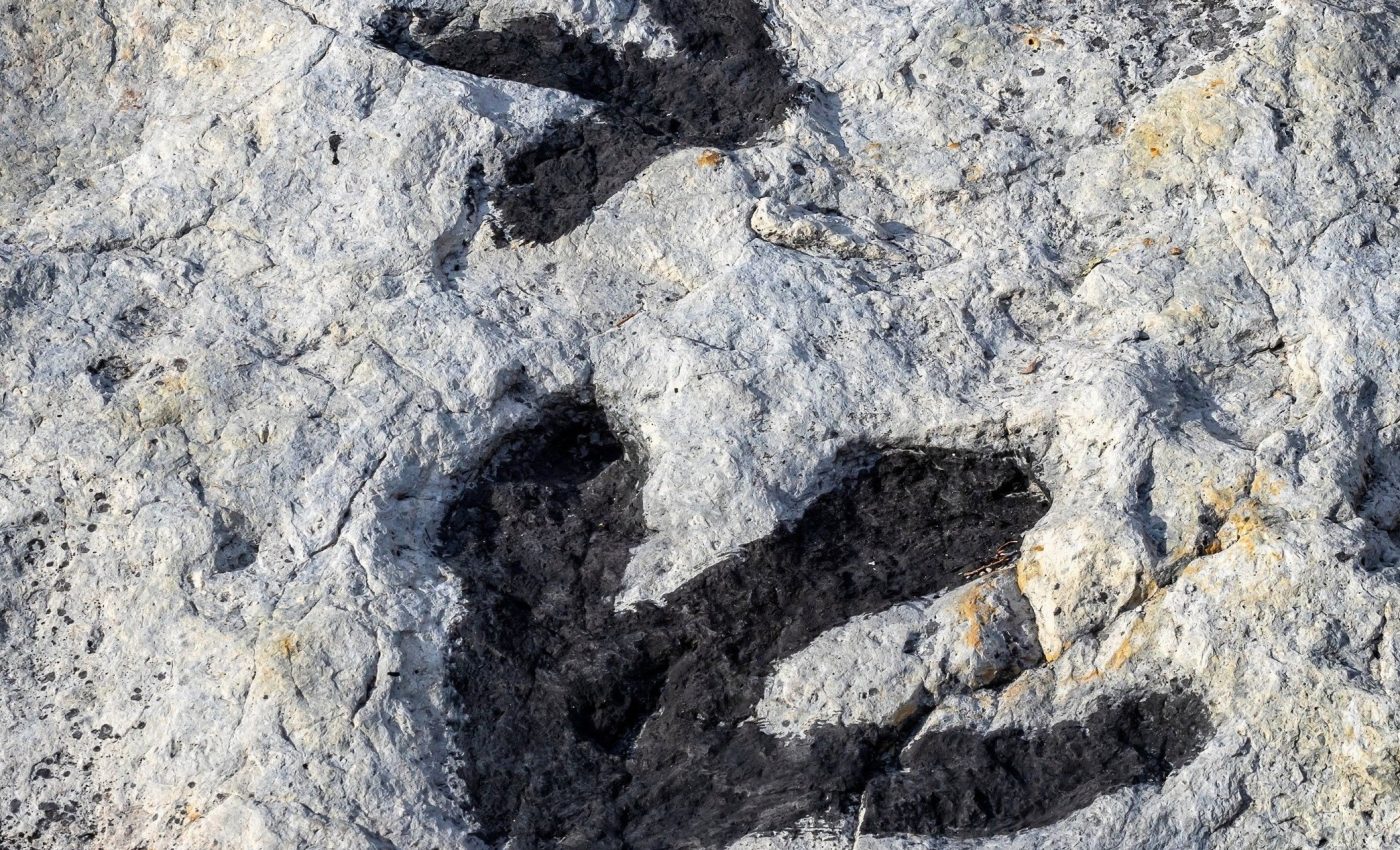
Near the end of the dinosaurs’ reign, about 16,600 footprints pressed into wet mud along a shoreline in central Bolivia.
Those tracks now form a single exposed rock surface in Torotoro National Park, revealing a crowded scene frozen in time.
Dinosaur tracks reveal a busy route

The work was led by Raúl Esperante, a paleontologist at the Geoscience Research Institute (GRI) in California. His research focuses on ancient coastal environments and what dinosaur tracks can reveal about behavior and habitat.
Carreras Pampa sits in a small valley where erosion peeled back a flat slab of gray limestone. That surface covers just under two acres, all belonging to a single layer of rock that once lay on a coastal plain.
Many paths on one rock surface
Within that surface, the team marked off nine study zones where footprints cluster in different concentrations. The zones sit on the same flat rock sheet, so every track comes from nearly the same moment in geologic time.
The researchers counted 1,321 continuous paths and 289 lone prints, representing individual animals moving across the surface in separate passes.
All of the measured footprints were made by three-toed theropods, the mostly meat-eating dinosaurs that walked on two legs, or by their close bird relatives.
Dinosaurs moving at a steady pace
Each line of footprints, called a trackway, records one animal as it moved across the mud.
Paleontologists read the spacing, depth, and shape of the prints to estimate speed, body size, and how the animal balanced with each step.
At Carreras Pampa, many trackways have long stride lengths and narrow step patterns that match animals moving at a steady running pace.
Compared with other dinosaur sites, a larger proportion of these trackmakers were moving at a faster gait rather than strolling slowly.
Traces of walking and swimming
In some parts of the surface, the footprints plunge into deep-walled pits that show where the ground was soft and waterlogged.
Nearby, shallow claw scratches and sinuous grooves mark moments when toes scraped the bottom and tails dragged behind dinosaurs moving through shallow water.
Similar trace fossils appear at another shoreline site in the same region. Earlier research described mixed trackways there, with both walking prints and long marks from dinosaurs swimming in shallow water.
Dinosaur tracks set new records
The detailed study led by Esperante confirmed that Carreras Pampa holds the greatest number of dinosaur footprints ever recorded at a single site.
The same region set records for the number of trackways, tail traces, and continuous swimming trails preserved on one rock surface.
Across the exposed slab, there are a few footprints in every square yard of rock. That density turns Carreras Pampa into a natural classroom for ichnology, the study of fossil tracks and other movement traces.
Most dinosaur tracksites around the world are far sparser than this Bolivian expanse. Many famous locations preserve only a few dozen impressions, with large stretches of bare stone separating one set of prints from another.
Reconstructing a lost shoreline
At Carreras Pampa, most footprints point roughly northwest to southeast, with only a minority heading in other directions.
The orientation of the tracks matches tiny ripple ridges in the rock that mark an ancient paleocoastline, a former shoreline now preserved inside limestone.
Some trackways run side by side for many steps without crossing. That pattern hints that small groups of dinosaurs paced along the same watery route at different times during a short window.
Deeper pits and tail drags often cluster in slight depressions on the surface. These areas probably stayed wetter longer, so dinosaurs sank farther as they waded through shallow pools near the shoreline.
In a few places, tightly curved paths record sharp turns. Those curves show dinosaurs slowing, pivoting, and then setting off in a new direction – behavior rarely captured in the fossil record.
Dinosaur tracks in a crowded community
Dinosaur trackways in many parts of the world already show that footprints can reveal social behavior and hunting styles. In Canada, a set of tyrannosaur trackways preserved three large predators walking side by side across a muddy flat.
Carreras Pampa adds a different view, showing a community dominated by small and medium theropods that lived close to the waterline.
Many of the trackmakers had hip heights under four feet, so this shoreline was crowded with modest sized predators and their bird cousins.
The same research team has described other Bolivian tracksites with swim traces, sudden stops, and unusual kicking marks preserved in similar rocks.
The study is published in the journal PLOS One.
—–
Like what you read? Subscribe to our newsletter for engaging articles, exclusive content, and the latest updates.
Check us out on EarthSnap, a free app brought to you by Eric Ralls and Earth.com.
—–