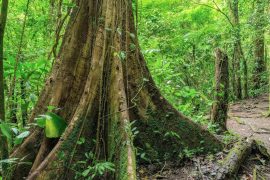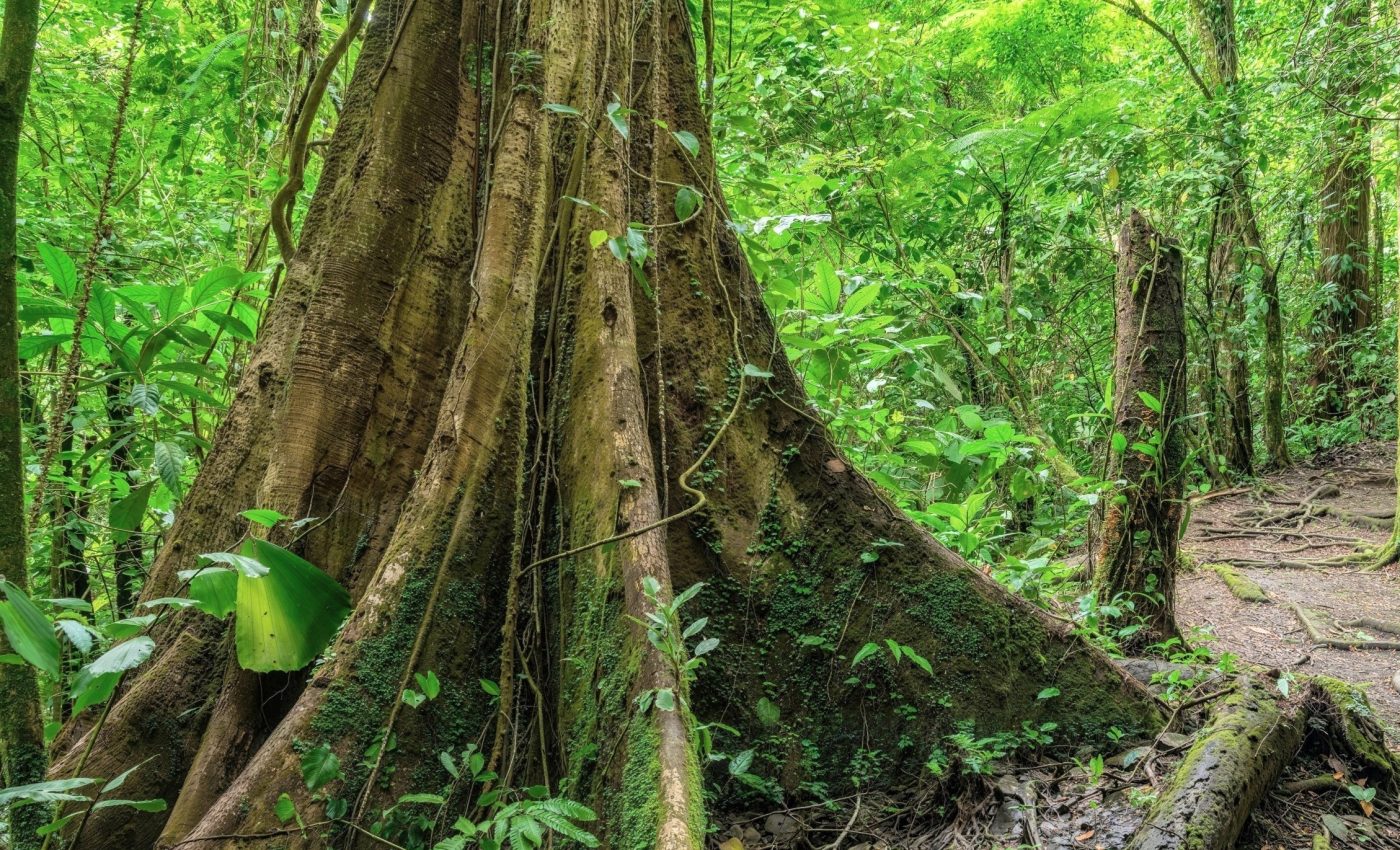
Tropical trees are growing deeper roots to survive droughts



 Follow Earth on Google
Some tropical trees are reaching deeper for water as droughts intensify. In a new study, scientists saw surface fine root growth fall about 50 percent, while deeper roots increased during dry periods.
The study was led by experts at Colorado State University. The team tracked roots down to about 3 feet across four forests in Panama.

The researchers used repeat measurements to capture how roots behaved through wet and dry periods.
Why deep tree roots matter
Plants pull in water and nutrients through fine roots, slender roots under a tenth of an inch that do most of the absorbing. When near surface soil dries, these roots are first to lose function.
The work was led by Professor Daniela Cusack, who studies tropical forest biogeochemistry and climate resilience.
Roots anchor a large share of stored carbon in tropical soils. When they die back in dry spells, the forest can lose biomass even before leaves show stress.
Deeper growing roots, by contrast, tap moisture that lingers below the surface. They act as a hedge when the top few inches turn dusty.
Testing the impacts of drought
The researchers used a method that blocks part of the rain from hitting the ground to create chronic drying. Clear roofing over small plots reduced water reaching the soil without shading the plants.
They paired that with minirhizotron, a clear tube used to slide a camera underground, to watch roots grow and die over time. This allowed repeated measurements without digging up the forest floor.
Four Panamanian forests spanning different rainfall and soils were included in the study. The team sampled across dry and wet seasons to separate natural swings from the experimental drying.
The researchers measured root production near the surface, from 0 to 4 inches, and at depth to roughly 3 feet. They also assessed fungal partners that help roots take up water and nutrients.
Shifting deep roots
Surface fine root production dropped by about 50 percent in dried plots at 0 to 4 inches. Live surface root biomass also declined by about 21 percent.
At depths beyond roughly 2 feet, root growth rose in the dry season, and under the drying treatment in most sites. This activity was strongest at the deepest layers measured.
Colonization by arbuscular mycorrhizal fungi, symbiotic fungi that help roots access water and nutrients, increased under chronic drying.
The plants also grew slightly thicker fine roots in surface soils during the late wet season. Specific root length, a trait sometimes linked with drought response, did not consistently change.
That suggests forests can reallocate biomass downward and lean more on fungal partners rather than make uniformly thinner roots.
How deeper roots help
Decades of research in Panama shows that some trees draw water from deeper layers during the dry season. Those with access to deep moisture keep water use more stable when surface soils bake.
Another study found plants switched to water more than about 2 feet down by late dry season. Soil moisture at those depths stayed relatively high even when the topsoil dried.
During extreme drought, deep water access predicted survival for vulnerable species in Panama. Deep roots can buy time by delaying dehydration.
In the field study, deeper roots grew when and where water persisted, even as surface roots declined.
Predicting how forests will adapt
Long-term changes in rainfall patterns could force tropical forests to reorganize how they use water and nutrients.
Some species may adapt by shifting more energy into deeper roots, while others may lose ground if they cannot reach stable water supplies.
Soil communities may also change as conditions swing toward drier periods. Fungal partners that help roots absorb water could become even more important as forests adjust to extended dry seasons.
What remains unclear
Tropical forests store vast amounts of carbon belowground. If surface roots die faster than deep roots grow, net soil carbon could still fall.
“This finding shows that even while tropical forest roots in surface soils die off under drought, representing a carbon loss to the forest, some trees are able to send roots deeper in search of moisture, potentially helping rescue the forest,” Cusack said.
Across many species, a large meta-analysis shows that plants with these fungal partners often tolerate drought better. The Panamanian forests increased those partnerships under chronic drying.
“How extensive this rescue effect might be is unknown, and the increase in deeper roots is not enough biomass to offset carbon losses from much more extensive root death in the surface soils,” said Cusack.
The study is published in the journal New Phytologist.
—–
Like what you read? Subscribe to our newsletter for engaging articles, exclusive content, and the latest updates.
Check us out on EarthSnap, a free app brought to you by Eric Ralls and Earth.com.
—–