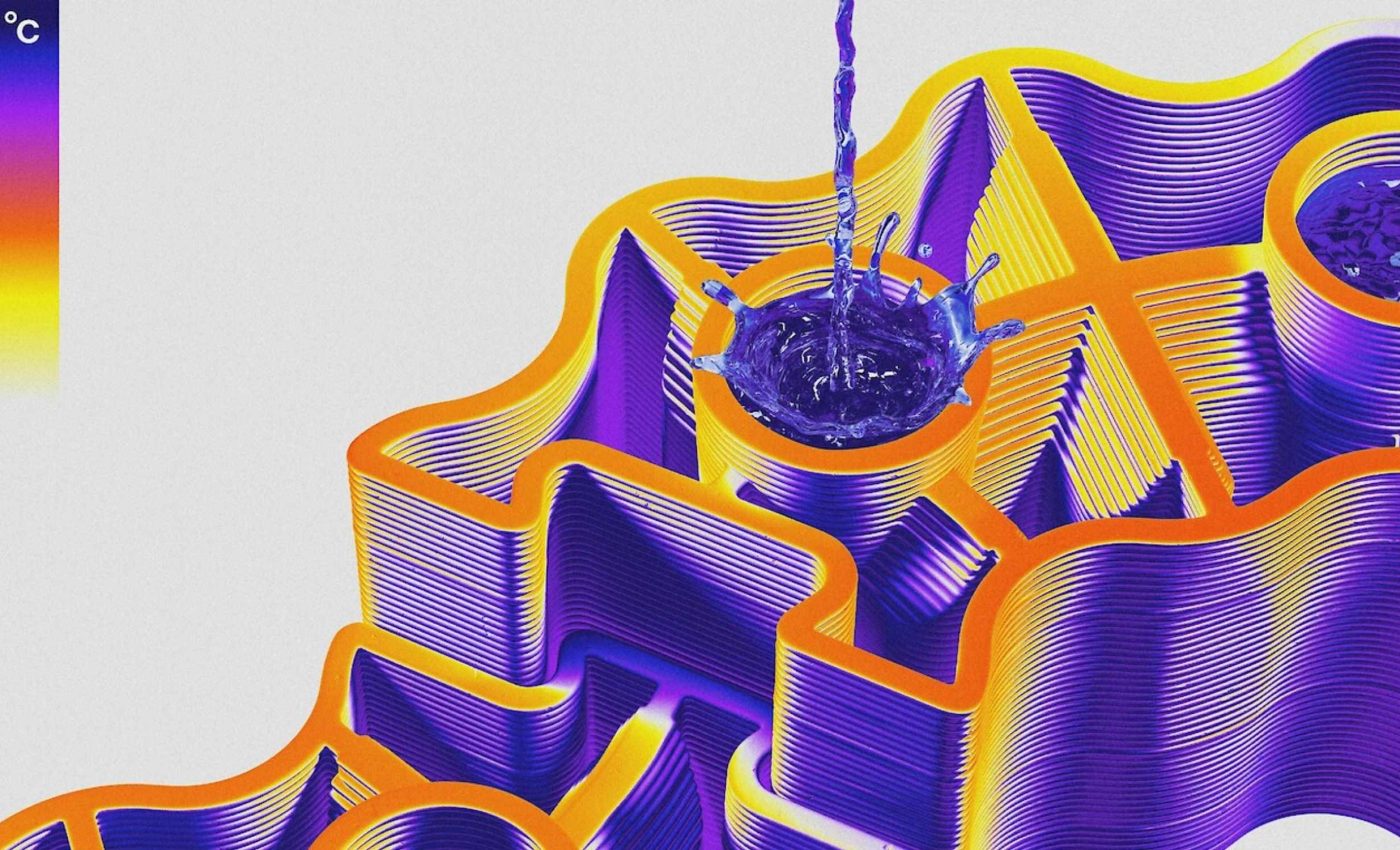
Two young people design a brick capable of cooling cities without using electricity



 Follow Earth on Google
Two young designers have built a brick based system that can cool the air at bus stops, schoolyards, and plazas without using electricity from the grid.
Their stack of terracotta modules turns searing paved spaces into small pockets of safer air on sweltering days.

The concept, called bloc°, was developed in Switzerland as a response to summers that now stretch out as long, dangerous heat waves in many cities.
It aims to protect people who must spend time outside to work, commute, or simply wait, even when temperatures soar.
Why city heat feels so intense
The work was led by the Zurich University of the Arts (ZHDK) in Switzerland through its industrial design bachelor program, where students explore climate adaptation, actions that reduce harm from climate change.
Teachers there push design teams to rethink ordinary city objects so they protect people during hotter, wetter, or more unpredictable weather.
Across the world, satellite temperatures show that city surfaces often run 10 to 15 degrees Celsius hotter than nearby rural land on summer days.
Dark roofs, asphalt, and a lack of trees soak up heat and radiate it back onto people waiting at places like bus stops.
Scientists call this pattern an urban heat island, a citywide bubble of higher temperature caused by hard, sun soaked surfaces.
When heat waves strike, these islands can keep nights dangerously warm and leave little chance for bodies or buildings to cool down.
One global estimate links hundreds of thousands of deaths each year to heat exposure, many of them in Europe and Asia.
Recent research also finds that in the United States, extreme heat is now the leading weather related cause of death, ahead of floods and storms.
bloc° brick cools hot cities
Two industrial design students turned that big city problem into a compact solution by creating bloc°, a stackable brick based structure sized for sidewalks and plazas.
Their design uses 3D printed terracotta, a porous fired clay that naturally soaks up water, to form the outer shell of each cooling unit.
Inside each unit, warm air moves through wet clay channels while a small solar powered fan keeps water circulating around the brick.
This process, called evaporative cooling, water changes to vapor and carries heat away, letting the bloc° project cool air by 9 degrees Celsius in testing.
Water trickles through the interior from a small reservoir and can be refilled from city pipes or by rain that lands on the sculpted top surface.
The team treats bloc° as a passive cooling approach, cooling that relies mostly on natural processes rather than power hungry mechanical air conditioners.
Because each unit can be placed alone or stacked into walls or clusters, bloc° behaves like a modular system, repeating pieces that can be combined in many ways.
Different cities could arrange these bricks beside bus shelters, around benches, or near school entrances depending on where people need the most relief.
Terracotta brick cooling works
In laboratory tests, engineers have built terracotta tube panels that cool air as it flows through moist clay surfaces. One engineering study showed that air leaving such a panel in India was several degrees cooler than the air coming in, even though the system only used a small electric pump.
A previous engineering paper explained the cooling principle in simple terms, noting that evaporative cooling works by letting a liquid absorb heat as it turns to vapor. That kind of explanation lines up closely with how bloc° moves water and air through its terracotta body.
Traditional clay pot cooler, a simple nested clay pot fridge that works without power, designs used for food storage in hot regions show a similar effect.
One field report describes how these coolers can keep the air inside about 10 degrees Celsius below the surrounding temperature and extend the life of fruits and vegetables.
Bloc° borrows from that tradition and from natural patterns seen in cacti and termite mounds. The project entry explained that these types of biomimetic systems show how design can work with nature to cool air through evaporation and self shading.
Designing for real people
To fit crowded sidewalks, bloc° is shaped as a low wall that people can rest against while they wait. Its curved surfaces create small shaded spots and help channel air through the wet interior.
The design draws on biomimetic forms, using ridges and hollows inspired by natural systems to guide airflow and reduce heat. Digital modeling lets the team refine these details.
They tested the full scale layout in virtual reality to see how it worked beside street furniture. The water reservoir and pump were also arranged for quick access so crews can keep the system running smoothly.
Why passive cooling matters
As summers grow hotter, many cities struggle to protect people who lack air conditioning or who work outdoors. Small systems like bloc° cool the exact spots where heat affects people most without trying to chill entire neighborhoods.
Its clay, water, and solar based design avoids refrigerant gases and works even where power grids are strained. That makes it useful in places where residents have limited access to electricity.
In many areas, those most exposed to heat have the fewest resources. Simple cooling at bus stops, markets, and school entrances can offer basic protection throughout the day.
These bricks do not replace broader climate efforts, but they can support city plans that add shade, trees, and reflective surfaces while using far less energy than mechanical cooling.
Lessons from cooling bricks
Projects like bloc° bring engineering, architecture, and public health together. They use simple physical principles to create structures that protect people in the hottest parts of a city.
Research on terracotta tubes shows that water soaked clay can lower temperatures by several degrees without heavy machinery. That evidence points to the potential for larger cooling walls or walkways built from similar materials.
Designers will likely keep testing new brick shapes and placements to see how much cooling they can achieve with minimal water and power.
With enough support, brick based shelters could become common features in hot regions, offering steady relief in real world conditions.
Image credits: ZHdK.
—–
Like what you read? Subscribe to our newsletter for engaging articles, exclusive content, and the latest updates.
Check us out on EarthSnap, a free app brought to you by Eric Ralls and Earth.com.
—–