Artificial beaver dams may help protect rivers from climate stress



 Follow Earth on Google
Beavers are back in the conversation as rivers across the Pacific Northwest come under growing stress. Summers run hotter, snow melts earlier, and streams shrink when fish need cold water the most.
Land managers are trying many ideas to slow the damage. One potential solution borrows a trick straight from nature.

Instead of concrete or steel, some restoration projects now use sticks, mud, and plant matter to slow water down.
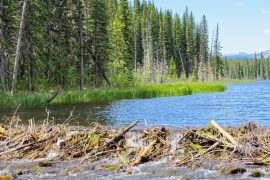
These human-built structures copy what beavers have done for thousands of years. They are meant to hold water in the landscape longer, cool streams, and bring life back to worn-out waterways.
The idea sounds simple, yet it involves modern climate science, wildlife biology, and land management.
The need for artificial beaver dams
Beavers once shaped much of North America’s rivers and streams. Their dams created deep pools, spread water across flood plains, and kept wetlands alive through dry months.
That changed in the 1700s and 1800s. The fur trade pushed beavers close to extinction. Rivers straightened, wetlands dried out, and many species lost habitat.
Beaver numbers have recovered somewhat, but they are still far below historical levels. As climate change puts new pressure on waterways, interest in beavers has returned.
When real beavers are absent or slow to return, people sometimes step in and build what are known as beaver-dam analogs.
These structures aim to recreate the effects of beaver dams, even if no actual beavers show up.
Beaver restoration shows promise
In a recent review, experts looked closely at how well these efforts actually work. The team reviewed 161 studies that examined beaver-related restoration projects.
The results suggest real promise – along with real uncertainty. The review found strong evidence that beaver-style restoration can help streams handle climate stress.
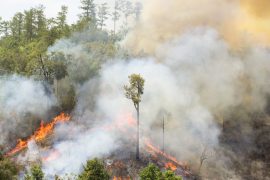
The potential benefits include cooler summer water, more stored water, better connections between rivers and flood plains, greater biological diversity, and increased resistance to wildfires.
At the same time, many questions remain unanswered. Results from one river do not always translate to another. Stream size, landscape shape, vegetation, and local wildlife all matter.
Jonah Piovia-Scott, associate professor in the School of Biological Sciences at WSU Vancouver, is the study’s senior author.
“There’s a fair amount of active research, but the extent to which this practice is being implemented is far outpacing the research on the subject,” said Piovia-Scott.
“There’s a lot of good evidence coming out, but there’s still a lot of work to be done to bridge the gap between the potential benefits and what’s actually happening on the ground.”
A success story, with limits
One well-known project sits along Bridge Creek in Oregon, a tributary of the John Day River.
There, ecologists built a series of artificial dams using woven willows and other plant materials. Over time, fish numbers rose, including threatened steelhead.
The work has drawn national attention. It shows how beaver-mimicry projects can improve fish habitat and support population growth. Still, even this success comes with caveats.
“That series of studies is fantastic and it’s really a great example of how these beaver-mimicry practices can improve fish habitat and contribute to fish-population growth,” Piovia-Scott said. “It’s not at all clear whether those benefits will accrue in other systems.”
Rivers differ widely. A method that works in one watershed may fail in another. Scaling up without careful study could waste money or even harm ecosystems.
The value of partnerships
Much of this work happens through partnerships. Tribes, nonprofits, and local groups often lead restoration projects.
These locals know the land and the rivers. What they often lack is time and funding for large research studies.
Scientists bring tools for measuring outcomes over years, not just seasons. When both sides work together, the results improve.
“I work with a lot of restoration practitioners, and they have way more on the-ground expertise in so many things than I do as a researcher,” Piovia-Scott said.
“What they don’t have is a lot of capacity to conduct large-scale research projects – they may have the skills, but it’s usually not what their organizations are funded to do.”
“So, there’s a tremendous amount of knowledge around restoration practices that can be generated through these partnerships.”
Artificial beaver dams are not a guarantee
Artificial beaver dams are not a silver bullet. They will not fix every river or replace real beavers everywhere. Still, they offer a low-cost, nature-based way to help streams survive a warming world.
The challenge now is balance. These projects are spreading quickly, especially in the Pacific Northwest. Science needs to keep pace.
Careful study, shared knowledge, and honest limits will decide whether beaver mimicry becomes a lasting tool or a passing trend.
For rivers under pressure, the stakes are high. The work continues, stick by stick and stream by stream.
The full study was published in the journal Restoration Ecology.
—–
Like what you read? Subscribe to our newsletter for engaging articles, exclusive content, and the latest updates.
Check us out on EarthSnap, a free app brought to you by Eric Ralls and Earth.com.
—–