Backyard ants could help fight drug-resistant superbugs



 Follow Earth on Google
Antibiotic resistance is rising, but a surprising ally may be walking just under our feet.
A team led by Auburn University entomologist Clint Penick has shown that common ants deploy sophisticated antimicrobial strategies that have stayed effective for millions of years.

The research offers clues for how humans might use antibiotics more wisely today.
“In our study, we tested how ants use antibiotic compounds to fight off pathogens and asked why their chemical defenses remain effective over evolutionary time,” said Penick.
The backyard chemists we overlooked
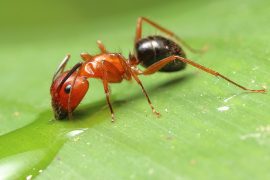
Rather than scouring exotic jungles, the researchers focused on six ant species that thrive across the southeastern United States – the same species that wander lawns, sidewalks, and campus greens.
“These are the ants that live in our backyards and live on college campuses,” Penick said. “And yet some of the most powerful antibiotics we found come from ants we typically consider pests, like fire ants.”
That simple choice – study what’s right here – paid off. The team found compelling evidence that ants maintain potent chemical defenses while avoiding the resistance trap that plagues human medicine.
“Humans have relied on antibiotics for less than a century, yet many pathogens have already evolved resistance, giving rise to ‘superbugs.’”
Ants, by contrast, have kept their microbial adversaries in check for tens of millions of years.
Two big ideas, one persistent puzzle
The team tested two explanations for how ants keep their antimicrobial edge. First: do ants make multiple kinds of antibiotics, switching tactics when one compound falters?
Second: are their compounds targeted, tuned to hit specific enemies without carpet-bombing whole microbial communities?
Both questions address the central dilemma of modern antibiotic stewardship. If we deploy one broad-spectrum drug again and again, we select for resistance in both the pathogen we care about and in harmless bystanders that can later trade resistance genes.
Penick’s team wanted to know if ants had already solved this by diversifying and aiming their biochemical firepower.
Ants have their own medicine cabinet
To probe chemical diversity, the researchers extracted antimicrobial compounds from each species using different solvents – essentially opening separate drawers of a chemical “medicine cabinet.”
The activity profiles shifted with the solvent, a strong hint that multiple classes of antimicrobial molecules were present.
“It’s just like when you go to the doctor, and they try one antibiotic. If it’s not working, they’re going to try another one,” Penick explained.
The results suggest colonies aren’t stuck with a single bullet; they can deploy a suite of options.
“Just like us, ants seem to have different medicines in their medicine cabinet that they can try if the first one doesn’t work.”
That flexibility matters. In human clinics, rotating therapies or combining them can slow resistance. Ants appear to have converged on a similar strategy, except theirs has been honed by evolutionary trials for ages.
Antibiotics that are more targeted
The second hypothesis zeroed in on specificity. Could ants field compounds that target fungi here, gram-negative bacteria there, and gram-positive bacteria somewhere else – reducing the collateral damage that drives resistance?
“If we just dump antibiotics into systems to kill everything, we’re not only killing our target pathogen but also killing all these other microbes that aren’t harming us,” Penick said.
“By doing that, we’re helping breed resistant genes in non-target populations that can lead to drug resistance down the line.”
Tests showed that ant extracts indeed behaved like precision tools. Some were potent against fungi, others against gram-negative bacteria, and still others primarily against gram-positive strains.
“This is something that people are really interested in within human medicine – figuring out more targeted antibiotics,” Penick said. “And it looks like ants have been doing this for millions of years.”
Ant chemistry and drug discovery
Though not the team’s primary aim, one result jumped out: extracts from nearly all tested species knocked down Candida auris, a hospital-acquired fungal pathogen notorious for multidrug resistance and fast-spreading outbreaks.
In an era when new antifungals are rare and resistance is common, that’s a striking signal. It doesn’t mean we have a ready-made drug, but it does mean ant chemistry is fertile ground for discovery.
Researchers’ next move is an essential detective work: identify the specific molecules, map how ants deploy them, and test mechanisms of action.
“It could help inform our own practices or potentially we could discover new compounds that have medical importance,” Penick said.
“Our findings suggest that ants could represent a vast and largely untapped source of new antibiotics, including ones capable of combating today’s most dangerous drug-resistant infections.”
Why this matters now
Two principles emerge from the ants’ playbook. First, diversify: use multiple antimicrobial classes to avoid giving microbes a single evolutionary target.
Second, target: hit the pathogen you mean to hit, sparing the bystanders that can become reservoirs of resistance.
Those ideas line up with the best modern antibiotic stewardship, and they hint that nature has already road-tested tactics we can refine.
There’s also a broader lesson. Ants maintain complex social lives in microbe-rich environments – soil, decaying wood, crowded nests – yet flourish without igniting an arms race they can’t win. That balance is precisely what human medicine needs to regain.
The molecules ants make could yield new drug leads. Just as importantly, the strategies ants use – combination defenses, task-specific chemistry, and perhaps even context-dependent deployment – could inspire how we prescribe and regulate the drugs we already have.
For now, the search shifts from trails in the grass to benches in the lab: isolating compounds, testing spectra of activity, and checking toxicity.
The promise is plain enough, and it’s closer than we thought. The next great antibiotic might not come from a deep sea vent or a rare rainforest microbe. It might be marching across your patio, carrying a crumb.
The research is published in the journal Biological Journal of the Linnean Society.
—–
Like what you read? Subscribe to our newsletter for engaging articles, exclusive content, and the latest updates.
Check us out on EarthSnap, a free app brought to you by Eric Ralls and Earth.com.
—–