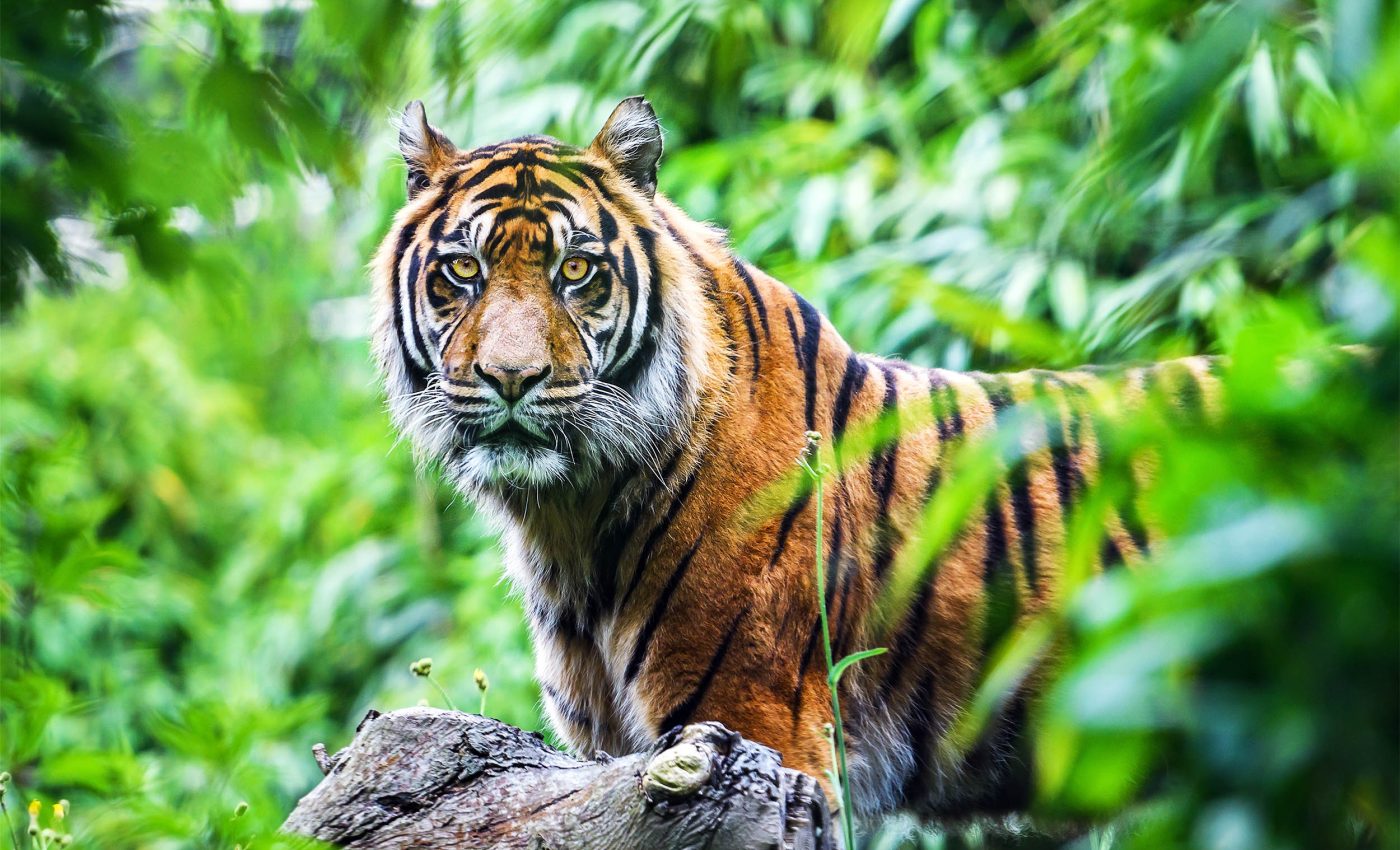
Biologists release new findings on critically endangered Sumatran tigers



 Follow Earth on Google
Tigers once roamed across huge stretches of Asia, but their world has shrunk rapidly. Habitat destruction, poaching, and a sharp drop in prey have pushed them to the edge.
Today, they occupy only about 5-10 percent of the places they once lived. It is a tough picture, and people who care about wildlife know how serious it is. Even so, a small corner of Indonesia shows signs of hope that deserves attention.

A new study points to a promising population of Sumatran tigers living on the island of Sumatra.
The news lands at a time when good updates on tiger conservation feel rare. It helps to look closely at what is happening there and why it matters for the future of these big cats.
A stronghold for wildlife
Sumatra’s Leuser ecosystem stands out for a reason. It is three times the size of Yellowstone National Park and holds the largest stretch of connected tiger habitat left on the island.
Lowland, hill, and montane forests create a mix of environments where wildlife can still breathe.
Almost half of this area is considered an intact forest landscape, which is surprisingly uncommon today. It also receives more ranger patrols than most other parts of Sumatra, which helps keep poaching pressure down.
The research was led by Dr. Joe Figel, a conservation biologist who works with Indonesian wildlife and forestry agencies.
“We documented a robust tiger population, apparently among the healthiest on the island,” he said. “For those on the ground, the onus now falls on us to double down and adequately protect them.”
Watching tigers with tech
The team worked with people from communities near the survey area. Together, they set up infrared cameras in the northern part of Leuser, located in Aceh Province.
The cameras stayed in place through three monitoring periods. Thirty-four cameras were set up from March to May 2023. Fifty-nine cameras followed between June and December 2023. Seventy-four cameras were added between May and November 2024.
This long stretch of monitoring mattered. “Multi-year camera trap monitoring is critically important for estimating key tiger demographic parameters such as survival, recruitment, tenure, and population growth rate,” said Figel. “With these data – and only with these data – can we even begin to evaluate conservation efforts.”
The cameras captured 282 clear images of Sumatran tigers. The stripe patterns revealed 27 individuals: fourteen female, twelve male, and one that could not be sexed. Female and male tigers showed up an average of 14 and 16 times.
The high count of females signals strong habitat quality, since female tigers need stable spaces to raise cubs.
During the six-month session in 2023, the team recorded three different sets of cubs. Two tiger brothers first photographed as cubs later appeared separately as adults.
Sumatran tigers thrive under locals
Gunung Leuser National Park sits inside the broader Leuser ecosystem, yet this work took place in forests protected by the Aceh government, not the central government.
That difference matters because provincially protected forests receive fewer resources than national parks.
Even so, the cameras here captured almost three times as many tiger images as earlier 90-day surveys at other sites in Sumatra.
Only three past surveys across the island recorded more than ten individual tigers, and those were inside national parks. Higher density numbers were only seen in one intensive protection zone far to the south.
Movement patterns reshape monitoring
Beyond the population counts, the study also gathered movement data that could improve future surveys.
The patterns could help researchers understand where to place cameras and how far apart they should be. That kind of detail shapes long-term monitoring, which conservation projects depend on.
The high number of tiger sightings here did not happen by luck. The region has preserved key pockets of lowland and hill forests – areas where tiger prey densities peak in Sumatra – because of sustained work and support from government agencies, local Acehnese and Gayo communities.
The future of Sumatran tigers
Conservation successes rarely feel simple, and this one is no exception. The tigers of Leuser still face threats that could undo progress if pressure increases.
But the study shows that with enough space, prey, and protection, these animals can hold on. It takes sustained work on the ground, strong community support, and long-term monitoring.
Sumatra’s tigers remain critically endangered, but this population hints at what is still possible. In a world where large predators often lose their battles quietly, the signs from Leuser offer a reason to keep pushing.
The full study was published in the journal Frontiers in Conservation Science.
—–
Like what you read? Subscribe to our newsletter for engaging articles, exclusive content, and the latest updates.
Check us out on EarthSnap, a free app brought to you by Eric Ralls and Earth.com.
—–