Dinosaur families left their babies to fend for themselves



 Follow Earth on Google
Imagine a world filled with giant dinosaurs and their tiny babies sharing the same landscape in completely different ways.
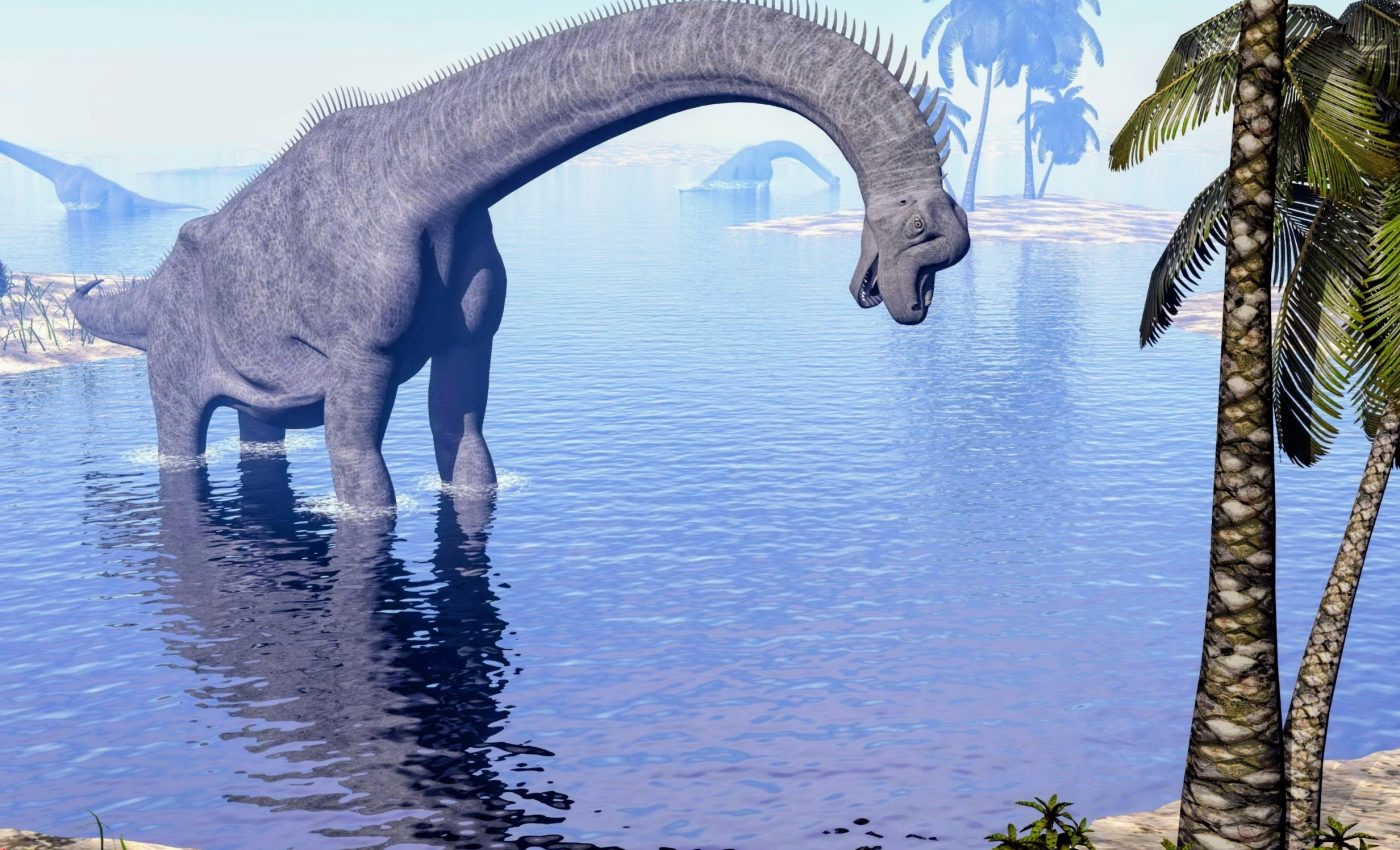
A baby Brachiosaurus might stand no taller than a golden retriever. It searches for food with its siblings and works to avoid predators.

Meanwhile, its huge parents wander far away and rarely check on it. Scenes like this show how dinosaur families lived very differently from the animals we know today.
Thomas R. Holtz Jr., a researcher at the University of Maryland, has spent years trying to understand how dinosaurs interacted with their surroundings.
His new study suggests that scientists may have missed an important detail when comparing dinosaurs with modern mammals.
How dinosaurs raised babies
People often compare dinosaurs with mammals because both were the biggest land animals of their time. Holtz argues that this comparison overlooks something central: how they raised their young.
“A lot of people think of dinosaurs as sort of the mammal equivalents in the Mesozoic era, since they’re both the dominant terrestrial animals of their respective time periods,” Holtz said.
“But there’s a critical difference that scientists didn’t really consider when looking at how different their worlds are: reproductive and parenting strategies.
Holtz noted that how animals raise their young impacts the ecosystem around them, and this difference can help scientists reevaluate how we perceive ecological diversity. This idea changes how we picture dinosaur communities.
Mammal vs. dinosaur families
Mammal babies depend on their mothers for a long time. They eat the same foods as adults. They use the same habitats and survive because adults do most of the work.
“You could say mammals have helicopter parents – and really, helicopter moms,” said Holtz. “A mother tiger still does all the hunting for cubs as large as she is.”
“Young elephants, already among the biggest animals on the Serengeti at birth, continue to follow and rely on their moms for years. Humans are the same in that way; we take care of our babies until they’re adults.”
Dinosaur babies lived differently
Dinosaurs raised their babies in a different way. They protected eggs and early hatchlings for a short time. Then the young left and formed groups with others their age. They found their own food and protected themselves. Crocodiles today show a similar pattern.
“Dinosaurs were more like latchkey kids,” Holtz said. “In terms of fossil evidence, we found pods of skeletons of youngsters all preserved together with no traces of adults nearby.”
“These juveniles tended to travel together in groups of similarly aged individuals, getting their own food and fending for themselves.”
Dinosaurs laid many eggs at once. They also reproduced more often than mammals. This meant they could create many offspring without spending much time caring for each one.
Holtz says this early independence shaped dinosaur ecosystems. Each life stage acted almost like a different kind of animal because each stage had different needs, dangers, and habits.
Changing roles with growth
A young Brachiosaurus the size of a sheep cannot eat leaves high in trees. It must feed on low plants and avoid predators that would ignore adults. As it grows, its food sources and risks shift again.
A dog-sized babies faces different challenges than a horse-sized one or a giraffe-sized one. Each step in its growth fills a new role in the ecosystem.
“What’s interesting here is that this completely changes how scientists view ecological diversity in that world,” Holtz said. “Scientists generally think that mammals today live in more diverse communities because we have more species living together.”
“But if we count young dinosaurs as separate functional species from their parents and recalculate the numbers, the total number of functional species in these dinosaur fossil communities is actually greater on average than what we see in mammalian ones.”
In simple terms, one dinosaur species acted like many different creatures throughout its life.
Why ecosystems held more life
Holtz offers two reasons ancient ecosystems could support so many roles. First, the Mesozoic world was warmer, and plants grew faster due to higher carbon dioxide levels.
This likely created more available food. Second, dinosaurs may have needed less energy than mammals of the same size, allowing ancient habitats to support more animals at once.
“Our world might actually be somewhat starved in plant productivity compared to the dinosaurian one,” Holtz said.
“A richer base of the food chain might have supported more functional diversity. And if dinosaurs had a less demanding physiology, their world would have been able to support far more dinosaur functional species than mammalian ones.”
Rethinking dinosaur diversity
Holtz is not saying dinosaurs lived in a wildly more varied world. Instead, he argues that their diversity took forms we do not count today. baby dinosaurs and adults acted like separate ecological units.
He hopes to study more species with this idea in mind to better understand how dinosaur worlds worked and how they shaped the planet humans inherited.
“We shouldn’t just think dinosaurs are mammals cloaked in scales and feathers,” Holtz said. “They’re distinctive creatures that we’re still looking to capture the full picture of.”
The study is published in the Italian Journal of Geosciences.
—–
Like what you read? Subscribe to our newsletter for engaging articles, exclusive content, and the latest updates.
Check us out on EarthSnap, a free app brought to you by Eric Ralls and Earth.com.
—–