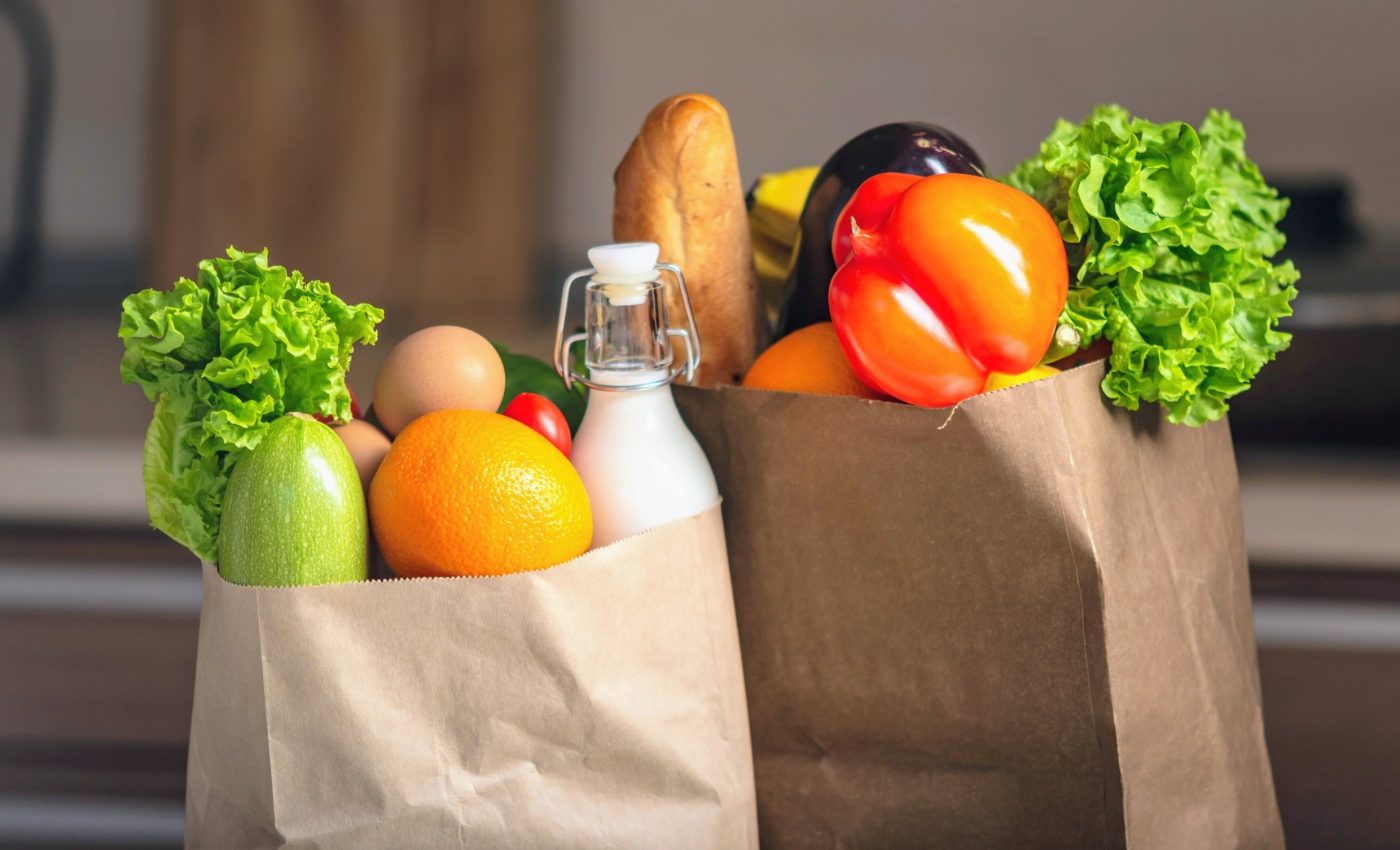
Healthy eating can actually be cheaper - and better for the planet



 Follow Earth on Google
Eating for the planet is often framed as a luxury choice – something that comes with higher food bills and hard tradeoffs. But a new global analysis suggests that assumption is wrong.
Researchers at Tufts University’s Friedman School examined what people actually buy to eat and compared it with the cheapest possible diets that still meet basic nutrition needs while keeping greenhouse gas emissions low.

Across countries and cuisines, a clear pattern emerged: within most food groups, lower-cost options also tend to carry a smaller climate footprint.
At a time when food systems are under pressure to cut emissions without worsening food insecurity, the findings offer a rare bit of good news.
In many cases, eating in a way that’s better for the climate doesn’t mean spending more – it means making different choices.
Comparing cost, nutrition, and emissions
The researchers built country-by-country models using three streams of data for each food item: local availability and cost, how often it appears in the national food supply, and its global average greenhouse gas footprint per unit.
For every country, they generated five diet scenarios: the lowest-emission healthy diet, the lowest-cost healthy diet, and three versions built from commonly consumed foods.
“In general, choosing less expensive options in each food group is a reliable way to lower the climate footprint of one’s diet,” said study lead author Elena Martinez.
“This new study extends that to the extremes, asking which items could meet health needs with the smallest possible climate footprint.”
Cheap, climate-friendly foods
Using 2021 as a reference, a healthy diet built from the most commonly consumed products emitted about 5.38 pounds of CO2-equivalent per person per day and cost a global average of $9.96.
The benchmark plan explicitly designed to minimize climate harms would have emitted just 1.48 pounds and cost $6.95. A plan built to minimize monetary cost would have emitted 3.64 pounds for only $3.68.
A pragmatic blended scenario, mixing popular items with lower-cost, healthier swaps, landed in the middle at roughly $6.33 per day and 4.10 pounds of emissions.
On average, both emissions and costs fall when people shift toward cheaper choices within each food group.
Cheaper food often means lower carbon
In most categories, the least expensive items use fewer fossil fuels and involve less land-use change, two of the biggest drivers of food-related emissions.
Production efficiencies, simpler processing, and shorter supply chains also help. The pattern holds strongly until you push to the very cheapest ends of two key groups: animal-source foods and starchy staples. There, tradeoffs emerge.
Animal foods complicate the pattern
Among animal foods, milk is often the lowest-cost option per calorie, and its CO2-equivalent emissions are far below beef and many other meats. But it isn’t the only frugal, climate-smart choice.
Small, oily fish such as sardines and mackerel typically sit at an intermediate cost while delivering even lower emissions, thanks to their feed efficiency and processing profile.
For families aiming to stay nourished and shrink their footprint, shifting protein toward dairy and low-trophic-level fish can pay immediate dividends.
Rice’s hidden climate cost
Starchy staples tell a different story. In many countries, rice is the cheapest choice at the market, but not the lowest emission staple.
Wheat or maize often carry smaller carbon footprints, largely because flooded paddy fields emit methane as microbes break down organic matter.
That microbial methane makes rice a high-emission bargain – economical at the checkout, costly in the atmosphere.
Where people can comfortably substitute some rice with wheat or corn products, emissions fall without blowing up budgets.
A simple rule for shoppers
These insights give governments and development agencies a clearer path to align climate and nutrition policies.
Subsidies, school meals, and safety-net programs can prioritize lower-cost foods within each food group that also reduce emissions.
At the same time, investments in rice-paddy methane mitigation and dairy methane reductions can address the rare cases where the cheapest options carry outsized climate impacts.
For consumers, the rule of thumb is refreshingly simple: within each aisle, the more affordable choice is usually the greener one, so long as you’re not leaning entirely on the cheapest rice or the most methane-intensive dairy.
Budget food choices help the climate
“There are situations where reducing emissions costs money because it involves investment in new equipment and power sources,” said William Masters, the senior author of the study.
“Most people can reduce emissions by choosing less expensive options from each food group, with important exceptions at the extremes of low-cost diets due to methane from dairy and rice.”
In practical terms, that might look like swapping premium cuts for eggs or milk. It may be favoring sardines over steak, choosing beans often, and mixing maize or wheat into meals that would otherwise be rice-heavy.
Healthy diets don’t have to be expensive to be climate-friendly. Across countries and cuisines, the study’s modeling shows that modest shifts toward cheaper items inside each major food group cut both costs and carbon.
With food prices and climate risks rising together, that’s welcome news: a pathway where doing right by your budget also helps the planet.
The study is published in the journal Nature Food.
—–
Like what you read? Subscribe to our newsletter for engaging articles, exclusive content, and the latest updates.
Check us out on EarthSnap, a free app brought to you by Eric Ralls and Earth.com.
—–