Oldest shackles ever found in the Mediterranean were in Egypt



 Follow Earth on Google
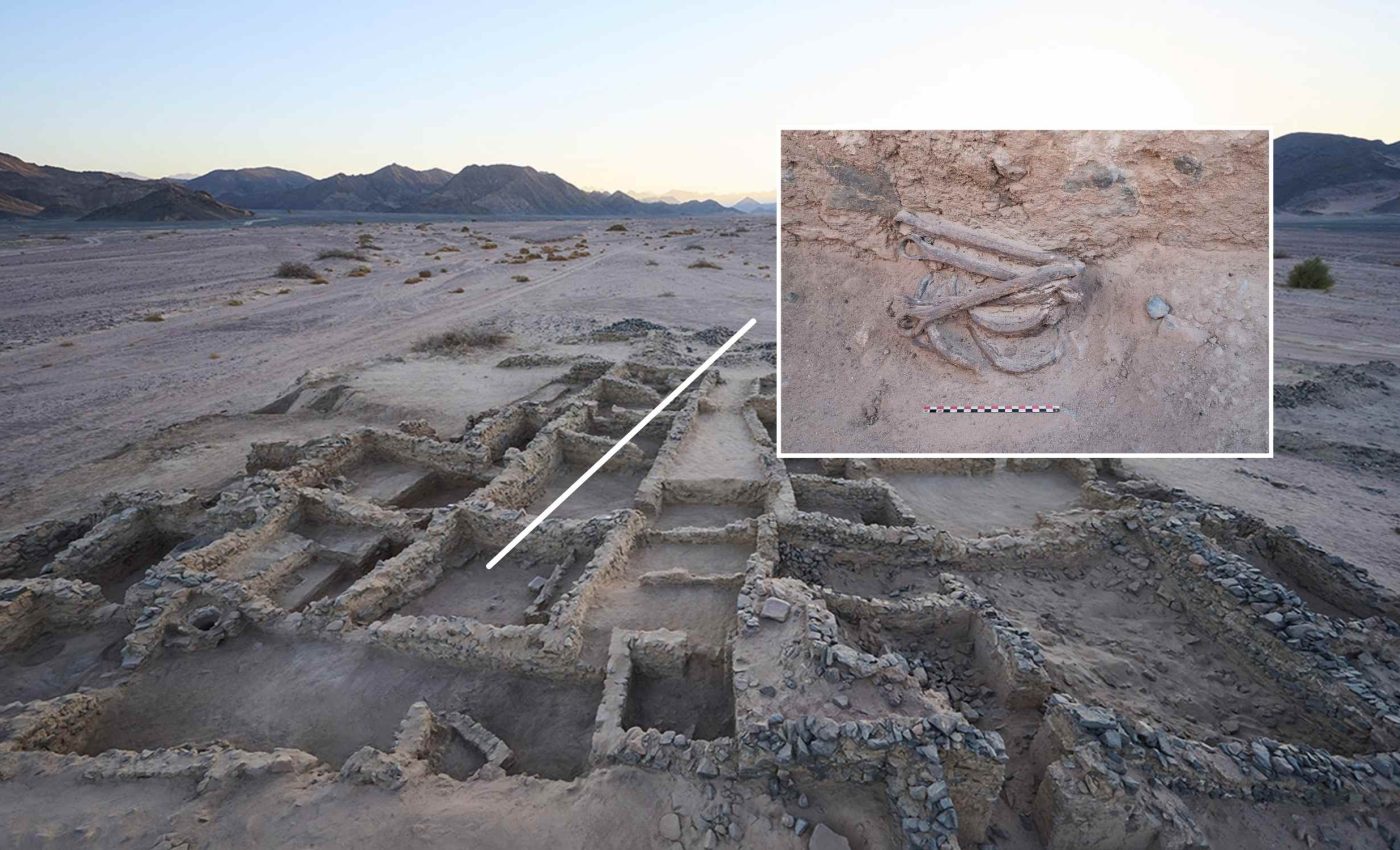
Two iron ankle shackles, buried for about 2,200 years in the Egyptian desert, have revealed new evidence of forced labor. They appear to be among the oldest known restraints in the Mediterranean world, according to a recent study that analyzed their age and design.
Archaeologists uncovered the restraints at Ghozza, which was a gold mining village in Egypt‘s Eastern Desert. Income from the gold mines once helped Ptolemaic rulers to pay for armies and building projects.
Sad tales of forced labor

The work was led by Bérangère Redon, an archaeologist at the History and Sources of the Ancient Worlds Laboratory (HSAWL) in France.
Her research focuses on how mining sites, ports, and caravan routes connected Egypt to the wider Mediterranean economy.
At Ghozza, her team excavated two sets of iron ankle shackles that are dated to the later third century B.C. They belong to a short period when Egypt’s rulers pushed hard to open new gold mines in the Eastern Desert.
The archaeologists found the shackles in a storage complex on the edge of the village. Charcoal, iron tools, and heavy waste from metalworking surrounded the shackles. Much of that waste was slag – glassy rock left behind after smelting metal ore.
Gold, power, and the Ptolemaic state
A book on ancient Egyptian gold mining shows that work expanded again under later Greek rulers. Historians call this the Hellenistic, Greek-influenced era after Alexander the Great’s conquests, when gold funded wars and giant building schemes.
In that era, the new dynasty opened nearly 40 known gold mines across Egypt’s Eastern Desert. Ghozza was one of these sites, part of a network of roads, wells, and forts that turned empty valleys into busy work zones.
Earlier excavations at Samut North, another Ptolemaic gold mine, had revealed controlled dormitories where at least part of the workforce slept behind locked gates.
At Ghozza, hundreds of ostraca, broken pottery sherds reused for quick notes, mention wages and rations for miners instead of strict housing rules.
Life inside a desert mining village
Ghozza had streets, blocks of houses, baths, and administrative buildings laid out on the slopes of a dry valley. Archaeologists have now excavated more than half of the village. This research has revealed work areas, kitchens, and storage rooms alongside family-style living spaces.
On the surface, miners crushed quartz-rich rock with handheld grinding stones, then washed the powdered ore to concentrate tiny gold flakes.
Such tasks demanded long hours, strong bodies, and careful coordination, even for laborers who appear to have received wages.
The discovery of shackles in the storage area showed that at least some workers were not free to leave when they wished. Their presence, alongside tools and metal waste, links everyday workshop routines to a quieter, more controlled layer of life at the mine.
Shackles that match ancient texts
Metalworkers made the iron rings to close directly around a person’s ankles. There was no hinge or lock that the wearer could open alone.
Heavy links joined the rings, so anyone trapped inside could walk only slowly and would tire quickly on the rough desert ground.
Ancient writers recorded the suffering of gold miners in Egypt long before people buried these shackles. Diodorus Siculus, a Greek historian, describes miners with bound feet who worked unceasingly, both day and night.
To Redon and her team, the Ghozza shackles show that these literary reports were not exaggerations.
“The shackles complement an ancient text that describes the living conditions of miners in Egypt,” said Redon.
Echoes of Laurion and the wider Mediterranean
The Ghozza shackles closely resemble restraints found in the silver mines of Laurion, a mining district in southern Greece.
An online account of those mines describes large numbers of enslaved workers driven to extract ore for Athens’ wealth.
Modern researchers on Laurion show that some enslaved miners gained specialist training and kept complex underground operations running.
That mix of skill, coercion, and profit offers a useful parallel for thinking about forced labor at Ghozza and other mines in Ptolemaic Egypt.
Shackles reflect harsh level of control
At Ghozza, no written record clearly labels who wore the shackles. Archaeologists cannot yet say whether the restrained people were prisoners, convicts, or enslaved people.
What the hardware does show is a level of control that went far beyond normal workplace discipline in a paid mining crew.
The Ghozza discovery shows that even settlements that look open and loosely organized on the surface could hide harsh systems of control.
As excavations continue through the village, archaeologists hope to locate spaces where restrained workers slept, ate, and tried to build routines under constant watch.
The study is published in Antiquity.
—–
Like what you read? Subscribe to our newsletter for engaging articles, exclusive content, and the latest updates.
Check us out on EarthSnap, a free app brought to you by Eric Ralls and Earth.com.
—–