Largest fossil database ever compiled rewrites the human origin story



 Follow Earth on Google
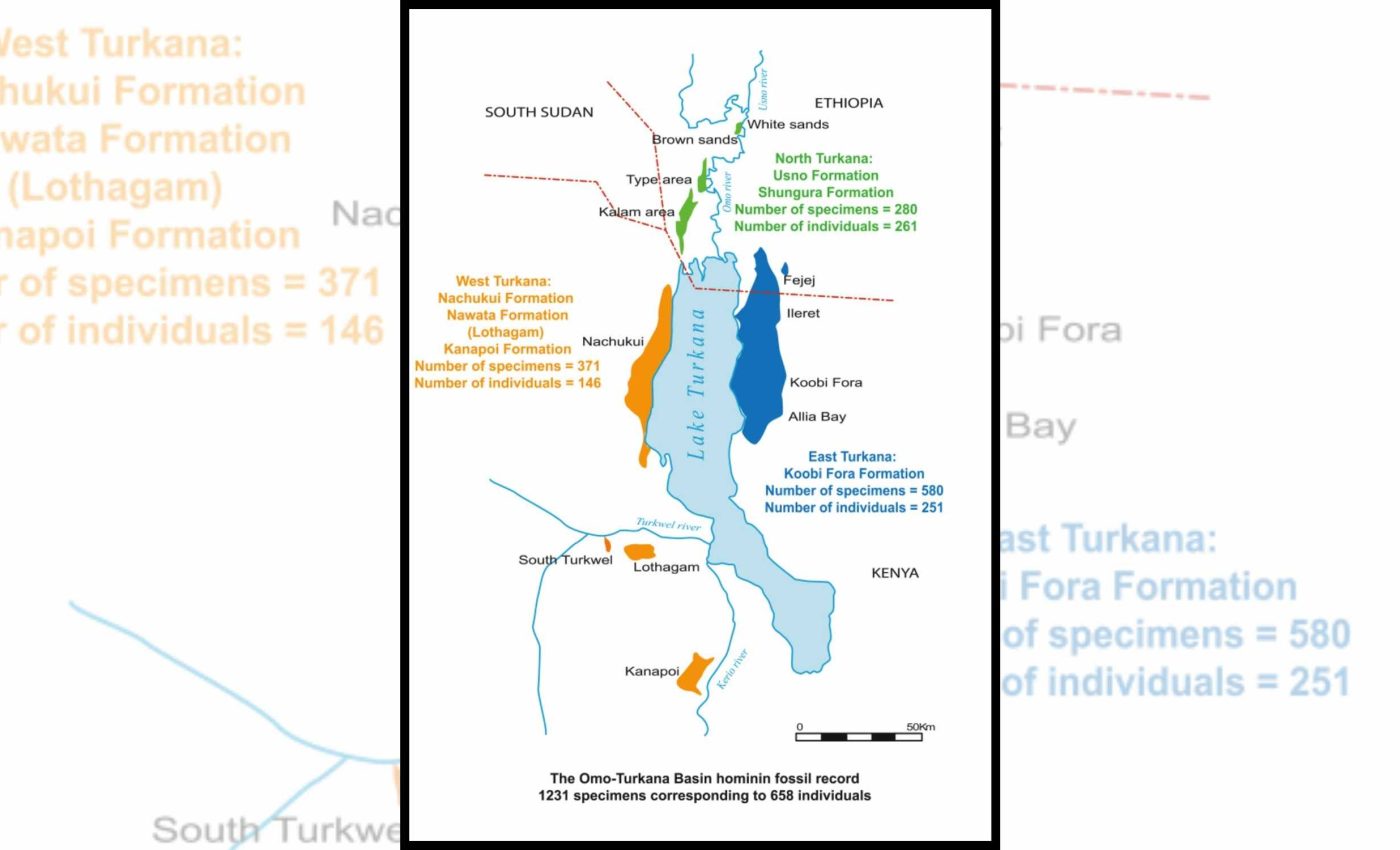
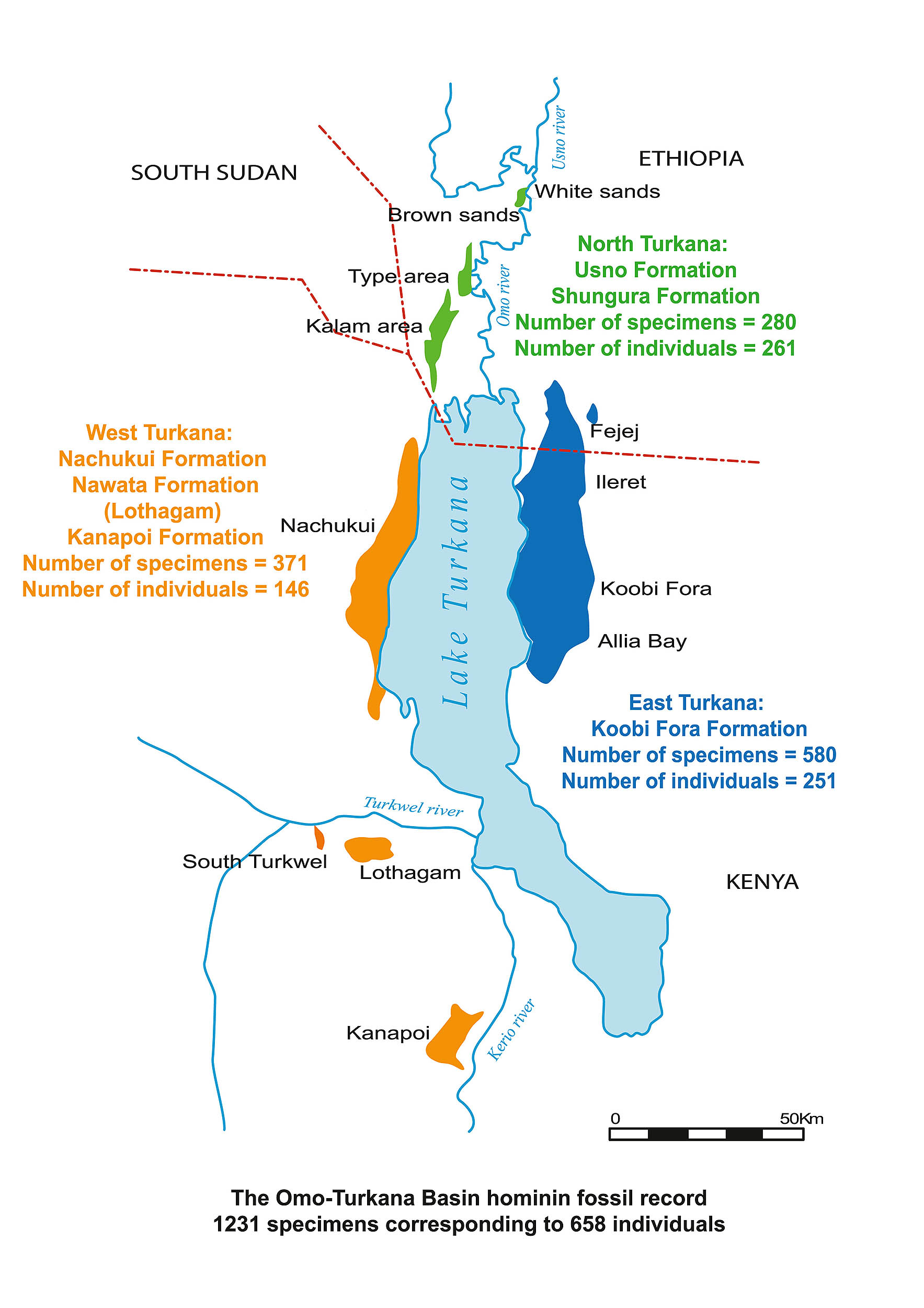
A new fossil mega catalog from the Omo-Turkana Basin in East Africa pulls together 1,231 ancient bones and teeth. That single basin now holds roughly one in three hominins, humans and their closest fossil relatives, found from that slice of African prehistory.
For decades, early members of our own genus, Homo, seemed strangely scarce in this region around 2 million years ago.

The new catalog shows that Homo was never really missing, just split among separate reports and buried inside an uneven fossil record.
Omo-Turkana Basin importance
Along the border of Kenya and Ethiopia, the Omo-Turkana Basin lies where the Omo River drains into Lake Turkana, preserving fossil-rich sediments.
The work was led by François Marchal, a paleoanthropologist at Aix-Marseille University, and his research focuses on fossil records.
In that basin, fossils span roughly 4.2 to 1.5 million years, with only two major gaps where sediments hold no hominin bones.
Across that 2.7 million year stretch, about 81 percent of time slices include at least one fossil, so the record there is unusually continuous.
The basin has yielded everything from early Australopithecus species to robust Paranthropus and the first tall, long-legged Homo bodies.
Those fossils sit in rock layers tied to ancient rivers, floodplains, and lakes, letting scientists connect changes in anatomy to changing environments.
Building a mega fossil catalog
Until now, researchers had separate lists for each dig site or species, so no one could see the full picture at once.
Marchal and colleagues pulled data from 117 different publications into a single standardized database, checking each fossil’s number, age, and identification carefully.
Each fossil entry in the catalog carries around two dozen pieces of information, including its anatomical part, species label, and estimated age.
By standardizing these details, the team can look for patterns that would be invisible in smaller, project-specific lists.
The catalog shows that 80 percent of individuals are known from just one bone or tooth, which makes it hard to reconstruct full skeletons.
Isolated teeth make up about 56 percent of all specimens, so teeth carry much of the story about who lived there and when.
Early Homo and Omo-Turkana
For years, textbooks and review papers described early Homo as rare before about 2 million years ago, especially in East Africa.
Part of that view came from the Ledi-Geraru mandible, which set Homo at about 2.8 million years ago but left an earlier gap.
The new Omo-Turkana catalog counts at least 45 individuals of early Homo between 2.7 and 2.0 million years ago.
Most of those individuals come from the northern basin, where fossils are fragmentary and harder to assign to species, so they were overlooked.
“By compiling all the published hominin fossil data, our analysis treats the basin as an integrated system,” said Marchal. That integrated view reveals that early Homo was already a regular part of the fauna in this basin, not a rare visitor.
Sharing the landscape
The catalog confirms that Homo shared the basin for 1.5 million years with Paranthropus, a side branch of early humans with huge chewing teeth.
When the team counted individuals, Paranthropus outnumbered Homo roughly two to one across that entire span, even though both groups occupied the same region.
Other work in the basin suggests that Paranthropus relied on grass-rich diets, while early Homo used a flexible mix of foods and habitats.
That difference may have allowed both lineages to live side by side without competing directly for every meal.
The catalog also flags one short interval in the Upper Burgi Member at Koobi Fora where Homo fossils outnumber Paranthropus, flipping the usual pattern.
That odd pocket hints that local environments or preservation conditions sometimes favored one lineage over the other, instead of reflecting simple global trends.
Fossils, gaps, and future study
Even in this unusually rich basin, there are long stretches with no hominin fossils at all, including gaps of hundreds of thousands of years.
Some intervals between 3.9 and 3.6 million years ago, and between 2.95 and 2.75 million years, are silent in the record despite good preservation.
Researchers also know that the first and last fossils of a species rarely mark its true beginning or end, because sampling is always incomplete.
Statistical models show that species ranges often extend beyond their fossil record, especially when only few specimens exist.
Lessons from Omo-Turkana
Even with this catalog, about 14 percent of the basin’s hominin fossils have not been formally described in scientific papers yet.
Only around 70 percent have confident species-level labels, which shows how much careful work is still needed in museum collections.
“Today, numerous international teams are continuing to carry out fieldwork in the three parts of the basin,” wrote François Marchal.
They point to new imaging, 3D shape analysis, and probabilistic methods as key tools for turning fragmentary teeth and bones into stronger evolutionary tests.
As more fossils and better dates are added to this database, scientists can test ideas about how Homo arose, spread, and weathered environmental swings.
Instead of a thin, patchy trail of fossils, the picture from this catalog shows multiple hominin species living together, with Homo in the mix.
The study is published in the Journal of Human Evolution.
—–
Like what you read? Subscribe to our newsletter for engaging articles, exclusive content, and the latest updates.
Check us out on EarthSnap, a free app brought to you by Eric Ralls and Earth.com.
—–