Oxygen reached Earth’s oceans earlier than scientists thought



 Follow Earth on Google
Oxygen began entering Earth’s oceans around 2.32 billion years ago, and shallow seas followed within a few million years.
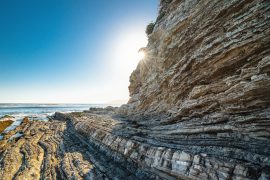
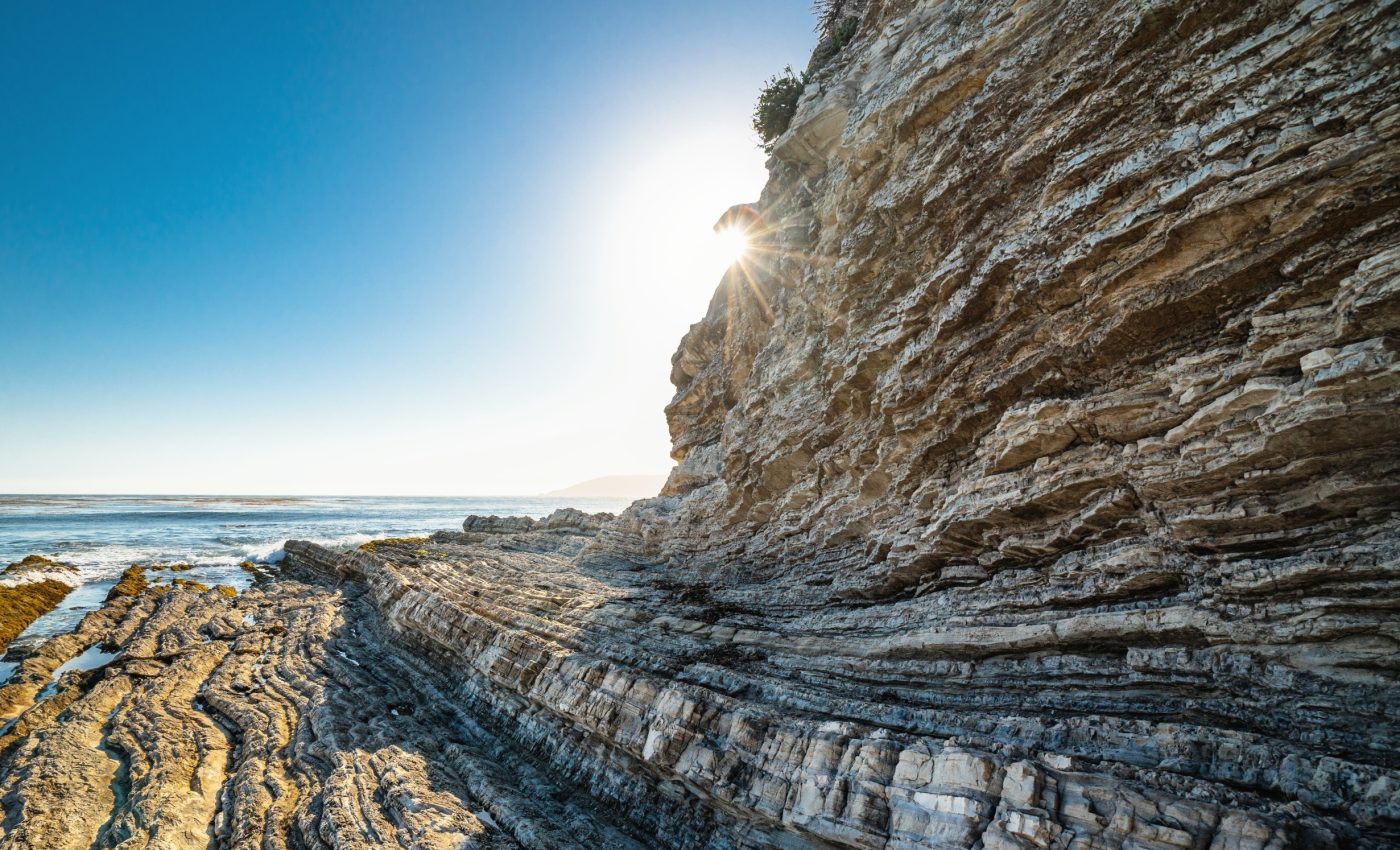
Scientists at the Woods Hole Oceanographic Institution (WHOI) traced that change in ancient rocks from South Africa.

Chemical signatures in the rocks show when seawater first held persistent oxygen, which set the stage for later complex life.
A clue in South Africa’s rocks
Black shales, dark rocks made from organic-rich seafloor mud, can trap traces of the water and air above them.
WHOI researchers sampled layers that formed during the Great Oxidation Event (GOE), a rise in oxygen about 2.4 billion years ago.
The work was led by Andy Heard, assistant scientist at WHOI and lead author of the study. His research focuses on chemistry that records when oxygen enters seawater and stays there.
In those rocks, vanadium chemistry changes right above the layer that marks oxygen’s first lasting rise in the atmosphere.
Oxygen was hard for early life
Oxygen reacts easily, so it can damage cells that evolved in low-oxygen water and mud.
Before the GOE, microbes could not rely on oxygen, and early photosynthesis likely fed it into chemical sinks instead.
“At that point in Earth’s history, nearly all life was in the oceans,” said Heard. Once oxygen stuck around, life could tap it for energy, but only after evolution built new ways to handle it.
A metal that tracks oxygen
The team followed vanadium isotopes, heavier and lighter forms of one element, because oxygen changes how vanadium moves in seawater.
In oxygen-poor water, vanadium tends to stick to sinking organic matter and get buried in dark sediments.
When oxygen rises, more vanadium stays in a form that clings to iron and manganese particles instead.
That switch leaves a detectable isotope pattern in sediments, which the researchers measured across the rock column.
What the rocks showed
The samples came from rock units laid down on an ancient shelf, where shallow water met a wider ocean.
The vanadium isotope ratios change in one direction at a specific depth, pointing to more oxygenated shallow seas.
The change sits just above a boundary where older sulfur isotope signals disappear, giving the timing an anchor.
Because the core records seawater chemistry layer by layer, it preserves the order of oxygen changes over time.
The sulfur sign in the air
Many researchers watch sulfur mass-independent fractionation, a quirky sulfur isotope pattern that forms in oxygen-free air.
Studies have shown that once oxygen rises past a small threshold, that sulfur pattern stops forming and later vanishes from rock layers.
In the South African section, that disappearance sits near the point when atmospheric oxygen became a lasting feature.
Vanadium isotopes start telling a different story shortly above that marker, linking ocean oxygen to the changing air.
Dissolved oxygen in the ocean
The study focuses on oxygen levels above 10 micromoles per liter, a threshold that researchers examined closely in 2020.
Modern oceans hold much more dissolved oxygen than that early benchmark, especially where waves and algae keep water mixed.
Yet crossing that threshold matters because it allows new chemical reactions and minerals that simply cannot persist in oxygen-starved waters.
It also signals that oxygen moved past the surface and reached parts of the seafloor on shallow shelves.
Shallow and deep oceans
Oxygen enters seawater from the atmosphere at the surface, but mixing and biology can strip it away deeper down.
A broader review says the deep ocean stayed largely oxygen-poor long after the GOE began.
That split helps explain why early-oxygenated habitats could exist near shore while vast deep waters still lacked oxygen.
The new vanadium signal fits this surface-first pattern, because oxygenated settings show up where seawater could trade gases with air.
Chemical clues in rocks
Rock layers do not come with timestamps, so scientists rely on volcanic ash beds and slow chemical dating methods.
The South African record includes dated layers that narrow ages, but gaps remain where different lab methods are needed.
Researchers skipped one interval that looked too oxygen-rich for their procedure, since vanadium sits in different minerals there.
Even with that missing piece, the results show how one chemical clue can support other clues in the same rocks.
Oxygen on other worlds
Astronomers look for oxygen on exoplanets – planets that orbit stars beyond our Sun – because it seems promising. Oxygen can build up without life in some cases, including severe water loss.
Still, ocean chemistry matters for habitability, and the new results suggest air and surface water can connect quickly.
Future observations may need several gases and context together, rather than treating oxygen alone as a final answer.
Testing many chemistry signals
The GOE did not look the same everywhere, and some evidence suggests oxygen rose in fits and starts.
Vanadium isotopes only respond above a certain oxygen level, so they miss low-oxygen oases that fall below that line.
Local sediments also reflect local rivers, microbes, and burial conditions, so one core never speaks for every shoreline.
That is why scientists compare many chemical signals, then test whether they agree on the order of events.
Why this matters beyond geology
Oxygen shaped the path to complex cells, but it also reshaped oceans, weathering, and the kinds of rocks Earth makes.
By pinning surface-ocean oxygenation near the start of the GOE, the study tightens a key chapter in Earth history.
Better metal isotope tools may now map where oxygen first spread, and where it stayed locked out for ages.
Those maps connect life, oceans, and planets, because oxygen leaves clues that researchers can read long after the water is gone.
The study is published in the journal Nature Communications.
—–
Like what you read? Subscribe to our newsletter for engaging articles, exclusive content, and the latest updates.
Check us out on EarthSnap, a free app brought to you by Eric Ralls and Earth.com.
—–