Rare 'supershear' earthquakes that could devastate California


 Follow Earth on Google
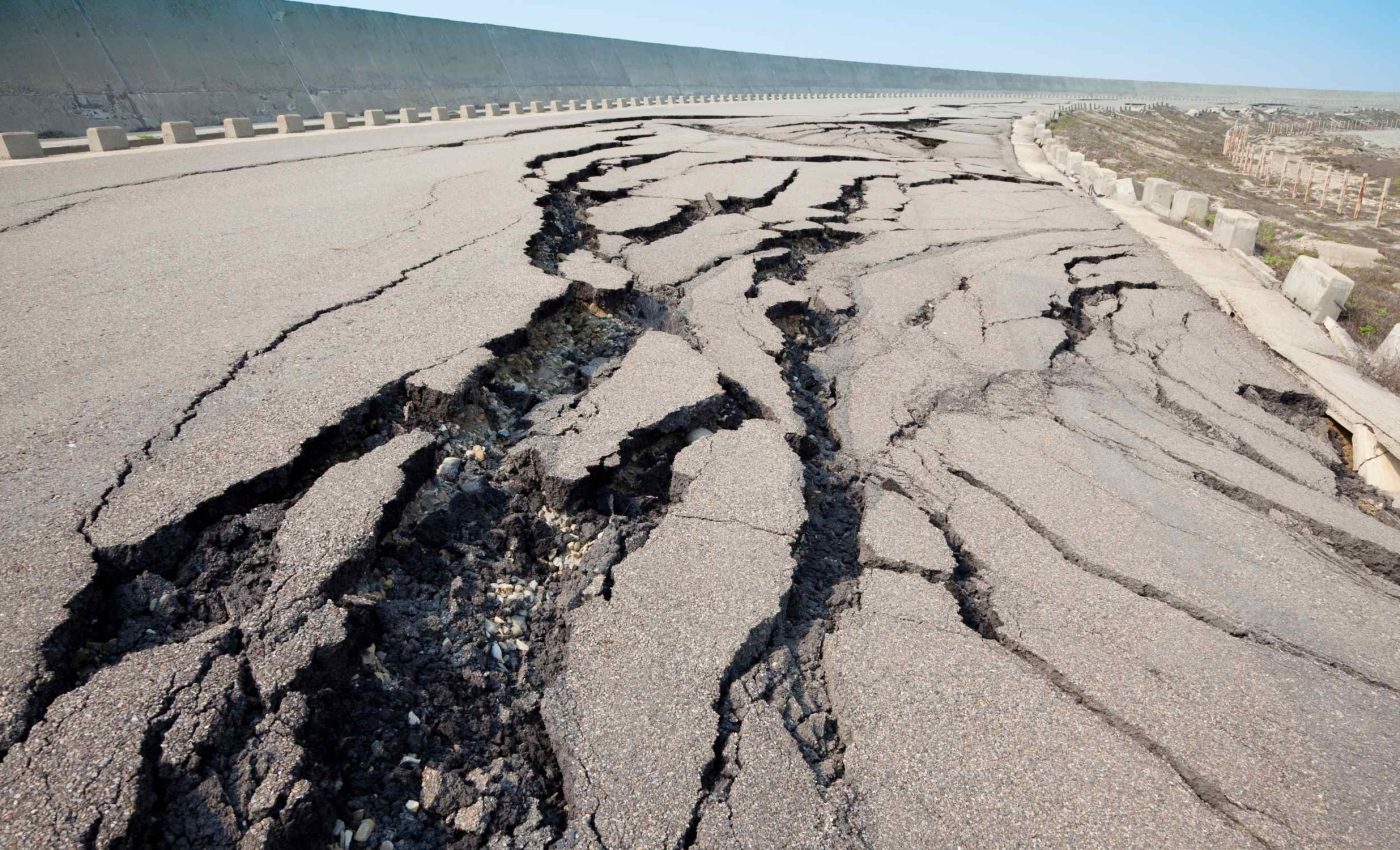
Most people in California expect big earthquakes, but there is a faster kind that could hit harder and over a wider area.
These rare supershear earthquakes, ruptures that move faster than their own side to side shaking waves, can slam cities with especially intense ground motion.

Scientists working with the Statewide California Earthquake Center say that many of the large quakes California is likely to face in coming decades could fall into this category.
They warn that current building codes and hazard plans do not fully reflect what these events can actually do.
Understanding supershear earthquakes
The work was led by Ahmed Elbanna, a professor of Earth sciences at the University of Illinois Urbana Champaign, in collaboration with colleagues at the Statewide California Earthquake Center (SCEC).
His research focuses on how complex fault ruptures release energy and how that energy translates into shaking at the surface.
In a typical quake, a rupture spreads along a fault at a speed slower than shear waves, seismic waves that shake the ground sideways. A supershear rupture outruns those waves, so energy piles up at the rupture tip and forms a sharp shock front.
That shock front is why these quakes can be so damaging. A nearby town can get hammered first by the high speed rupture front, then by the trailing waves in what Elbanna describes as a “double strike”.
Many of the faults that can host these events are strike slip faults, fractures where blocks of crust slide horizontally past each other instead of moving up or down.
The San Andreas fault, which stretches roughly 800 miles through California, is the most famous example of this kind of structure.
Because the rupture speed is so high, a supershear event can keep strong shaking focused in a long, narrow corridor along the fault.
That is different from more ordinary quakes, where the harshest shaking tends to weaken with distance in a more spread out pattern.
When and where they strike
For a long time, seismologists thought supershear earthquakes were exotic outliers. A recent study found that in the past 15 years, 14 out of 39 large strike slip earthquakes worldwide showed clear signs of supershear rupture, which is about one third of the total.
Independent work looking at earthquakes since 2000 shows something similar. One research group found that about 14 percent of large strike slip earthquakes hit supershear speeds, more than double earlier estimates that put the rate below 6 percent.
Recent disasters have shown how this plays out in real life. The 2018 magnitude 7.5 Palu earthquake in Indonesia broke a long segment of a strike slip fault at supershear speeds and triggered deadly landslides and tsunamis that killed thousands of people.
California and supershear earthquakes
California sits on a tangle of large strike slip faults that pass close to major cities. The San Andreas, San Jacinto, and Hayward faults all cut through regions packed with freeways, pipelines, data centers, and dense housing.
Long term forecasts show that the state is not simply waiting for a single rare event. A statewide forecast estimates a 99 percent chance that California will experience at least one magnitude 7 earthquake within a 30 year span.
An official assessment puts the odds of a magnitude 8 or larger California earthquake in the next 30 years at about 7 percent, which is small but not negligible for an event of that scale.
Supershear ruptures are most likely on exactly the kinds of long, straight fault segments that would host those huge quakes.
The opinion piece stresses that current building codes mostly assume the strongest shaking will be perpendicular to the fault.
In a supershear quake, the most damaging energy can stay aligned with the fault, which means communities stretched out along the fault trace could face a much sharper punch than expected.
Preparing for supershear earthquakes
California’s hazard planning has to catch up to this science. Researchers stressed that these events are expected to occur in the coming decades regardless of how prepared the state is.
One important step is improving monitoring. Denser networks of strong motion instruments near major faults would give scientists clearer data on how ruptures begin, accelerate, and sometimes transition into supershear.
Another step is the use of advanced computer models that test how real cities might respond to supershear scenarios.
These simulations help identify which neighborhoods, bridges, or hospitals would face the sharpest bursts of shaking and where targeted retrofits could have the greatest impact.
Better science alone cannot address the full challenge. Elbanna has emphasized that reducing risk will require a coordinated effort across agencies, researchers, and communities.
The study is published in Seismological Research Letters.
—–
Like what you read? Subscribe to our newsletter for engaging articles, exclusive content, and the latest updates.
Check us out on EarthSnap, a free app brought to you by Eric Ralls and Earth.com.
—–