Sargassum is exploding on beaches but vanishing where it matters



 Follow Earth on Google
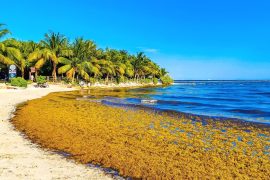
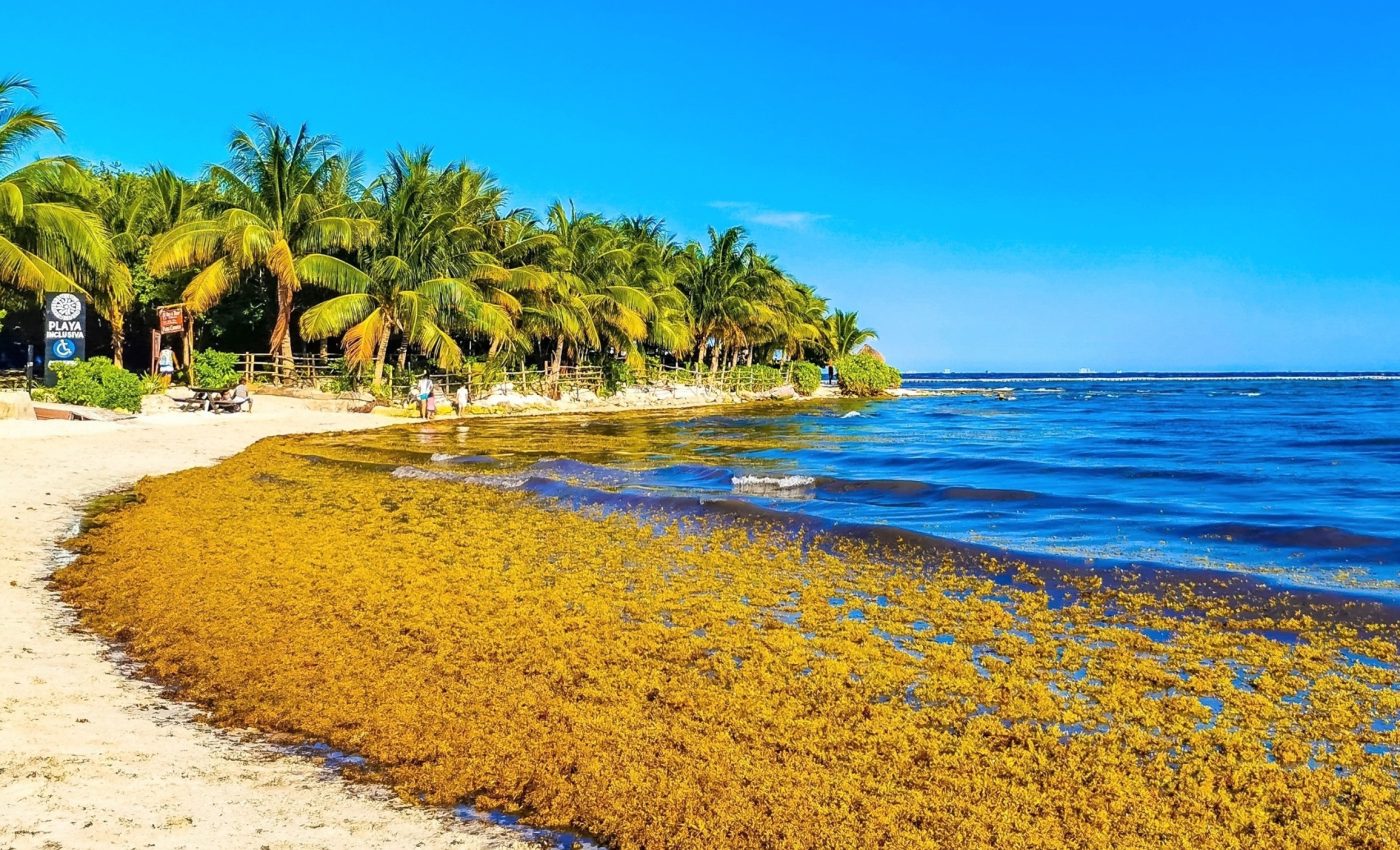
For years, coastal communities around the Caribbean and Gulf of Mexico have watched towering mats of sargassum roll ashore.
The seaweed piles stretch for miles, rot in the sun, choke coastlines with sulfurous smells, and cost millions to remove. It feels like an invading force that never lets up.

That’s why the newest findings may come as a surprise: while beach-bound sargassum blooms have surged across the tropics, one of the Atlantic’s most important natural nurseries is quietly fading.
A new study reports that the northern Sargasso Sea now holds far less healthy sargassum than it did a decade ago.
This decline is setting off alarms, because these floating forests support entire communities of marine life – from young sea turtles and juvenile fish to crabs and seabirds. When the habitat thins, the food web weakens.
Sargassum’s Atlantic crossroads
The work comes from researchers at the University of South Florida’s College of Marine Science and their partners. The team found a dramatic decline that began around 2015.
Sargassum coming from the Gulf – which normally helps fuel the Sargasso Sea each year – has also fallen sharply.
“What is fascinating is that two opposite patterns occurred in the Atlantic Ocean,” said Chuanmin Hu, professor of oceanography and senior author of the study. “The tropical Atlantic has seen much increased sargassum in the past decade, but at the same time the Sargasso Sea has a lot less than it used to.”
Much like forests on land, thick mats of sargassum shelter a wide mix of life. But the trouble starts when they wash ashore.
As they break down, they release gases that smell awful and can hurt marine creatures near the coast. For beach towns that rely on tourism, the cleanup hits hard.
Tracing sargassum from orbit
Hu’s team has studied sargassum from space since 2006. His group helped identify the Great Atlantic Sargassum Belt in 2019. They use satellite images to track how much seaweed appears each month.
For this study, the researchers used NASA satellite data along with field samples collected by Sea Education Association and Eckerd College. Those samples helped fill in missing details about sargassum varieties, temperature tolerances, and seasonal shifts that satellites cannot capture on their own.
The team found that the Gulf normally sees a spring bloom that travels north and reaches its peak in the Sargasso Sea during late fall or early winter. When the Gulf produces less healthy sargassum, the Sargasso Sea suffers.
“These findings suggest we may be witnessing the early stages of a basin-scale regime shift in sargassum distribution,” said Yingjun Zhang, a postdoctoral scholar at the Scripps Institution of Oceanography.
“Since a wide range of marine life relies on pelagic sargassum ecosystems, this could really make a difference.”
The shift has reshaped sargassum seasonality, as fall and winter peaks have given way to summer peaks in the north Sargasso Sea.
When temperatures tip ecosystems
Plants need light, nutrients, and the right temperature to survive. In this case, temperature may be the deal breaker.
The Gulf has heated rapidly. Studies show that Gulf waters warmed about 0.34°F per decade between 1970 and 2020. Sargassum usually does well between 68°F and 82°F. But in recent summers, Gulf waters have topped 86°F.
Warmer water can stress sargassum and make it less able to handle long trips. If the seaweed reaches the Sargasso Sea already weak, it may not survive the colder water there.
There is also a chance that sargassum from the Great Atlantic Sargassum Belt competes for nutrients on the way, adding more pressure.
Even that massive 5,000-mile belt cannot make up for what is being lost. Sargassum that comes from warmer regions might not cope well with the temperature change when it arrives farther north.
“It’s a complex story and challenging to unravel due both to the spatial scale and the fact that each variety of sargassum responds to ocean environmental conditions in different ways,” said Deb Goodwin, chief scientist at Sea Education Association and a co-author of the study.
A fragile future ahead
Healthy sargassum plays a major role in ocean ecosystems. When it thins out in one region and explodes in another, the balance shifts. Changes in seasonal timing add another layer. If the decline continues, some species may lose key habitat.
The team plans to look deeper into how these changes might shape the future. One question is whether competition from the Great Atlantic Sargassum Belt could push Gulf populations even lower.
Scientists still have many pieces to fit together. But one thing is clear: the story of sargassum is more than beach piles and cleanup crews. It reaches across the entire Atlantic and touches the lives of countless species along the way.
The full study was published in the journal Nature Geoscience.
—–
Like what you read? Subscribe to our newsletter for engaging articles, exclusive content, and the latest updates.
Check us out on EarthSnap, a free app brought to you by Eric Ralls and Earth.com.
—–