Ancient hand gestures could revolutionize how robots move



 Follow Earth on Google
Movement can communicate as powerfully as speech. A shift of the wrist, a traced arc of the fingers, or a held pose can express emotion, rhythm, or meaning.
Classical dance traditions have refined that silent language for centuries, making their gestures rich sources of information about how skilled hands move.
Robots and complex hand actions

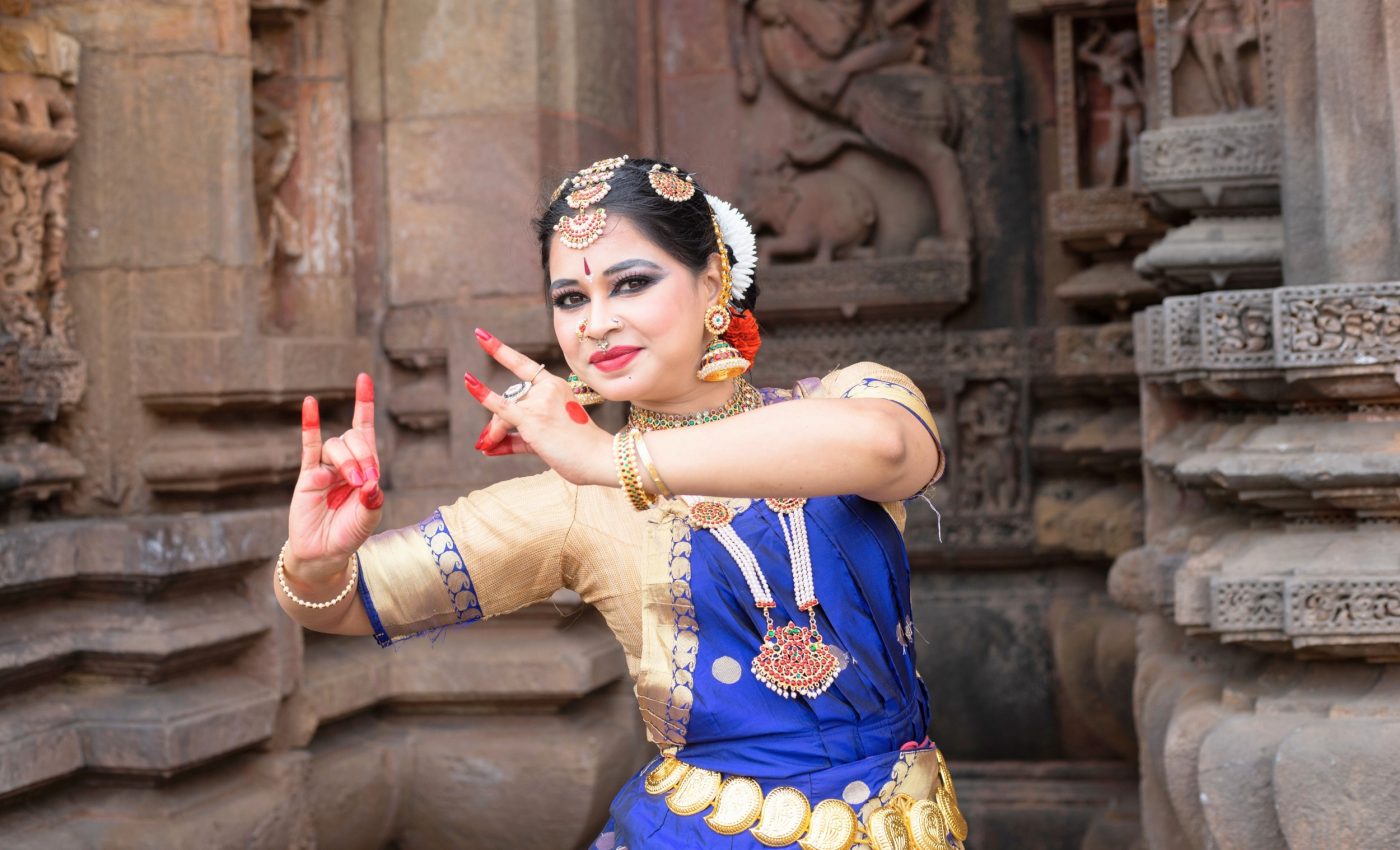
Hands can tell stories without speaking. In Bharatanatyam, a classical dance form, precise and expressive gestures bring that skill to life.
Scientists working on robots now study such traditional movements to understand how complex hand actions work.
A recent study looked at Bharatanatyam hand gestures in detail. Researchers searched for simple building blocks hidden inside each motion.
Those small units could help robots learn smoother hand control and could also support new therapy methods for people who want stronger, more coordinated hand movements.
Classical gestures map motion
A University of Maryland, Baltimore County (UMBC) team extracted core movement units from Bharatanatyam mudras.
A mudra follows codified forms shaped by cultural practice. Each form demands firm control across joints and requires sustained focus.
Joint motion can be represented through Gaussian-shaped velocity curves that capture smooth flexion patterns. Synthetic versions of mudras and natural grasps can be created from those profiles.
A virtual hand model validated each synthetic gesture by mapping 14 joint angles into clear end postures.
Natural grasps cover functional actions such as pinches, wraps, and sphere holds. Mudras encode symbolic shapes that demand deliberate precision.
Both sets reveal underlying kinematic structure, but mudras show stronger consistency.
Two motion styles compared
A synergy framework captures coordinated joint activation patterns. Gaussian-modeled angular velocities generated an angular-velocity matrix across gestures.
Principal component analysis extracted a compact synergy set for mudras and another for natural grasps. Mudra synergies captured around ninety-four percent of the variance across mudras.
Natural synergies captured slightly higher variance across natural grasps due to fewer core shapes.
Those synergy banks reconstructed 75 gestures spanning ASL postures, natural grasps, and mudras. Reconstruction accuracy showed clear patterns. Mudra synergies outperformed natural synergies on ASL and mudra postures.
Natural synergies excelled on everyday grasps. Mudra synergies also generalized across functional grasps more effectively than natural synergies generalized across symbolic gestures. That asymmetry suggests stronger internal structure within mudra forms.
The structured nature of mudras creates stable coordination patterns that transfer well across unrelated gesture sets. Natural grasps involve more context-driven variation and show weaker transfer.
Hand gestures improve robot learning
End-posture work captured only static outcomes, yet movement science suggests similar gains for dynamic tasks. Evidence from clinical dance-movement practice supports structured movement training for motor recovery.
Finger articulation within mudras engages neural circuits for timing, attention, and fine control. A synergy-based approach could support future rehabilitation programs.
Patients could practice structured primitives instead of memorizing long gesture lists. Such a program could improve dexterity through repeated activation of stable movement units.
A structured synergy bank also simplifies robotic learning. A robot can combine a few rudimentary patterns to produce many gestures. A humanoid hand called Mitra received reconstructed postures through a continuous mapping scheme.
Finger control in Mitra includes coupled motions, so small reconstruction errors can create visible changes in fingertip spacing.
Even with limited joint options, mudra synergy reconstructions appeared more reliable across symbolic tasks. That outcome implies a stronger benefit on platforms with higher joint resolution.
A strong base for robot learning
Kinematic redundancy in hands creates many possible solutions for each gesture. A synergy-based model reduces that complexity by offering compact control units. Synergy banks support more efficient planning for robots.
A robot can respond with precise gestures by mixing rudimentary activation curves rather than memorizing full shapes. Cultural gesture systems with codified forms offer a strong base for such learning.
Mudra structure emerges from long practice and cultural refinement. Such refinement forms stable patterns for efficient algorithmic learning.
A broader movement tradition with even richer structure could produce synergy sets with stronger generalization than mudra sets. Any gesture system that enforces stable, repeated forms might support strong synergy extraction.
How Bharatanatyam supports healing
Structured hand work has strong clinical promise. Motor-recovery programs for stroke survivors or Parkinson’s patients may benefit from symbolic movement units.
Practice with patterned joint control can strengthen motor planning and fine articulation. Dance-inspired therapy also offers emotional engagement and motivation, which supports long-term adherence.
Robotic-assisted platforms can guide users through mudra-based programs. A soft-robotic glove or exoskeleton can embed synergy sets to cue gradual progress.
Prosthetic controllers with synergy-based input could help users regain expressive control, not just functional grasping.
Expanding robotic motion tools
Future work may include three-dimensional kinematics and continuous gesture sequences. Dynamic reconstruction could reveal how small timing errors propagate across full motions.
Expanded datasets could support more robust synergy banks for robots, prosthetics, and rehabilitation programs.
Bharatanatyam mudras highlight a structured movement world that blends art and control. That world now offers a scientific foundation for next-generation gesture learning.
The study is published in the journal Scientific Reports.
—–
Like what you read? Subscribe to our newsletter for engaging articles, exclusive content, and the latest updates.
Check us out on EarthSnap, a free app brought to you by Eric Ralls and Earth.com.
—–