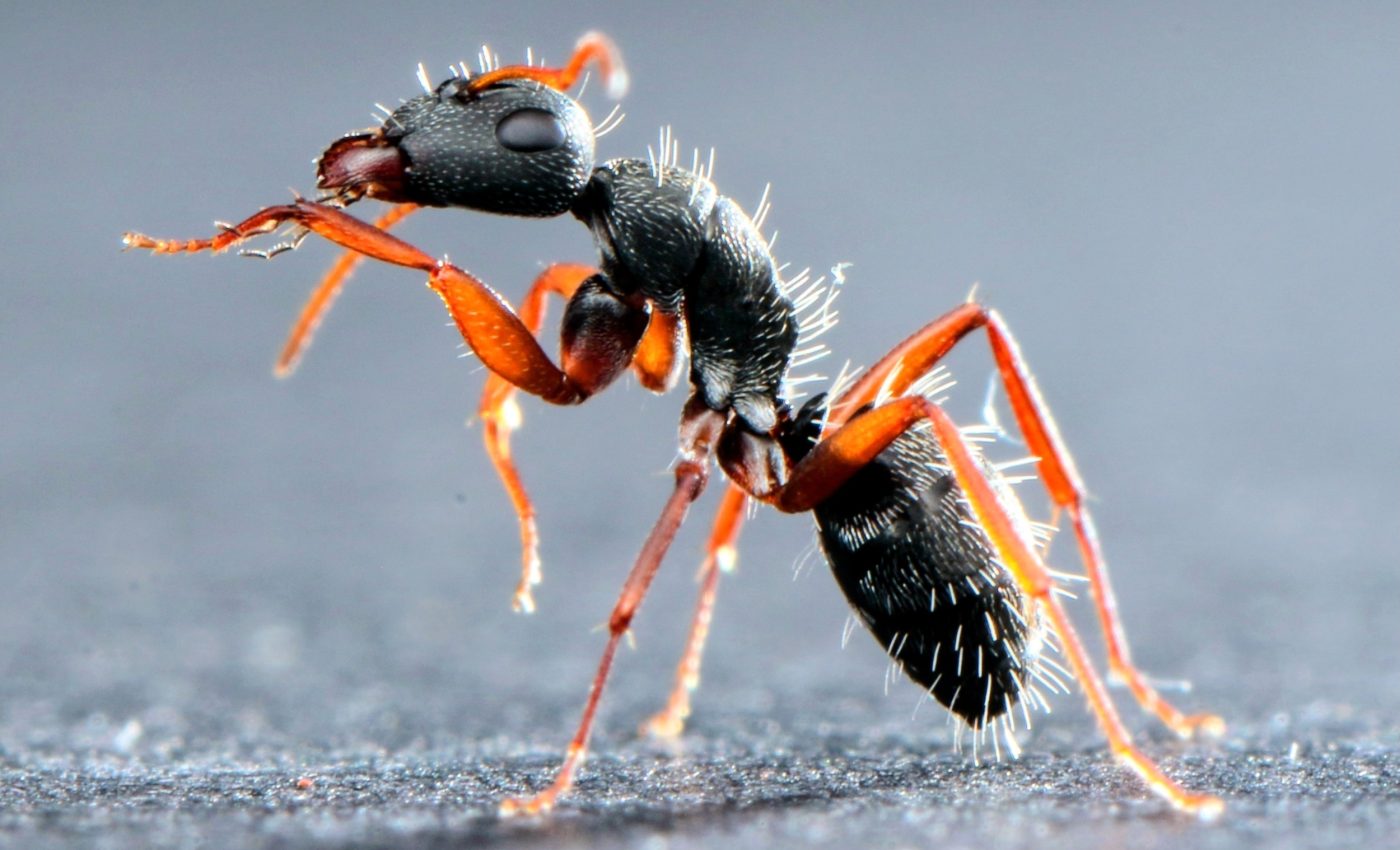
Ants are more vulnerable to invading parasites in hotter climates



 Follow Earth on Google
At first glance, ants look tiny and simple. But when scientists watch them closely, they see complex societies, clear communication systems, and even long-term conflicts that look a lot like wars.
Two recent studies explored one such conflict and revealed something surprising. Climate does not just affect where ants live. It shapes how they fight, communicate, and even how their genes change over time.

Researchers from Johannes Gutenberg University (JGU) Mainz and the Senckenberg Biodiversity and Climate Research Centre studied a long-running battle between two ant species.
One species acts as a host, while the other behaves like a social parasite. Together, the studies show that temperature and humidity play a major role in how this conflict unfolds across different regions.
When ants become enemies
Professor Susanne Foitzik is the senior author of both studies and chair of Behavioral Ecology and Social Evolution at JGU.
“Climate clearly explains the variation in host and parasite behavior better than parasite prevalence itself,” said Foitzik.
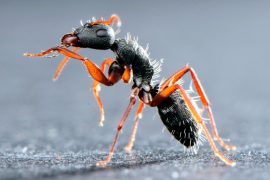
The conflict centers on two closely related ant species. The host ant is called Temnothorax longispinosus.
The parasite is known as Temnothorax americanus and is often called a “slave-making ant.” This name sounds extreme, but it accurately describes what the parasite does.
The parasite invades the host’s nest and steals its young ants, called brood. These stolen ants grow up inside the parasite colony and work for it as if it were their own home.
They gather food, care for young, and help the parasite colony survive. The host ants lose their future workers, which weakens their colony.
This kind of behavior makes the relationship especially intense. The host ants must defend their nests, while the parasite ants must plan raids carefully. Scientists wanted to know why this struggle looks different in various places.
Climate shapes ant behavior
To answer this question, researchers studied ten ant populations spread across a 1,000-kilometer (about 621 miles) stretch of the United States.
Some populations lived in warm and dry areas in the south. Others lived in cooler and more humid areas in the north.
The scientists brought all the ant colonies into the laboratory and kept them under the same conditions for a full year. This step mattered because it ruled out short-term effects of weather.
Any differences the researchers later observed had to come from long-term adaptation, not recent exposure.
Ant wars are affected by climate
When the experiments began, clear patterns appeared. Ant behavior followed climate more closely than the number of parasites in the area.
“Host and parasite populations differ in aggression, raiding activity, and their chemical profiles, and these differences follow the temperature and humidity gradient,” said study first author Dr. Erwann Collin.
In warmer and drier regions, host ants showed less aggression. Instead of fighting, they often grabbed their brood and fled the nest. This strategy reduced direct conflict but came with risks.
Parasite ants in these hotter regions behaved very differently. They showed higher activity and stronger aggression during raids.
In cooler and more humid regions, the pattern flipped. Host ants defended their nests fiercely. Parasite ants acted more cautiously and launched fewer bold attacks.
Climate appeared to tilt the balance of power in different ways depending on location.
Ants communicate through chemicals
Ants rely heavily on chemical communication. They use waxy substances on their bodies called cuticular hydrocarbons. These chemicals help ants recognize nestmates and protect them from drying out. They also play a key role during attacks and defense.
The researchers found that these chemical profiles changed in predictable ways along the climate gradient. Ants from warmer regions had different chemical signals than ants from cooler regions.
Because all ants lived under the same lab conditions for a year, these chemical differences did not come from recent weather.
Instead, they reflected evolved traits passed down over generations. Climate had shaped how ants communicate at a deep biological level.
Looking inside the genes
The second study went even deeper by examining the ants’ genes. Researchers used whole-genome sequencing and transcriptomics to see how natural selection acted on both species across different climates.
“We discovered a ‘geographic mosaic of coevolution’, with parasite populations differing more strongly from one region to another than host populations,” said Dr. Maide Macit.
Parasite ants showed greater genetic differences across regions, while both species shared climate-related survival genes. Climate aligned basic survival, but conflict drove different evolution.
Ants and parasites evolve differently
Host ants showed strong selection on genes involved in signaling and chemical sensing. These genes help ants detect invaders and respond quickly.
Some of the genes usually help fight bacteria or other microbes. In this case, host ants seemed to repurpose them to fight another ant species.
Parasite ants evolved in a different way. Selection focused on regulatory genes that control how raids happen. These genes help coordinate movement, timing, and behavior during attacks. Instead of improving detection, parasites improved execution.
Gene activity patterns reinforced this difference. “In the hosts, gene activity mainly reflected how common parasite colonies were in each area, whereas in the parasites it was influenced much more strongly by local climate,” said Dr. Barbara Feldmeyer.
This finding shows that hosts respond directly to the threat level around them, while parasites respond more to environmental conditions that shape their ability to raid.
Why smell is central
The researchers also found links between genes that produce chemical signals and genes that detect them.
Changes appeared not only in enzymes that make the chemicals, but also in odorant receptor genes that allow ants to sense these signals.
This result highlights how important chemical communication is in this conflict. Ants fight, flee, or attack based on what they smell.
Evolution repeatedly targets these systems because small changes can decide whether a colony survives or collapses.
Evolution of ants and parasites
Together, these studies show how environment and conflict interact to shape life over time. Climate does not act alone, and neither does biological conflict.
Instead, they work together, pushing species to adapt in specific ways depending on where they live.
“Host parasite systems are classic evolutionary arms races,” said Professor Foitzik.
“Because both species rely on chemical communication to recognize each other, their interaction provides a powerful framework for future studies on molecular coevolution.”
The study is published in the Journal of Evolutionary Biology.
—–
Like what you read? Subscribe to our newsletter for engaging articles, exclusive content, and the latest updates.
Check us out on EarthSnap, a free app brought to you by Eric Ralls and Earth.com.
—–