Intact royal tomb in Turkey dates back 2,800 years to the time of King Midas



 Follow Earth on Google
In Turkey, archaeologists have opened a 2,800-year-old royal tomb hidden inside a low, earth mound at Gordion, southwest of Ankara.
The researchers found human bones inside the wooden chamber, and dozens of bronze vessels that had supplied food and drink for a lavish funeral meal.

The burial dates to the 8th century B.C., the era when the historical King Midas ruled this region.
The site lies at the heart of the ancient kingdom of Phrygia. It gives researchers a starting point for understanding how royal power, family ties, and public ceremony came together in this capital city.
A hidden royal tomb chamber
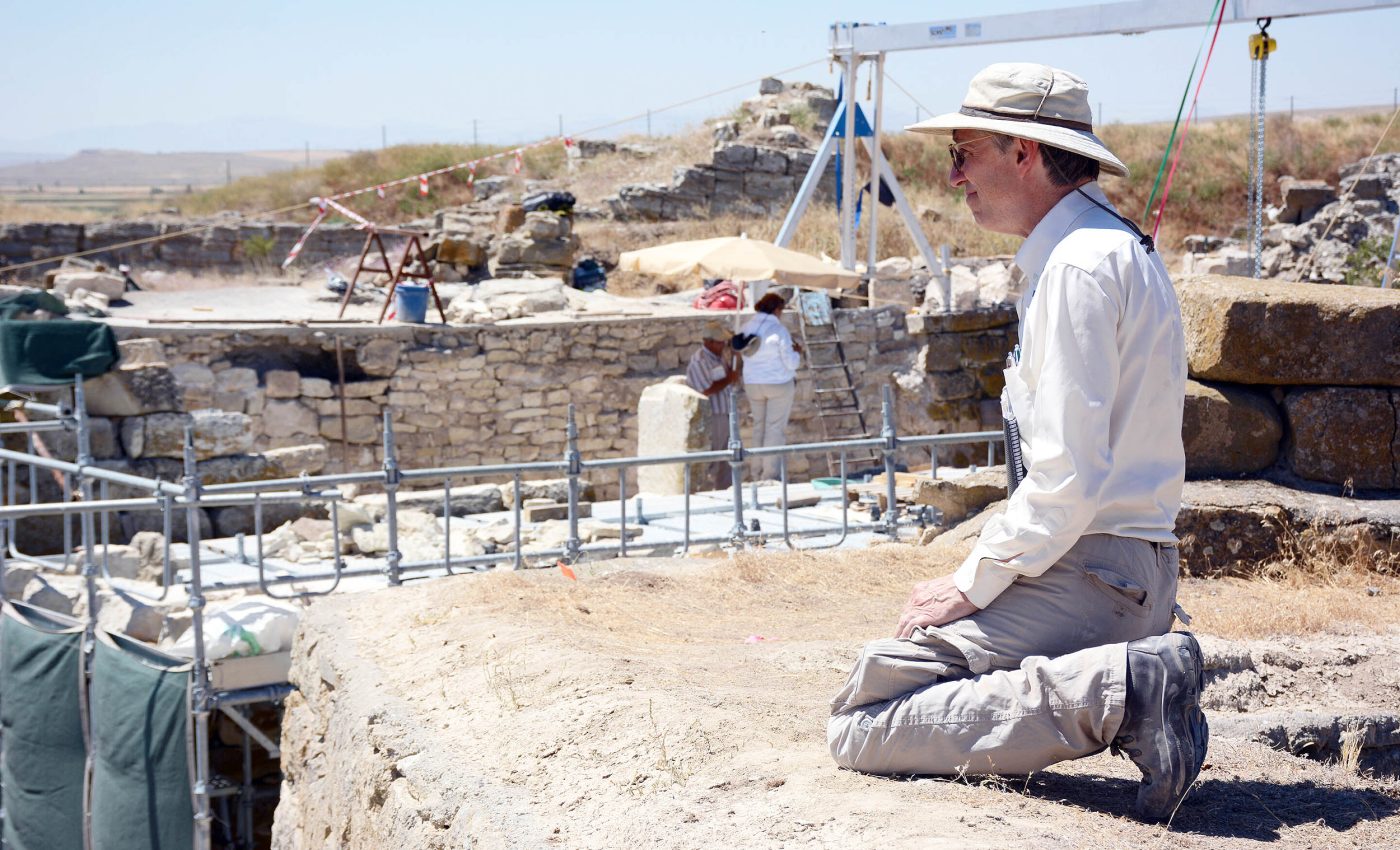
For years, excavations at Gordion have been led by C. Brian Rose, a classical archaeologist at the Penn Museum. His research focuses on how royal monuments, burials, and city walls expressed political power in ancient Anatolia and the wider eastern Mediterranean.
Working with Turkish colleagues, Rose and his team targeted a modest burial mound known as Tumulus T-26. Using remote sensing they pinpointed a wooden chamber hidden beneath a hill 25 feet (7.5 meters) high.
Gordion and the Phrygian Kingdom
Gordion was the capital of the Phrygian Kingdom that rose after the collapse of the Hittites. From this crossroads, its rulers controlled important trade routes between the Aegean world and the great empires further east.
Around the city, archaeologists count more than one hundred tumuli, large burial mounds built of earth to cover elite graves.
The biggest, known as the Midas Mound, rises over 170 feet (52 meters) high. It shelters a wooden burial room that was probably built for Midas’s father, Gordias.
Inside that earlier wooden chamber, excavators found the body of a man who was about 60 years of age. He was laid on thick, dyed textiles in a log coffin.
Chemical analysis of residues in the vessels showed a stew of lamb or goat served with a drink made from beer, wine, and honey.
Feasts, fire, and funeral clues
When archaeologists cleared the Tumulus T-26 chamber, they uncovered a pair of large bronze cauldrons, along with smaller cauldrons, jugs, and bowls.
The group forms a complete banquet set. It was probably used by mourners gathered around the royal tomb to eat and drink as part of the funeral.
Adjacent to the vessels lay the cremated bones of an adult. These were carefully placed among the containers that had once held food and drink, revealing burial rituals.
Several vessels preserved thin ghosts of cloth on their outer surfaces. These provided rare hints of the fine textiles that once wrapped or covered them.
For this period, most tumulus burials at Gordion hold unburned bodies. The cremated body in Tumulus T-26 thus suggests an experiment with cremation among the elite.
Ties to the Midas family
The new tomb lies close to the towering Midas Mound. Anyone buried there would have been part of the same royal landscape. Its built chamber, rich metal vessels, and central position within the mound field all indicate someone near the top of Phrygia’s social ladder.
“We estimate that the person in the tomb chamber may be a member of the royal family,” said Mehmet Nuri Ersoy, Turkey’s culture minister.
That level of wealth and symbolism would fit a close relative or key supporter within the dynasty often linked with King Midas.
Another nearby mound, labeled Tumulus T 52, contained the burial of a child younger than ten years old. The child was surrounded by a set of offerings, among which were more than 3,000 amber beads. The beads came from the Baltic Sea, revealing trade routes that linked central Turkey to northern Europe.
Lessons from this Turkish tomb
Even after seventy-five years of fieldwork, parts of the city and many burial mounds still lie unexcavated. “The area that has not yet been excavated is much larger than the area that has been excavated,” said Yücel Şenyurt, an archaeologist in Ankara.
Gordion was added to the list of World Heritage Sites, globally protected places recognized for exceptional cultural value.
The new status encourages careful conservation of the citadel, lower town, and surrounding burial mounds while still allowing research to continue.
A program from the Ministry of Culture and Tourism supports year-round excavations so teams do not stop when summer ends.
That extended season made it possible to follow subtle traces from the mound surface into the hidden royal tomb chamber of Tumulus T-26.
Tumulus T-26 shows how excavation and laboratory work can turn stains and objects into a story about people. It links the legend of Midas’s touch to a world of cooks, mourners, artists, and rulers whose choices echo through the landscape of Turkey.
Information from a press release by the Penn Museum.
—–
Like what you read? Subscribe to our newsletter for engaging articles, exclusive content, and the latest updates.
Check us out on EarthSnap, a free app brought to you by Eric Ralls and Earth.com.
—–