Archaeologists find a mysterious 8,000-year-old asexual figurine



 Follow Earth on Google
A tiny 8,000-year-old stone figurine from Damjili Cave in western Azerbaijan is pushing archaeologists to rethink how farming-era culture reached the South Caucasus.
The object looks human but has no clear male or female traits, which makes it what researchers call an asexual figurine.

Carved just before permanent farming villages appeared in the region, the figurine sits at the tipping point between mobile hunting life and settled agriculture.
Its unusual body shape and lack of gender link it to older local traditions rather than the clay women seen at later Neolithic sites.
Figurine from a Caucasus farm
The work was led by Yoshihiro Nishiaki, a prehistorian at the University of Tokyo. His research follows how early farming cultures spread into the Caucasus and how older hunter-gatherer communities responded.
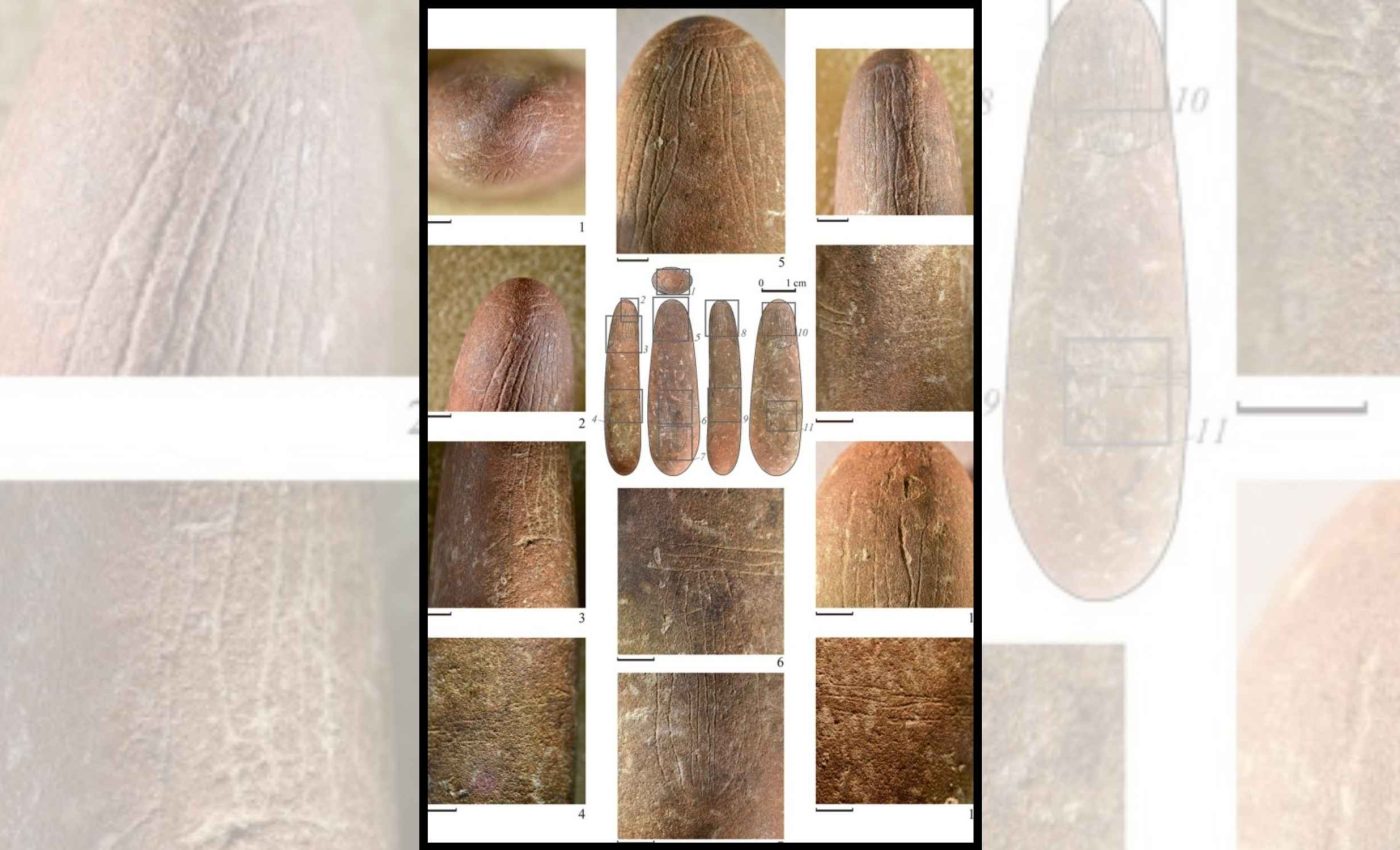
The figurine is about 2 inches long, carved from a smooth sandstone river pebble with fine lines on its surface.
Seen with the naked eye, it looks like an elongated reddish-brown stone, but closer inspection shows deliberate engraving rather than natural scratches.
In their detailed study, the team reports that the figurine has no face at all, only a rounded head with fine-linear marks.
Those marks form hair, a narrow belt, and a possible loincloth, creating a stylized body that is deeply different from later clay figures.
Mesolithic hunters to Neolithic farmers
The Mesolithic, the period between Ice Age hunters and full farming societies, was a time when people lived by hunting, fishing, and gathering.
In the South Caucasus, many groups moved seasonally between lowland rivers and mountain foothills instead of staying in permanent villages.
The Neolithic, the later period when people lived in farming villages, brought crops, herds, pottery, and new kinds of ritual objects.
For communities in the South Caucasus, this new way of life arrived earlier in some valleys and later in others.
Recent research describes Neolithization, the gradual spread of this farming way of life, as a slow and uneven process across the South Caucasus.
Domesticated plants and animals arrived around 6000 BC, but traits such as pottery and clay figurines became common only later at some sites.
Caucasus figurine with no gender
Most Neolithic figurines from the region are seated women with breasts and hips, while the Damjili figurine stands upright and shows no sexual features.
Archaeologists describe it as an asexual human figure, meaning its makers chose not to signal either male or female identity on the body.
Neolithic figurines from Anatolia and the Fertile Crescent, an arc of early farming lands in Southwest Asia, are mostly small clay humans and animals.
Research shows that many of these clay figures were seated female bodies with emphasized breasts, hips, and sometimes elaborate hair or headgear.
“A distinct cultural tradition of symbolic art within the communities of the South Caucasus,” said Nishiaki.
For him, the asexual stone figure marks a local Mesolithic way of thinking about bodies that did not simply copy later Neolithic female icons.
Deciphering ancient traditions
Earlier Mesolithic sites at Gobustan on the Caspian coast show portable art, small carvings and engravings that people could carry.
Figures of women and hunters carved on separate stones there hint at local symbolic traditions long before farming villages appeared inland.
At Damjili, researchers used microscopic imaging, radiocarbon dating, and X ray scans to confirm the figurine’s age and the fine engravings on its surface.
The radiocarbon dating, which estimates age from radioactive carbon in traces, places it between 6400 and 6100 BC, just before Neolithic farming spread locally.
The figurine comes from the Middle Kura Valley, the heart of the Shomutepe culture, an early-farming tradition known for its mudbrick villages.
Later layers at these settlements hold clay-human figurines but no stone ones, pointing to a break in portable art between Mesolithic and Neolithic times.
Lessons from the Caucasus figurine
“Recent research shows that the Neolithization of the South Caucasus occurred in stages,” wrote Yoshihiro Nishiaki, and the team calls this a staging hypothesis.
That staging hypothesis, the view that Neolithic customs arrived piece by piece, helps explain why some objects changed sooner than others.
For archaeologists, the asexual stone body helps trace how ideas about humans, gender, and images changed as farming spread into the mountain region.
This one small figurine shows that people in the South Caucasus did not simply abandon older beliefs when they adopted crops and herds.
Instead, they blended new farming lifeways with long-standing Mesolithic symbols, leaving behind a subtle stone body whose missing gender still challenges modern eyes.
The study is published in Archaeological Research in Asia.
—–
Like what you read? Subscribe to our newsletter for engaging articles, exclusive content, and the latest updates.
Check us out on EarthSnap, a free app brought to you by Eric Ralls and Earth.com.
—–