Black fungus living at Chernobyl evolved to 'eat' radiation, proving helpful for space travel



 Follow Earth on Google
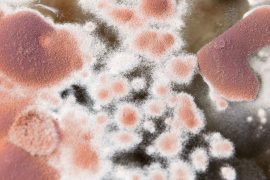
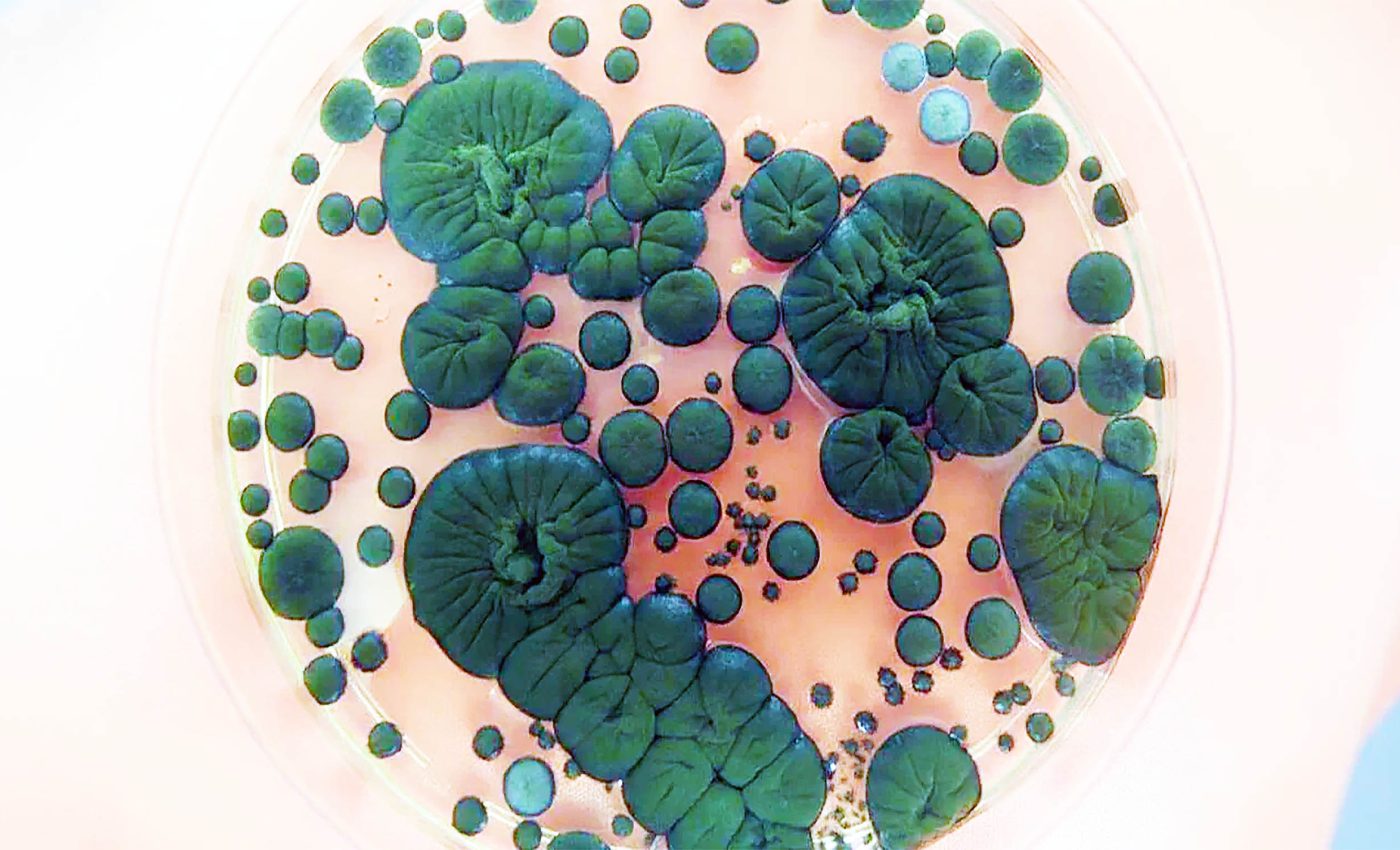
After the Chernobyl nuclear disaster in 1986, scientists expected to find a dead zone where almost nothing could survive. Instead, they found life that found ways to adapt and survive. One key example was a common black fungus called Cladosporium sphaerospermum.
Researchers had known about this fungus for more than a century, but its behavior at Chernobyl caught their attention. It didn’t just tolerate radiation. It appeared to grow toward it, colonizing surfaces where radiation levels were highest.
Cladosporium sphaerospermum and space

In a roundabout way, this is great news for astronauts. Space travel comes with a problem you cannot see in photos: radiation.
Outside Earth’s protective magnetic field, high-energy particles hit spacecraft and the people inside them. Those particles can damage DNA and raise long-term health risks.
Engineers can add shielding, but rockets charge a “weight tax” for every extra 2.2 pounds (1 kilogram) you launch. Mission planners face that trade-off on deep-space trips.
Some researchers have started asking a different question. Could a living organism grow into a self-renewing radiation shield?
The idea focuses on a dark fungus called Cladosporium sphaerospermum, one of the “black” fungi that produce a lot of melanin.
In humans, melanin helps protect cells from ultraviolet light. In these fungi, scientists think melanin can also help reduce damage from ionizing radiation.
Ionizing radiation has enough energy to knock electrons off atoms and trigger damaging chemical reactions.
Some fungi found in very radioactive places on Earth even show “positive radiotropism,” meaning they seem to grow toward radiation.
Researchers also use the term “radiotrophy” for the broader idea that radiation might help power the organism’s metabolism, although that idea remains controversial and hard to prove.
CubeLab module on the ISS
Researchers sent the fungus to the International Space Station (ISS) inside a CubeLab module that ran on its own.
The ISS orbits inside much of Earth’s magnetic protection, but it still gets more radiation than you do on the ground.
The box held two Raspberry Pi computers, a camera with a built-in light source, temperature and humidity sensors, and two radiation sensors.
A split Petri dish held the samples. One half contained potato dextrose agar with the fungus.
The other half held the same agar without the fungus, so it served as a built-in negative control (a comparison sample without fungus).
Space radiation on the ISS
One radiation sensor sat under each half of the dish, so both sensors “looked up” through almost the same materials. Only one side developed a layer of fungal biomass.
That setup mattered because radiation around the ISS changes as the station moves through orbit.
The team also positioned the dish and sensors to face away from Earth. Shielding from the planet and the station’s structure can change what the detectors record.
Cladosporium sphaerospermum growth
The team kept the inoculated plates cold at about 39°F (4°C) during transit so the fungus would not grow much before observations began.
On the ISS, the system took photos every 30 minutes for 576 hours and collected more than a thousand images. It recorded temperature and humidity frequently and logged radiation counts about once every 1.5 minutes, on average.
The full run lasted about 622.5 hours, and each radiation sensor logged tens of thousands of counts.
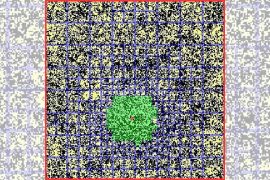
The researchers needed a way to measure growth without touching the dish. They processed the images and treated brightness changes as a stand-in for how much fungal material covered the agar.
Next, the experts converted those values into a “relative optical density” scale from zero to one. Ground controls on Earth matched the same temperature changes over time and used the same photo method.
They lacked the space environment, which let the team ask, “Did the fungus grow differently up there than it did down here?”
What the growth data suggested
Inside the hardware on the ISS, the temperature rose quickly and then settled at an average of about 89°F (31.5°C). Under those conditions, the fungus reached full coverage of the agar.
When the authors modeled the growth curve, they estimated the on-orbit growth rate was about 1.21 times the ground control rate (about 21% higher).
The researchers described this pattern as consistent with a possible “radioadaptive” response. Radiation could play a role, but microgravity also changes how fluids move and how cells interact, which can affect growth.
ISS radiation sensors
The radiation sensors did not function as the dose badges you may have heard about in medical imaging.
The sensors counted ionizing events, but they did not directly report a clean “dose” value in millisieverts for the experiment.
Because both sensors ran under the same dish at the same time, the design allowed a direct comparison.
Over the full runtime, the sensor under the fungal side recorded slightly fewer counts per minute than the sensor under the control side, about 147 versus 151 counts per minute.
The difference also changed with time. Early in the run, the sensors tracked closer together because the fungal layer still looked thin.
Later, after the fungus built up a stable layer, the separation grew. That timing made it less likely that one sensor was simply reading low from the start.
Why melanin and water matter
Melanin is central to the hypothesis. Radiation can create reactive molecules, and melanin can absorb energy and help neutralize some of the chemical damage those molecules cause.
The study also points to a simpler materials lesson: hydrogen-rich materials often help slow certain kinds of space radiation, especially energetic protons and neutrons.
Living biomass contains lots of water, and water contains lots of hydrogen. That means a thick layer of wet biological material can sometimes function as a useful shield per unit mass, even before you consider any special chemistry from melanin.
The authors described the shielding effect cautiously, using phrases such as “may have” and “could,” because shielding depends on particle type, energy, thickness, and geometry.
High-energy cosmic rays can also create secondary particles when they hit shielding, so engineers need careful measurements with more accurate dosimetry (radiation dose measurement) before they treat any material as a solution.
Limitations of the experiment
This study was a proof-of-principle test with one small payload, so it limits how confidently anyone can generalize.
The fungus grew in a sealed Petri dish with agar and a small headspace, which makes it hard to separate every possible contributing factor.
Most importantly, the experiment doesn’t demonstrate “radiosynthesis” in the strong sense of “the fungus lives off radiation the way plants live off sunlight.”
Follow-up work can use stronger sensors and repeated trials to test how stable the effect remains across different conditions.
Future of Cladosporium sphaerospermum
A living radiation shield concept ties into in-situ resource utilization (often shortened to ISRU), the idea that astronauts should manufacture useful materials where they travel instead of hauling everything from home.
A fungus like Cladosporium sphaerospermum can start from a small sample, grow into a thicker layer, and repair itself after damage, at least in theory.
The authors also discuss mixing fungal biomass or melanin with local materials such as lunar or Martian soil to create “living composites” that could combine structural and protective roles.
Spacecraft designers already stack different protections, including trajectory planning, monitoring solar activity, and dedicated shelter areas for short, intense bursts from the Sun.
A biological layer, if it proves reliable and predictable, could add another option in that larger plan.
The full study was published in the journal Frontiers in Microbiology.
—–
Like what you read? Subscribe to our newsletter for engaging articles, exclusive content, and the latest updates.
Check us out on EarthSnap, a free app brought to you by Eric Ralls and Earth.com.
—–