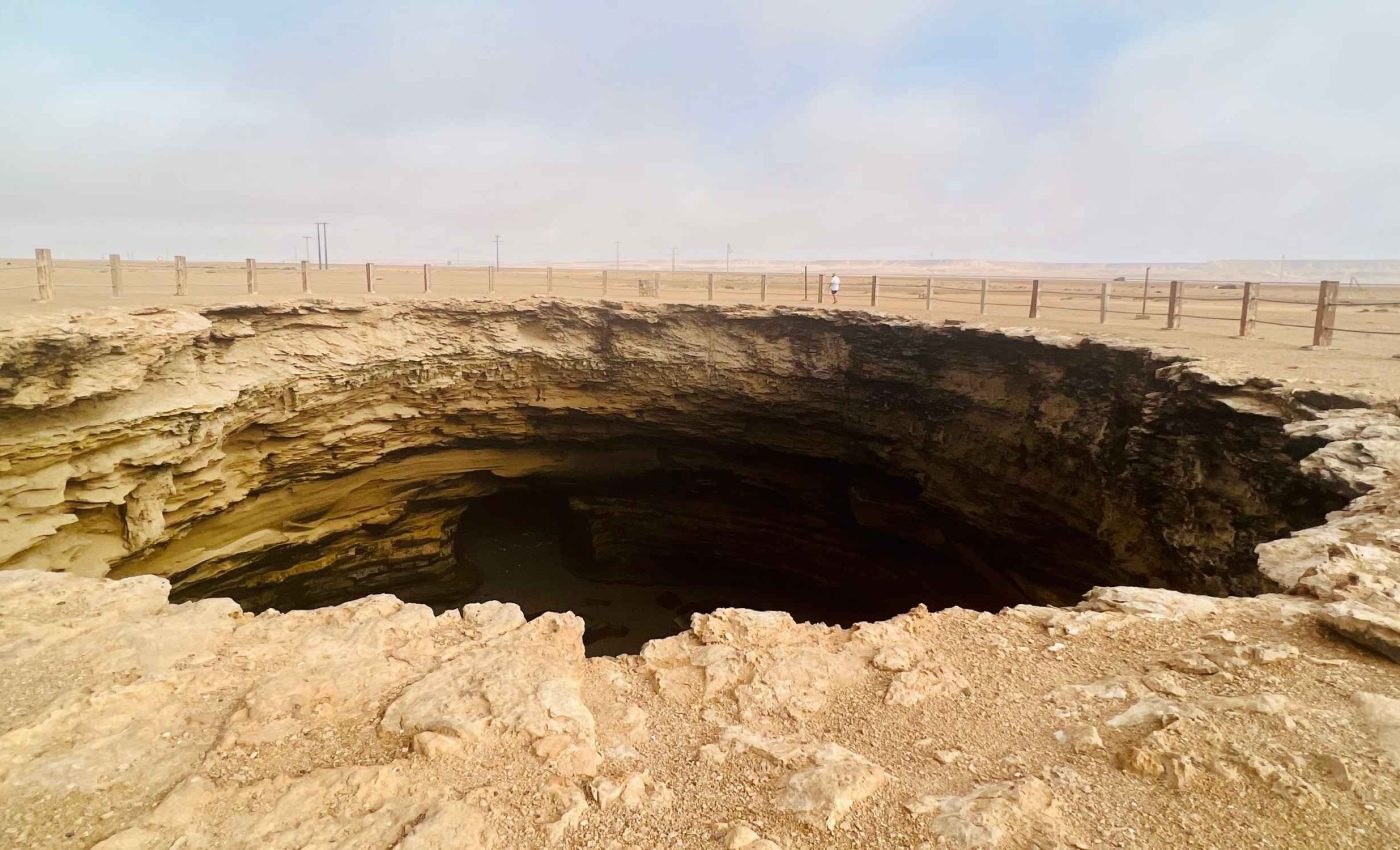
China is drilling a hole that will reach six miles deep into the Earth



 Follow Earth on Google
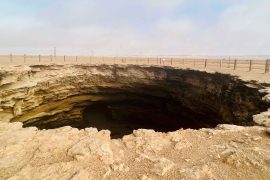
In the center of China’s Taklimakan Desert, engineers have started drilling a new scientific borehole. Their plan is to reach more than 32,800 feet straight down, roughly six miles into solid rock.
The well, called Shendi Take 1, sits in the Tarim Basin of Xinjiang and pushes China’s drilling technology into new territory.

It also turns a sweep of sand into a test site for understanding earthquakes, oil and gas, and Earth’s interior.
Drilling Shendi Take 1
The work is led by Sun Jinsheng, a drilling engineer and academician of the Chinese Academy of Engineering (CAE).
His research focuses on deep and ultra deep drilling technology for both energy production and Earth science.
By sinking this narrow borehole, scientists hope to reach rocks from an ancient era. That Cretaceous period, a stretch of time when dinosaurs still dominated the planet, left sediments that record ancient oceans, climates, and buried organic matter.
Shendi Take 1 has a design depth of about 36,400 feet. That is deep enough to cut through more than ten layers of continental rock, including the Cretaceous system.
The equipment is colossal for such a slim hole, with drill bits and steel pipes weighing more than 2,000 tons suspended in the well.
“The construction difficulty of the drilling project can be compared to a big truck driving on two thin steel cables,” said Jinsheng.
Why drill so far into Earth
At these depths, the goal is not scenery but information about the continental crust, the rocky shell of the planet beneath continents.
This layer stores heat, fluids, and stress that help control earthquakes, mountain building, and the way continents move over geologic time. Deeper wells also help track how oil and gas behave at extreme pressures.
One study of an ultra deep well called TK 1 found cores and fluids that overturned ideas about how deep hydrocarbons can exist.
For the Chinese team, Shendi Take 1 is a lab for plate tectonics, the idea that Earth’s plates move and change the planet.
As the bit chews downward, each slice of rock refines maps of faults, folds, and buried mountain roots that seismic surveys hint at.
“Drilling a borehole over 10,000 meters deep is a bold attempt to explore the unknown territory of the Earth,” said Wang Chunsheng.
“and expand the boundaries of human understanding,” said Chunsheng, a technical expert who joined the operation.
Other superdeep holes
China is not starting from scratch. The Kola Superdeep Borehole in Russia holds the record as the deepest hole, reaching about 40,230 feet.
Detailed analysis of Kola core samples showed that the expected basalt layer never appeared, even miles below the surface.
That unexpected stack of metamorphic rocks suggested that boundaries in seismic data mark changes in rock properties rather than switches from granite to basalt.
Modern projects like Shendi Take 1 use drilling fluids, liquids that cool the bit, carry crushed rock upward, and keep the well walls stable.
Recent work shows these fluids break down as temperatures rise and new cooling methods can keep them usable.
Far from the mantle
Even a seven-mile-deep hole only scratches a fraction of Earth’s interior. The crust beneath continents averages 19 miles thick and can deepen to 62 miles under mountain ranges, according to a USGS overview.
Below that crust lies the mantle, a layer of hot, dense rock that extends 1,800 miles down and creeps over millions of years.
Heat rising from this layer drives volcanic arcs, fuels mid ocean ridges, and helps power the convection that moves tectonic plates. Because Shendi Take 1 stops well within the crust, it will not touch the mantle.
It will, however, give geophysicists ground truth measurements to compare with seismic reflections and gravity data that now sketch our picture of deep structure.
The Taklimakan site is valuable because the Tarim Basin hosts the thickest sediment piles and deepest oil and gas reservoirs in Asia.
Linking layers from the surface to ultra deep formations in one column lets scientists test models of how basins evolve through millions of years.
Lessons from Shendi Take 1
“Going deeper into the Earth is a crucial strategic choice for securing China’s energy supply,” said Jinsheng. What happens in this remote desert will not stay there.
Deep Earth data can sharpen risk estimates for earthquakes and help planners understand where faults are locked or creeping at depth.
Better thermal and stress maps can also guide geothermal projects, carbon storage tests, and other attempts to use the deep subsurface in safer ways. Shendi Take 1 also reflects a longer career arc for Sun and his colleagues.
In recent years he has led work on drilling fluids and related technologies that keep wells stable when temperatures and pressures climb.
Together with earlier Tarim wells, this project marks a turn toward direct exploration of Earth’s interior on land rather than just beneath the oceans.
If the team reaches its planned depth, the samples they bring back could reshape textbooks about how continents work from surface to deep rocks.
—–
Like what you read? Subscribe to our newsletter for engaging articles, exclusive content, and the latest updates.
Check us out on EarthSnap, a free app brought to you by Eric Ralls and Earth.com.
—–