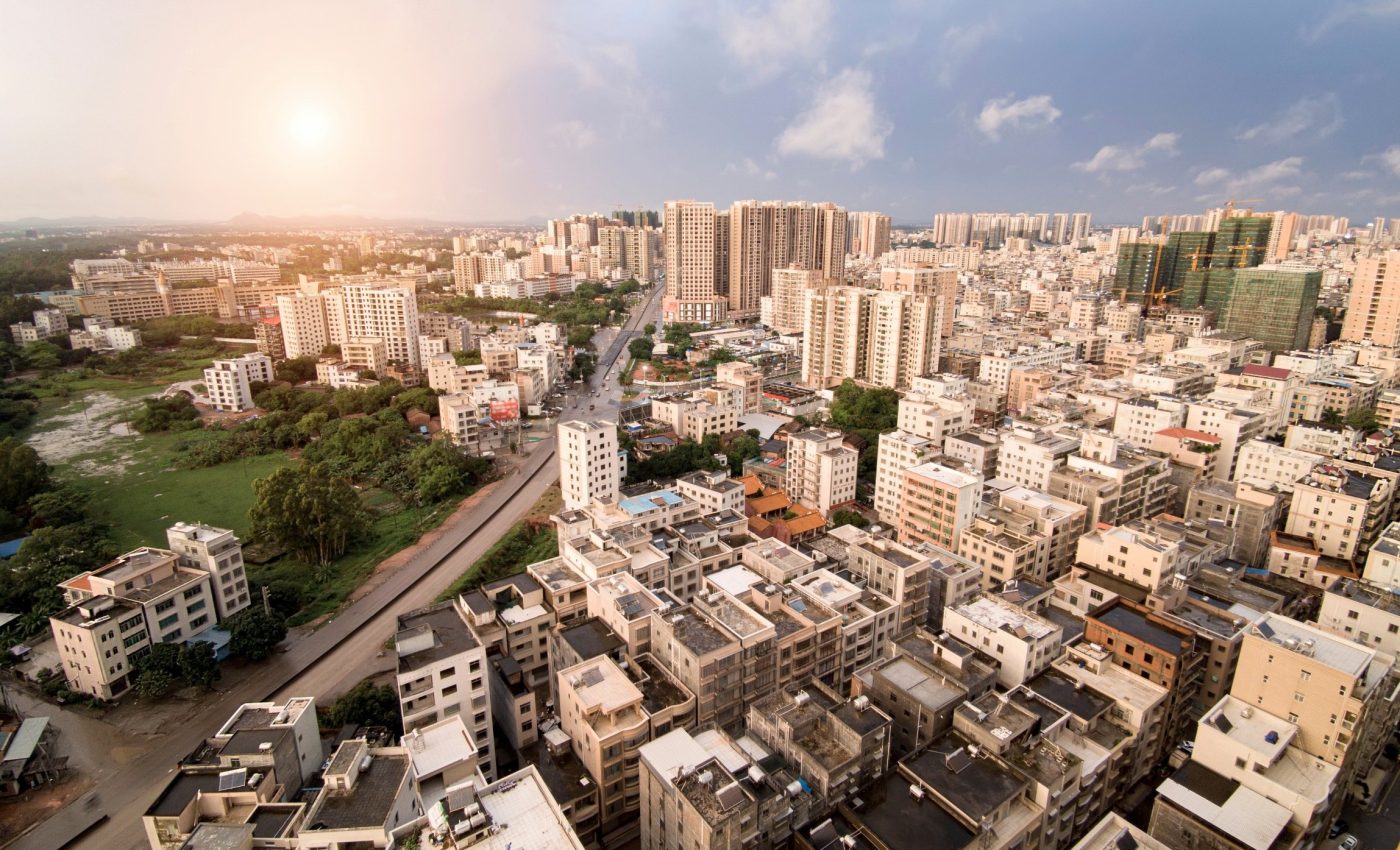
City growth could leave millions without water by 2050



 Follow Earth on Google
By 2050, the way cities spread could decide whether hundreds of millions of people turn on a tap and find water. A new analysis of more than 100 cities in Asia, Africa, and Latin America links sprawling growth to weaker access to water and sewage.
If new streets and homes cluster closer to city centers instead of sprawling outward, piped water could reach 220 million more people. Sewage services could reach an extra 190 million as well.
How city growth affects water

The team used a detailed analysis of more than 183 million buildings and 125,000 households to compare city layouts and basic services.
They found that sprawling cities pay about 75 percent more for water and have roughly 50 percent less piped coverage than compact ones.
In outer neighborhoods, people have about 40 percent less access to critical infrastructure than those closer to the center. These are the roads, pipes, power lines, and basic services.
The work was led by Rafael Prieto-Curiel, a complexity scientist at the Complexity Science Hub in Vienna. His research focuses on how urban growth and city design shape access to services such as water, transport, and safety.
How cities spread
To compare big metros and smaller towns, the researchers introduced remoteness, a measure of how far each neighborhood lies from the city center.
Instead of just drawing circles on a map, the team adjusted distances so that cities of different sizes could still be compared fairly.
From there, they calculated sparseness, the average remoteness of where people live. Low sparseness means most people cluster near the core, while high sparseness means more people are scattered in far flung districts.
Jakarta, for example, has more than half of its roughly 33 million residents in central areas, which keeps its sparseness relatively low.
In Kigali, only about 15 percent of the 2.2 million residents live near the center, so services must stretch across many distant neighborhoods.
Sparse layouts make every new connection costlier, because each extra house needs more pipe and pumping to reach the same water.
Three paths for fast-growing cities
To see what lies ahead, the team simulated each city doubling its population and built area, then asked where those new buildings would go.
The researchers tested a compact option that fills gaps near the center, a persistent one that keeps patterns, and a horizontal option that spreads outward.
Compact growth stacked more residents near existing networks, so a larger share of people stayed within reach of pipes and treatment plants. In the persistent case, access did not improve much, but it also did not fall as sharply as under horizontal growth.
Some central districts are not well served, as seen in Kibera in Nairobi, where many families lack safe water and sanitation inside their homes.
Projects there show that adding communal taps and hygiene programs can sharply cut diarrheal disease in children, but only with sustained investment and management.
Regions under strain
United Nations projections suggest that by 2050, cities worldwide will add about 2.5 billion more residents, mostly in Asia and Africa.
Africa’s urban population is expected to nearly triple from 550 million in 2018 to 1.5 billion, while Asia’s climbs to around 3.5 billion.
The study shows that African cities are already much more sparse than Asian ones. On average, only about 12 percent of residents in African cities live in central areas, compared with roughly 23 percent in Asian cities.
A recent update from the WHO and UNICEF Joint Monitoring Programme estimates that about 2.2 billion people still lack safely managed drinking water.
That term means water on the property, reliably available, and free from contamination. When those global pressures meet rapid urban growth, the way new districts are planned can either close those gaps or deepen them.
Enhancing access to water
“Water scarcity gets a lot of attention, but urban form is something we can actually control,” said Prieto-Curiel.
A recent World Bank report notes that about 3.5 billion people still lacked safely managed sanitation in 2022. It also warns that meeting global water goals by 2030 will demand investment levels several times higher than today’s spending.
In practical terms, compact growth means steering new housing and jobs into areas that are already connected to pipes, sewers, and transit.
Tools like zoning codes, land value taxes, and housing subsidies can line up so that people live near services rather than beyond reach.
“Our analysis shows that effective planning can significantly enhance access to water and sanitation. Compact, walkable neighborhoods with adequate density aren’t just environmentally sustainable,” said Prieto-Curiel.
The study is published in the journal Nature Cities.
—–
Like what you read? Subscribe to our newsletter for engaging articles, exclusive content, and the latest updates.
Check us out on EarthSnap, a free app brought to you by Eric Ralls and Earth.com.
—–