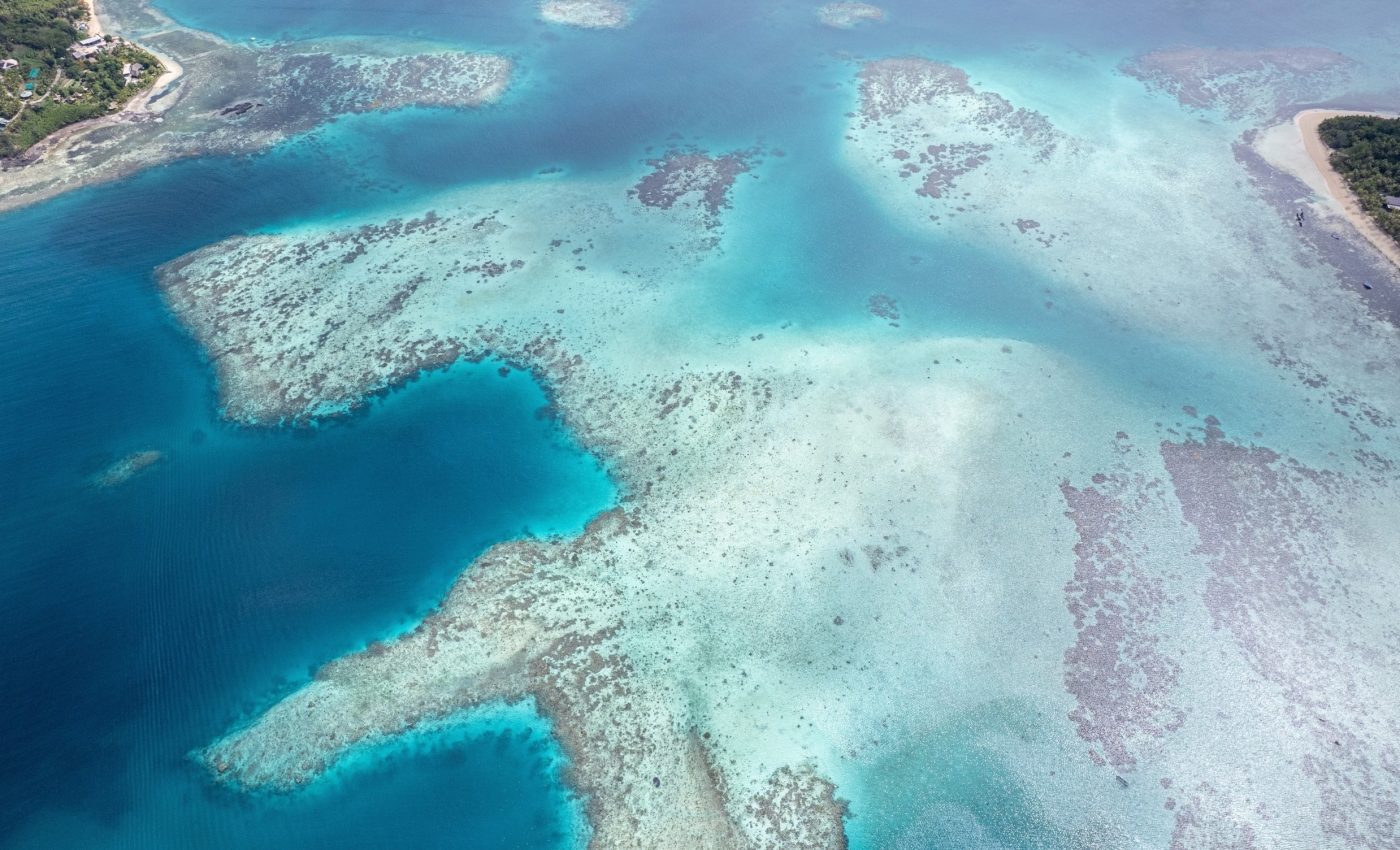
Coral reefs are much more resilient when they're connected



 Follow Earth on Google
Coral reefs are under relentless strain. Warming seas, polluted runoff, and heavy fishing are steadily chipping away at their resilience.
Coral reefs are undeniably struggling, yet the ways they react and adapt as a connected community remain unexpectedly complex.

A new study brings that complexity into view and hints at a strategy that could support their long-term resilience.
Advantages for connected reefs
Reefs aren’t isolated. They exchange larvae, support nearby ecosystems, and move in step as conditions shift. That basic idea becomes striking once you realize how one reef’s recovery can influence waters many miles away.
It also raises a big question: if reefs are linked, could actions in a few key places benefit an entire region?
A team from the University of Oxford, the University of Toronto, the National Research Council of Italy, and the Wildlife Conservation Society (WCS) dug into this idea by building a detailed model of coral reefs in Fiji.
The experts studied what happens when fishing pressure drops, when pollution is reduced, and when both actions happen at the same time.
The study’s focus on Fiji wasn’t random. Many reefs there act as climate refuges, meaning they’ve shown some ability to recover after heat waves and storms.
Boosting a connected reef system
The model showed something clear. When local pressures were addressed together, reefs did better than when fishing or pollution were tackled on their own.
The combined approach helped coral cover rise in ways that held up even when the researchers tested uncertain future conditions. That kind of durability is rare in ecosystem work.
The researchers also found that fishery closures in less than half of the network could boost coral across the entire system because larvae move from reef to reef.
This means one place’s recovery can help another area miles away without any extra effort from people living there.
“For too long, coral reefs have been managed in isolation. Our research shows that when we account for connections between reefs, we find that they are far more stable than previously thought,” said Dr. Ariel Greiner.
“Protecting a few key reefs can help sustain high coral cover across the entire network – the key is identifying which ones to protect. We also illustrate that strategies that address both overfishing and land-based pollution together deliver the strongest and most lasting results.”
How reefs shift over time
The team noticed that the movement of young corals helps stabilize reef systems over long periods. It lowers the odds that a coral-rich area will slip into a state dominated by other organisms.
“Our study shows that when we include realistic dispersal connectivity between many reefs, the duality of coral- or non-coral-dominated reefs that we see in models of single or pairs of reefs disappears when we consider entire networks of reefs,” said Dr. Greiner.
“This is a novel, unexpected, and exciting result with impacts for coral reef management, and for our understanding of coral reef dynamics globally.”
A realistic path to protect ecosystems
The researchers paired their model with a value of information analysis. This tool helps decision-makers understand which actions are worth taking when working across large areas and long periods of time.
The method is rarely used in marine conservation, yet it may help fill gaps in planning by setting priorities more clearly.
“This study shows how modeling can help forecast the long-term consequences of today’s conservation decisions and pinpoint the actions that build lasting resilience for reefs facing multiple pressures,” said Dr. Emily Darling, Director of Coral Reefs at WCS.
“What’s powerful about these findings is their practicality: when we focus on climate-resilient coral reefs, coordinated efforts to reduce fishing pressure and improve water quality can generate outsized benefits across entire reef networks.”
This gives decision-makers a realistic path to protect ecosystems while supporting the communities who depend on them, noted Dr. Darling.
The resilience of connected reefs
The group plans to expand this work to other reef systems. They want to see how human behavior, including tourism-driven conservation, fits into the picture.
The researchers also aim to learn more about when the movement of young coral and macroalgae strengthens or weakens a reef’s ability to survive.
Coral reefs may appear fragile, but this study reveals a resilience that emerges when they’re treated as a connected system. The task now is to turn that insight into action – and build protection strategies that endure.
The full study was published in the journal Ecological Applications.
—–
Like what you read? Subscribe to our newsletter for engaging articles, exclusive content, and the latest updates.
Check us out on EarthSnap, a free app brought to you by Eric Ralls and Earth.com.
—–