Dinosaur fossil with preserved 'voice box' reveals how it may have sounded



 Follow Earth on Google
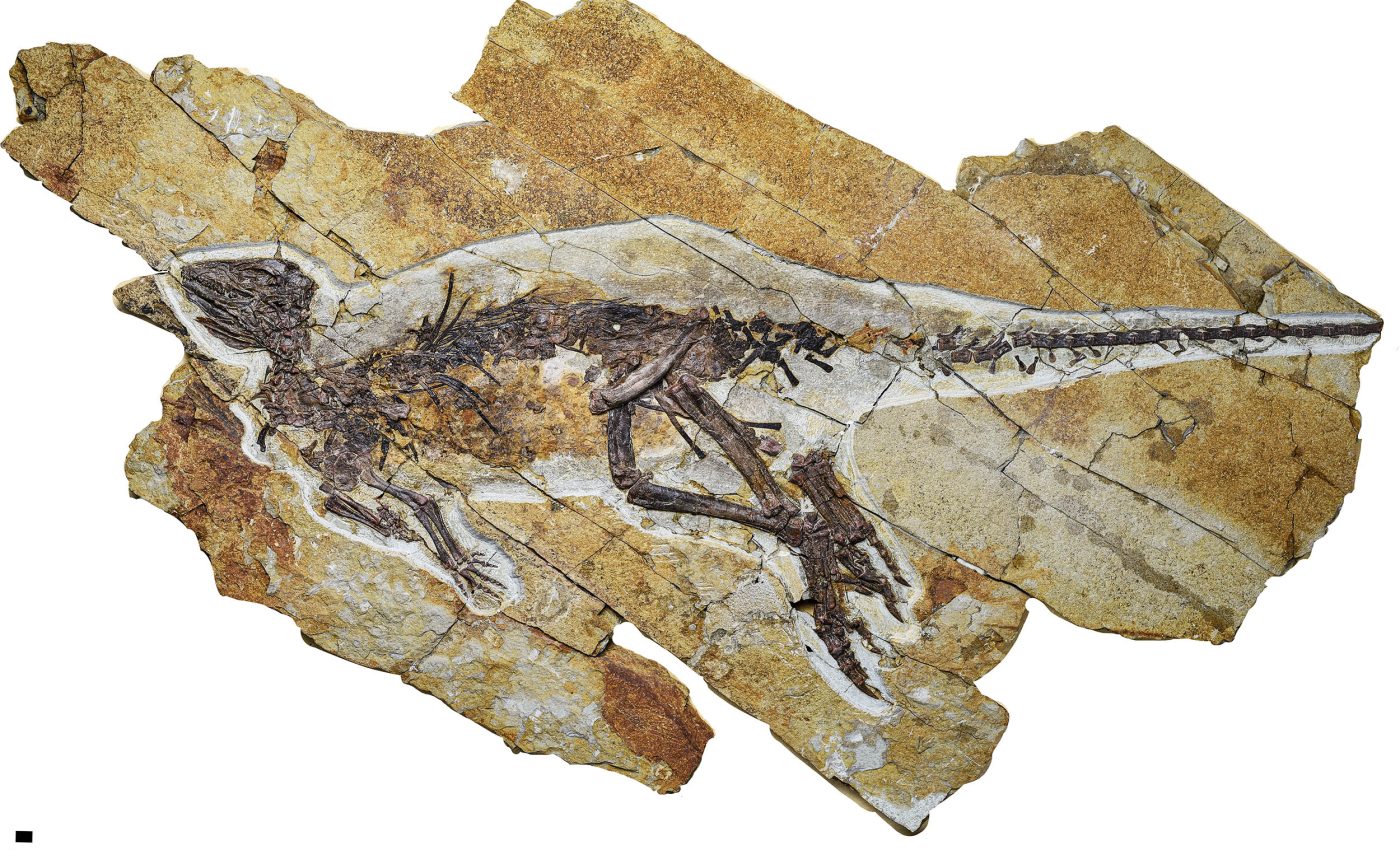
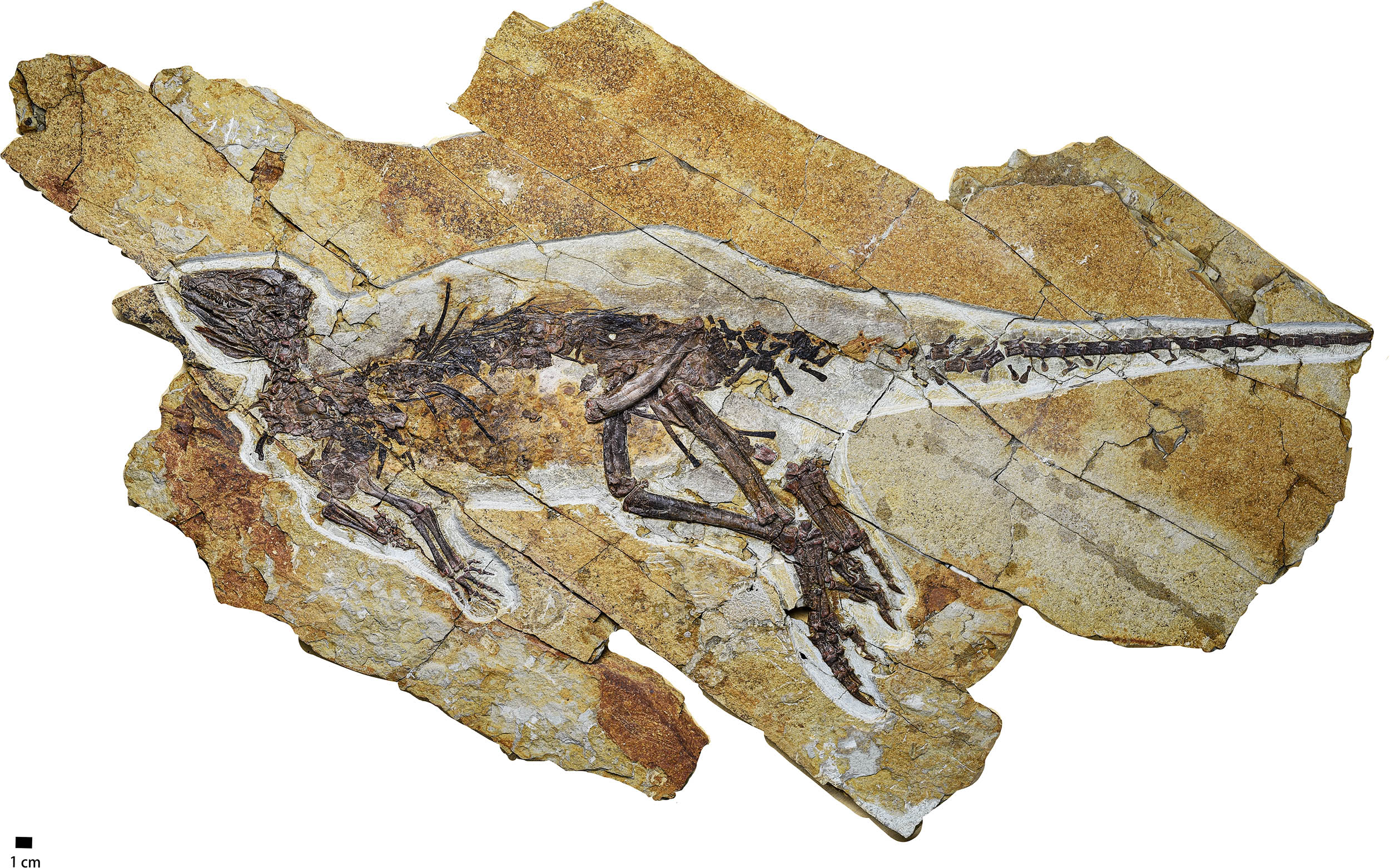
In a slab of Jurassic rock from northern China, a small dinosaur species named Pulaosaurus qinglong was discovered with its bones still connected. Near the chest and throat sit the last things it swallowed, including tiny bones that later turned to stone.
Pulaosaurus qinglong lived about 163 million years ago in what is now Qinglong County in Hebei. Its body was only about 28-inches long, and a recent study reports plant filled gut contents and a rare bony “voice box.”
Finding Pulaosaurus qinglong

The work was led by Yunfeng Yang, a paleontologist at the Institute of Vertebrate Paleontology and Paleoanthropology in Beijing (IVPP).
His research focuses on small plant-eating dinosaurs from China and what they reveal about early dinosaur evolution.
The skeleton lies curled on a flat slab of reddish sandstone, with the skull, spine, hips, arms, and legs in natural order.
Layers of ash and lake sediments in the same rocks point to a humid, forested landscape with nearby volcanoes.
Its eye opening is large compared with the skull length, and several joints in the neck and tail are still unfused.
Those features suggest the specimen had not yet reached adulthood, so older individuals may have grown somewhat larger and sturdier.
Based on many skeletal details, the team classifies Pulaosaurus as an early neornithischian, a small plant-eating dinosaur from the bird hipped line.
That position places it near the root of a group that later produced famous beaked herbivores such as duck billed and horned dinosaurs.
Bones that hint at dinosaur voices
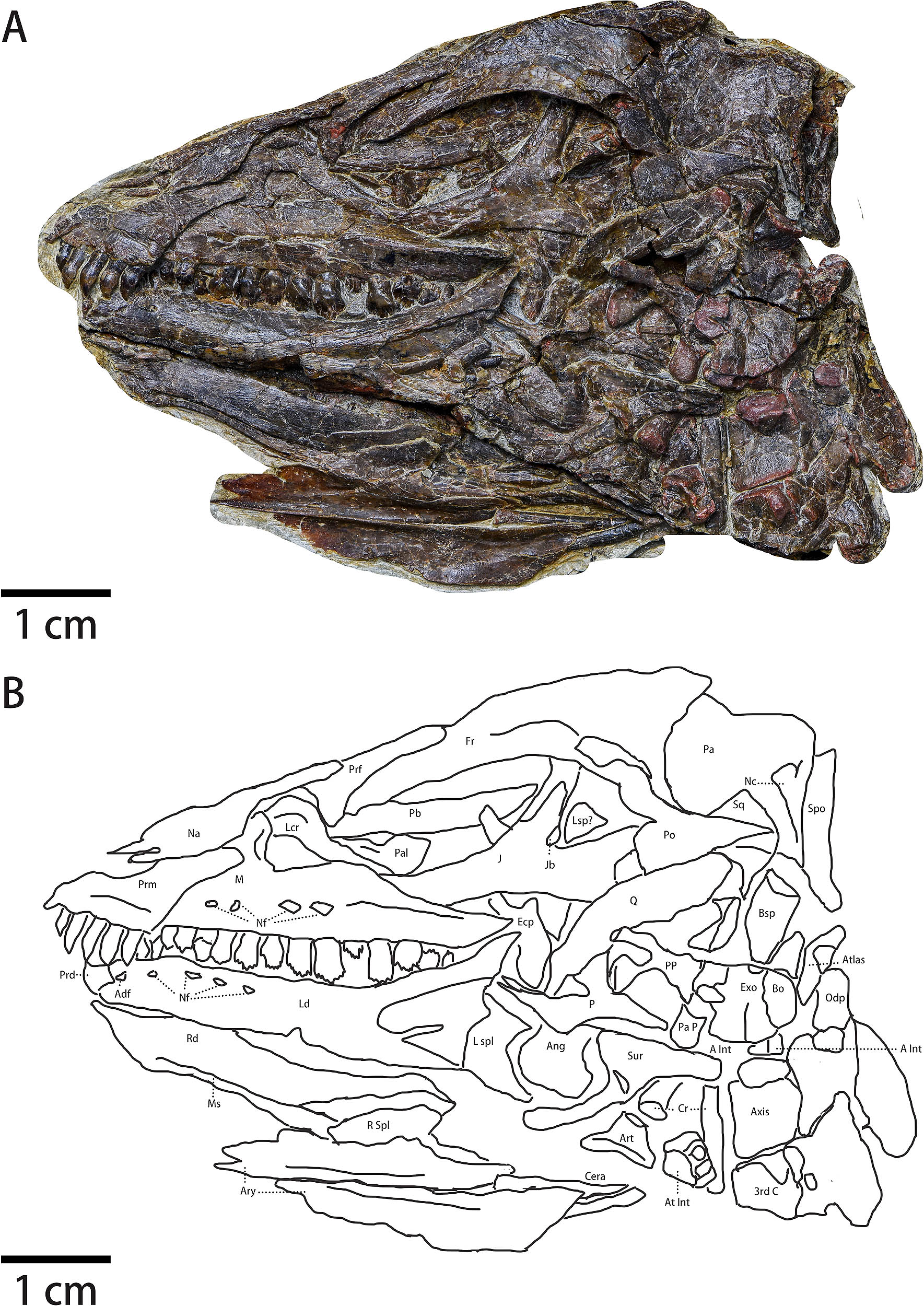
Near the lower jaw, the team identified a pair of long bones from the larynx, the voice box at the top of the windpipe.
In most living reptiles these parts stay as flexible cartilage, so finding them ossified in a small dinosaur is extremely unusual.
These bones are arytenoids, small larynx structures that move to open and close the airway. In Pulaosaurus they stretch to roughly eighty percent of the lower jaw length, a proportion close to what is seen in some birds.
A 2023 paper on the dinosaur Pinacosaurus grangeri showed that its large larynx acted as a modifier rather than the main sound source.
That finding led researchers to suggest that bird-like vocalization began in some dinosaur groups long before true birds appeared.
In 2016, another study described a fossil syrinx, a bird vocal organ low in the windpipe, in the Cretaceous bird Vegavis.
“Dinosaur sounds are one of those persistent unknowns,” said James Napoli, a vertebrate paleontologist.
Seeds, stones, and feeding method
Inside the chest and belly, the slab preserves small pebbles mixed with oval impressions that match the shape of plant seeds.
Together with its leaf edged cheek teeth, these clues point to an animal that nipped vegetation and swallowed it with grit to grind food.
Pulaosaurus also preserves part of the hyoid, a set of slender bones that support the tongue and floor of the mouth.
In this dinosaur they are short compared with the jaw, which suggests a fairly limited tongue movement compared with many modern birds.
A 2018 study on dinosaur tongue bones found that most non bird species had simple rooted tongues, not long flicking ones.
Pulaosaurus fits that pattern, so it probably relied more on its beak, teeth, and forelimbs than on tongue movements to gather and handle food.
Rare fossils with preserved tissues
Fossils that preserve delicate tissues or small bones are unusual because those parts usually decay before sediments can protect them.
When they do survive, they give researchers direct evidence that can replace older guesses built only from comparisons with living animals.
These finds also shift the kinds of questions scientists are able to ask. Studies do not have to focus only on bone shape and family trees.
They can also examine how dinosaurs breathed and fed. They can even explore how these animals communicated in their environments.
Lessons from Pulaosaurus qinglong
The region where Pulaosaurus qinglong was found is part of the Yanliao Biota, a fossil community in northern China known for feathered dinosaurs and mammals.
Until now, that community lacked clear members of the neornithischian plant eaters, even though they appear in similar age rocks elsewhere in China.
By adding a herbivore to this fossil record, the find helps bridge a gap between sites in southwestern and northeastern China.
Those regions record Middle Jurassic and Early Cretaceous rocks, so Pulaosaurus helps connect their plant eating dinosaur communities through time.
Together with the ankylosaur voice box and the Vegavis syrinx, the larynx of Pulaosaurus qinglong suggests that complex vocal control evolved in several dinosaur lineages.
Nobody can yet say what this animal sounded like, but its throat bones show that some dinosaurs may have produced bird-like calls.
The study is published in PeerJ.
—–
Like what you read? Subscribe to our newsletter for engaging articles, exclusive content, and the latest updates.
Check us out on EarthSnap, a free app brought to you by Eric Ralls and Earth.com.
—–