Ancient fungus predates its ant partners by 18 million years



 Follow Earth on Google
Life inside an ant nest usually appears calm and organized. Ants care for gardens made of soft layers of fungus, and many tiny microbes live around the gardens. Everything seems routine, almost like a small farm run by insects.
A closer look tells a very different story, however. A fungus called Escovopsis has lived near ant farms for millions of years and carries a long history that has surprised many scientists.
Fungus with a complex history

Earlier work described Escovopsis as a parasite that harmed the fungus grown by farming ants. New research, however, shows a far more complex background.
The fungus changed over time, survived many environments, and formed many kinds of interactions inside ant nests.
The result is a richer story about a partner that is hidden in the soil, and shapes life inside ant colonies in quiet but important ways.
“Our current work is on Escovopsis, a genus of fungi that isn’t cultivated by ants, but is present in the colonies of some species of farming ants and can kill some of their cultivars,” explained lead author Quimi Vidaurre Montoya of the São Paulo State University.
“Because of this, it’s portrayed as a ‘parasite,’ when in fact only one of 24 species is known to cause infection in the fungus cultivated by ants.”
Escovopsis appeared almost 57 million years ago, long before leaf-cutter agriculture took modern form.
Early origins of Escovopsis fungus
Researchers examined hundreds of strains from across the Americas and uncovered patterns that point to deep origins linked with ancestral, fungus-growing ants.
“Our main hypothesis is that they emerged associated with ancestral groups of fungus-growing ants and then began to coexist with the current leaf-cutter ants 38 million years ago,” said Montoya.
“Another possibility is that they lived in a different context during those initial 18 million years, outside of their association with ants, as leaf colonizers or degrading organic matter, for example.”
A study from Communications Biology supports a similar view. Escovopsis connects only with a subset of ant groups rather than the full range of fungus-farming species.
Evolutionary lines move in and out of different ant hosts, which signals a shifting relationship through time, rather than a rigid one.
Escovopsis fungus shows many roles
For many years, scientists thought Escovopsis was a big danger to every ant garden because it parasitized the fungus being farmed. New studies now show a different story.
Only one species, called Escovopsis weberi, clearly harms the fungus that ants grow for food. Most other species of Escovopsis behave in softer ways.
Many grow slowly, cause little or no damage or do nothing at all once ants start cleaning the garden.
Wide variation in behavior
More research by Montoya showed that Escovopsis is not just one type of fungus. Some strains were even moved into new groups because they were so different.
When scientists compared DNA and cell features, they saw huge variation. Some relatives come near the garden but barely interact, while others ignore the garden completely.
A small number push against the crop fungus. This wide mix of behaviors shows that Escovopsis plays many possible roles in ant nests, not just a harmful one.
“Apparently, there’s a coevolution between ants, symbiotic fungi, and Escovopsis. We don’t know if they evolved to become parasites or if they’re opportunists that feed on debris and can eat what remains when the system as a whole collapses,” Montoya said.
Changing traits over time
Escovopsis did not stand still across millions of years. Older lineages form round reproductive cells. Newer groups made long, narrow ones that release far more conidia, which are tiny spores a fungus uses to spread and grow.
Growth speed also increases across later branches. Each shift seems tuned to life inside shelters that have been built by ants.
Close relatives in the same fungal family show many lifestyles. Some decay plant matter. Some live quietly inside roots. Others act as mild antagonists. Escovopsis fits into this broad pattern.
Narrow vesicles, faster growth, and higher conidia survival hint at gradual adaptation to crowded, ant-garden environments that are rich in microbes, nutrients, and competition.
New understanding of colony life
Ants work very hard to keep gardens clean. Workers wash leaf pieces, clean each other, and use helpful bacteria that make natural antibiotics. Because of all that cleaning, dangerous fungi usually die very fast inside a nest.
Escovopsis acts differently. Ants often do not react strongly to it. The fungus can stay in a nest for some time without causing panic. That surprises scientists, because older ideas claimed Escovopsis attacked every garden and caused serious damage.
New research now suggests a calmer story. Long ago, very early ant groups first came into contact with Escovopsis. Over millions of years, the fungus slowly reached newer ant groups.
During that long journey, many things changed: climates changed, ant behavior changed, and new microbes appeared in ant nests. All these changes shaped how ants and Escovopsis interact today.
Many questions remain
Escovopsis shaped long stretches of forest history through small, hidden exchanges under soil and leaf litter. More species continue to emerge, according to ongoing surveys. Each new strain adds detail to a system built on subtle forces.
The fungus now stands as a complex partner rather than a one-note villain, and the full story grows clearer with each new study. Fresh collections reveal new links with ancient ant groups, while genetic work exposes long periods of quiet coexistence.
Field observations also point toward roles that shift with climate, season, and colony age. Ant behavior adds another layer, as cleaning routines and microbial allies shape contact between garden fungi and Escovopsis.
Every new insight nudges old assumptions aside and builds a picture of a group that adapts, persists, and interacts in ways far more varied than earlier descriptions suggested.
The study is published in the journal Communications Biology.
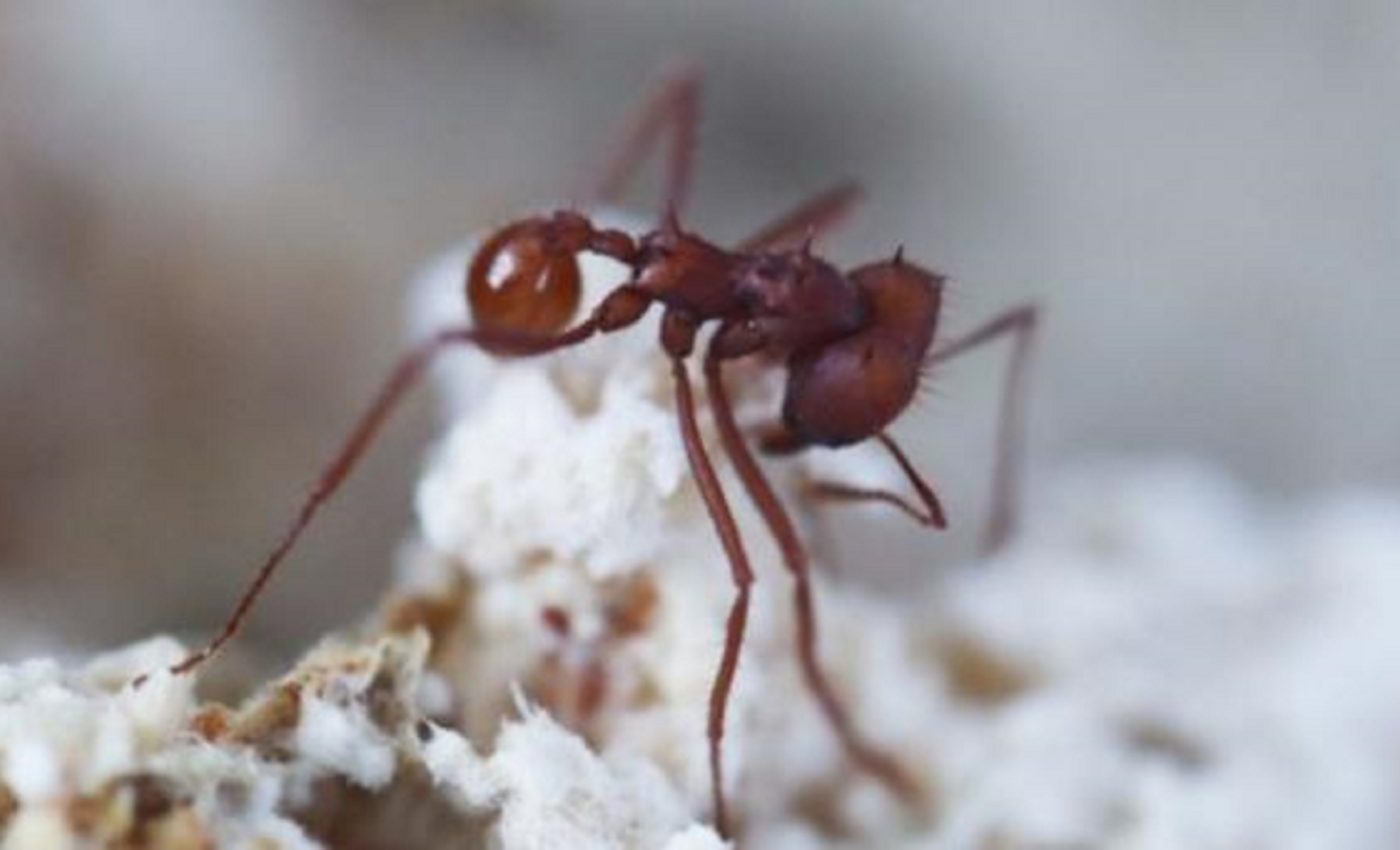
Image: An ant removes fragments of a fungus garden used to feed the colony. Credit: Quimi Vidaurre Montoya/IB-UNESP
—–
Like what you read? Subscribe to our newsletter for engaging articles, exclusive content, and the latest updates.
Check us out on EarthSnap, a free app brought to you by Eric Ralls and Earth.com.
—–