Giant spider species is methodically spreading across the US



 Follow Earth on Google
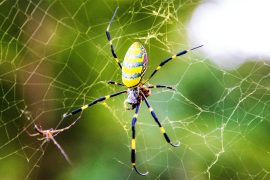
A bright yellow spider species, which reaches the size of a human hand, continues its march across the US and has now reached Tennessee. This is the Jorō spider (Trichonephila clavata), an Asian species that has now spread across the Southeast; and no one has a simple way to stop its advance.
Recent research has tracked the arrival of this spider. It was led by David R. Nelsen, a biology professor at Southern Adventist University in Tennessee.

His work focuses on how large spiders interact with people, including when they choose to bite and when they back away.
Meeting the Jorō spider
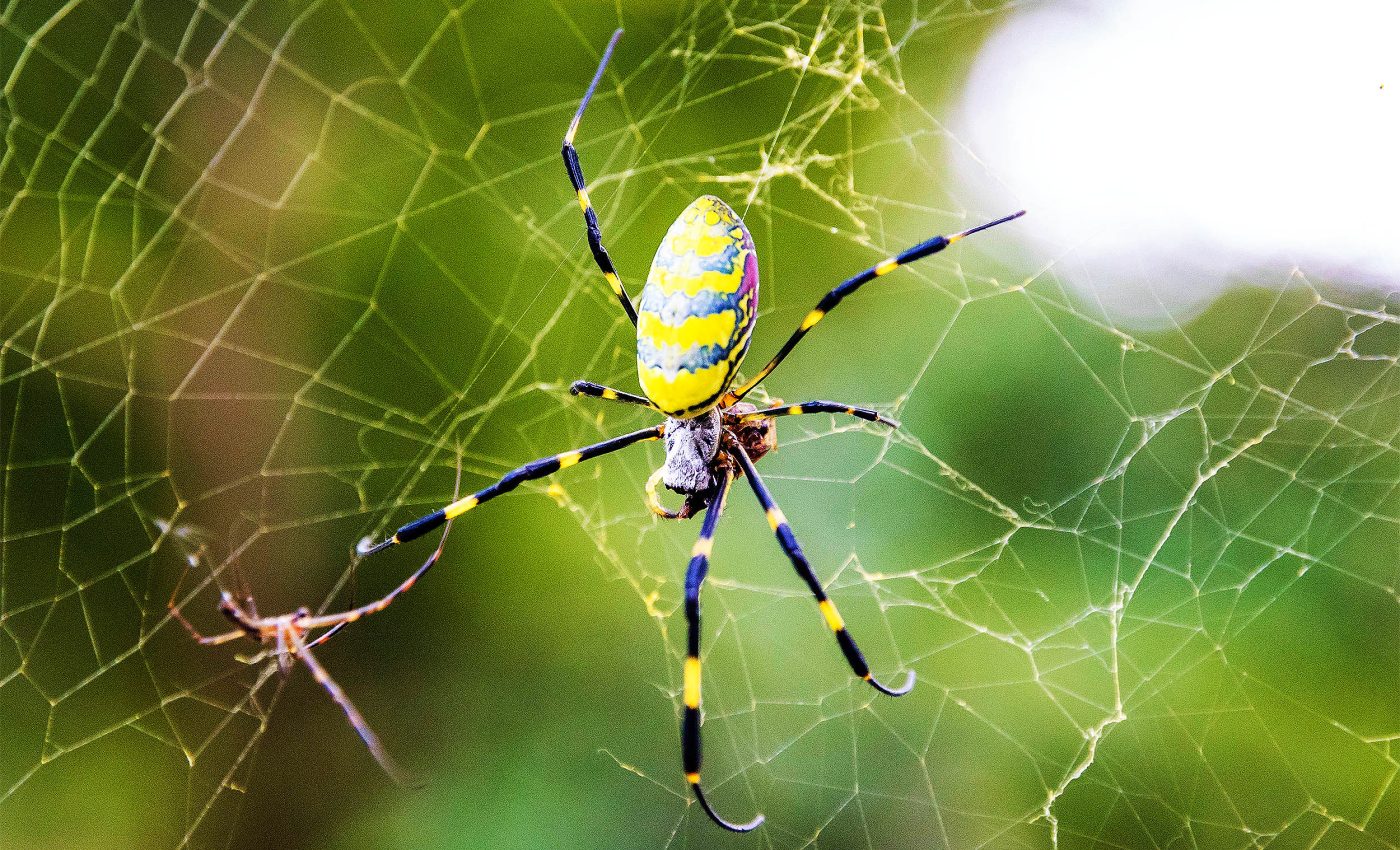
Female Jorōs have long legs and bright yellow and blue markings that stand out sharply against their dark bodies.
At full size, a female can stretch across an open human palm, with legs reaching roughly 6 to 8 inches (15 to 20 centimeters) from tip to tip.
Males are much smaller and duller, and tend to hide near the edge of the female’s web rather than in the center.
These spiders belong to the group called orb weavers. Their webs are large, wheel shaped designs that hang in the air like vertical nets.
The common name Jorō comes from a Japanese legend about a spider woman called Jorōgumo, who lures victims and binds them in silk.
That story has nothing to do with the spider’s real life behavior, but it does add to the eerie reputation that follows this species.
How Jorō spiders spread
The Jorō spider is an invasive species, a non native organism that spreads and establishes outside its original home range.
It likely arrived from East Asia in cargo around 2013 and was first recorded in Georgia before spreading into nearby states, including Tennessee.
Young spiders use a behavior called ballooning to reach new areas far from where they hatched. They release fine silk into the air and ride the breeze on the fine threads, sometimes for surprising distances.
Laboratory experiments comparing Jorōs with a related golden-silk spider show that Jorōs tolerate brief freezing much better.
That ability means they can complete their life cycle in parts of the eastern United States that are colder than Georgia.
People also help the spiders spread when egg sacs or adults hitch rides on cars, trucks, and outdoor gear.
Once an invader reaches so many places through natural dispersal and human travel, regional eradication becomes almost impossible with current tools.
Science of about Jorō spider bites
Many people live with arachnophobia, a strong fear of spiders that can spike when they see a large colorful one.
Stories about venom and bizarre photos on social media can fuel that fear faster than careful data ever does.
In outdoor field studies researchers watched hundreds of Jorō spiders while people moved closer, touched webs, and gently prodded them.
Most spiders either froze in place or dropped from their webs on a safety line instead of attempting to bite.
The same project then brought healthy volunteers into a lab and induced carefully controlled bites while medical staff monitored every reaction.
Volunteers reported low levels of pain, along with small patches of redness and swelling that faded within hours and left no lasting problems.
Impact on people and pets
Jorō spiders are venomous, meaning they inject chemicals through their fangs to subdue the insects they catch in their webs. The same fangs can pierce human skin, but the amount and strength of venom they deliver in a bite are low.
If a curious dog snaps up a Jorō spider, the worst outcome most veterinarians expect is mild stomach irritation that soon passes.
The spider’s venom and body tissues break down quickly in the digestive system, so serious poisoning from swallowing one is not expected.
People who do receive a bite are usually advised to wash the spot gently with soap and water and then apply a cool compress.
Signs like trouble breathing, widespread hives, or swelling of the face mean a possible allergy, and that needs emergency care.
In daily life, the main risk these spiders pose is startling people who bump into their webs or see them above eye level.
Keeping calm, stepping back, and gently brushing strands away usually solves that problem without harm to either side.
The bigger ecological question
While medical risk appears low, scientists are paying close attention to how this fast-growing predator fits into already stressed ecosystems.
Jorō spiders weave dense networks of webs that can crowd other web-building species and capture large numbers of flying insects.
Forest surveys in Atlanta, Georgia, found Jorō spiders doubling in abundance each year between 2022 and 2024.
Over the same period, the populations of several native orb-weaver species in those forests declined by about 40 percent per year.
Climate modeling using thousands of crowd-sourced sightings suggests that suitable North American habitat for Jorōs lies well north of their current strongholds.
That research also found Jorōs to be the most common orb weaver at many sites, raising concern for native species.
Because there is no realistic way to remove Jorōs across whole states, scientists now ask residents to help track them.
People can photograph spiders and upload sightings to projects such as Jorō Watch, giving researchers better data on where the species appears.
The study is published in the Journal of Medical Entomology.
Image credit: Carly Mirabile, University of Georgia.
—–
Like what you read? Subscribe to our newsletter for engaging articles, exclusive content, and the latest updates.
Check us out on EarthSnap, a free app brought to you by Eric Ralls and Earth.com.
—–