Horseshoe crabs were dying from infections 300 million years ago



 Follow Earth on Google
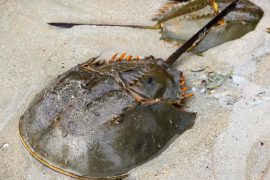
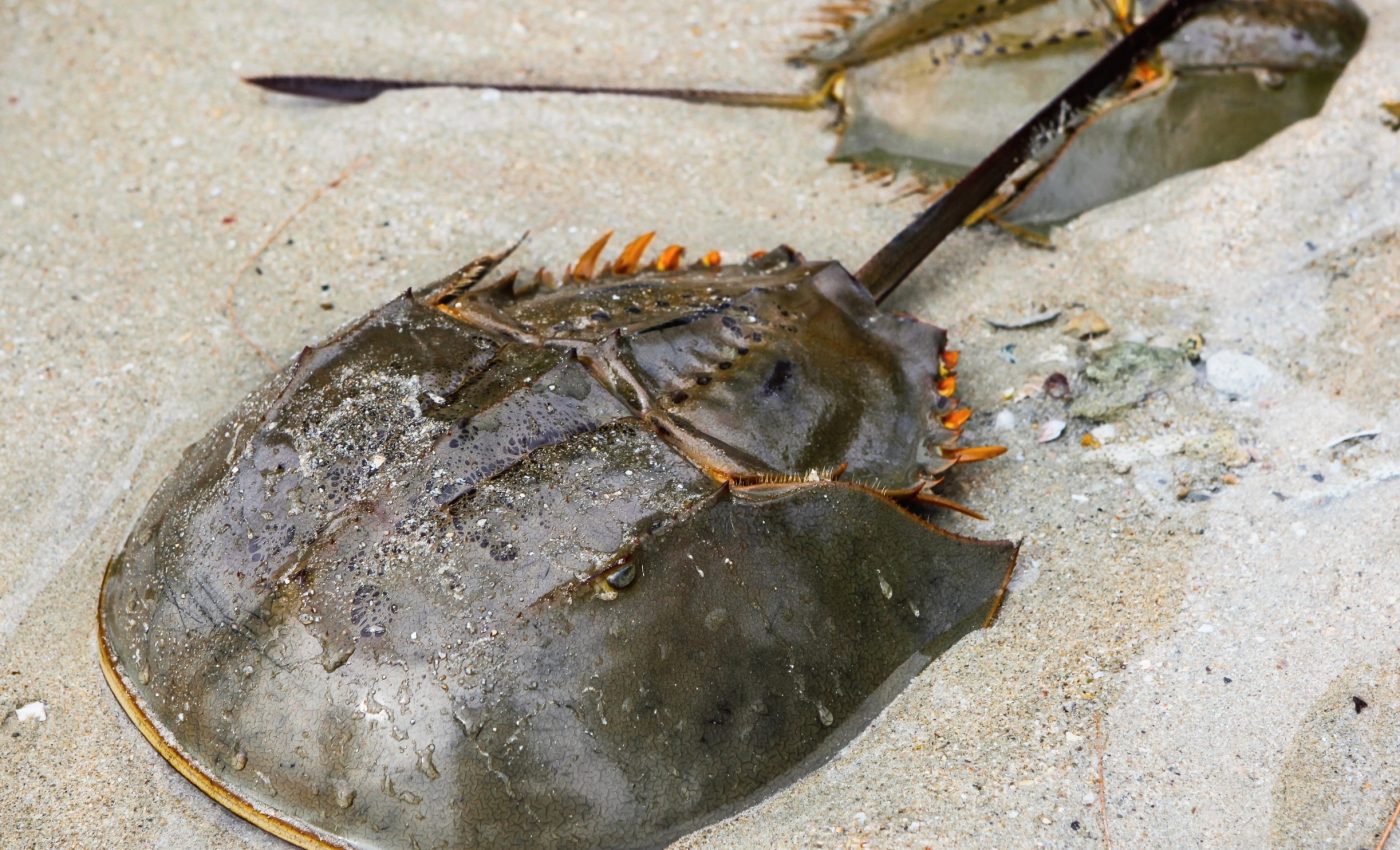
A fossilized horseshoe crab pulled from the famous Mazon Creek deposits in Illinois offers a rare glimpse of what infection looked like more than 300 million years ago.
The animal’s shell is peppered with over 100 tiny pits – marks that researchers say likely formed while it was still alive, and may even hint at what killed it.

The study, led by Dr. Russell Bicknell, a paleontologist at Flinders University in South Australia, was focused on a remarkably preserved Euproops danae specimen.
Dimples on the fossilized crab don’t resemble cracks or burial damage. Instead, they point to microbes or parasites that settled onto the shell during the animal’s final years.
Since adult horseshoe crabs don’t shed their shells, microbes can accumulate over time – right up until a surprise mudflow locks those traces into stone.
How Mazon Creek preserves life
Mazon Creek is a fossil site with unusually detailed preservation, because soft parts sometimes survive.
Many animals at this site hardened inside ironstone concretions – hard iron-rich nodules that formed around buried bodies – before sediments squeezed them flat.
A 2019 study suggests that siderite concretions, triggered by repeated sediment pulses from nearby rivers, are key to Mazon Creek’s preservation.
That kind of quick sealing can trap groups, so a single layer may hold dozens of creatures from the same event.
Moments frozen in mud
During the Late Carboniferous, broad swamps spread across the midcontinent, and storms could dump thick silt that buried animals in minutes.
As water levels fluctuated, salty water mixed with freshwater – a combination that can strain many shoreline animals during dry spells.
Nutrient-rich runoff fed algae and bacteria, which can coat shells and gills when circulation slows for days.
Once mud rolled in, burial cut off oxygen and sealed the scene, leaving paleontologists a snapshot of life.
Interpreting ancient crab shell damage
Pits that repeat in size and spacing usually point to biology, while random gouges often suggest rough damage after death.
Modern horseshoe crabs sometimes carry algae or parasites that leave pockmarks on their shells. This insight is useful when analyzing fossils.
Still, the changes a body undergoes after death can mimic disease through crushing, decay, or chemistry and must be checked carefully.
“Ancient arthropods faced many of the same ecological pressures that modern species experience today,” said Dr. Bicknell.
Molting shapes crab shells
Young horseshoe crabs molt again and again, leaving cast shells behind, and each new shell starts smooth and clean at first.
The crabs reach a terminal molt at maturity, shedding the last shell before adulthood, so later damage stays visible on the body for years.
The pattern found in the Euproops danae specimen suggests a late-life weakness because the study links dimpling to one life stage instead of all ages in the record.
If infestations strike adults, predators and microbes can influence which individuals get to reproduce, even in relatively simple swamp food webs.
Microbes leave lasting marks on crabs
Microbes rarely fossilize as cells, yet they can etch, pit, and stain hard surfaces while an animal lives in water.
In warm, calm water, a slimy layer of microbes can form quickly on shells within hours or days. Some algae and parasites drill or press into the cuticle, and the pressure leaves dimples that look shallow and round.
If the animal grew sluggish or could not molt, a fast flood could have buried it before recovery began.
Infection rarely fossilizes
Scientists study such damage through paleopathology – the study of disease signs in fossils – and they treat every mark with caution in published work.
Most infections rot away without leaving a trace, and hard parts often break or dissolve long before burial in most environments.
This record shows that animals and microbes interacted in complex ways long before dinosaurs.
Because exceptional fossil deposits capture such brief windows of time, they can reveal injuries, parasites, and stress that ordinary rock layers erase completely.
Questions about the crab infection
No one can name the exact microbe from pits alone, but the pattern can narrow the suspects to groups.
Collections from Mazon Creek hold thousands of nodules, so future discoveries may show whether this was a rare accident or routine there.
“This fossil links a specific biological event, likely microbial or algal infestation, to a broader evolutionary picture,” said Dr. Bicknell.
As more researchers scan old collections for tiny damage, fossils – including this horseshoe crab – may reveal when infection became a normal part of life on Earth.
The study is published in the journal Biology Letters.
—–
Like what you read? Subscribe to our newsletter for engaging articles, exclusive content, and the latest updates.
Check us out on EarthSnap, a free app brought to you by Eric Ralls and Earth.com.
—–