Hypertropics: The Amazon is crossing into a dangerous climate state



 Follow Earth on Google
The Amazon rainforest has long thrived in heat and humidity – growing dense, towering, and alive with sound. It also works like a giant carbon sponge, pulling carbon dioxide out of the air and storing it in wood and soil.
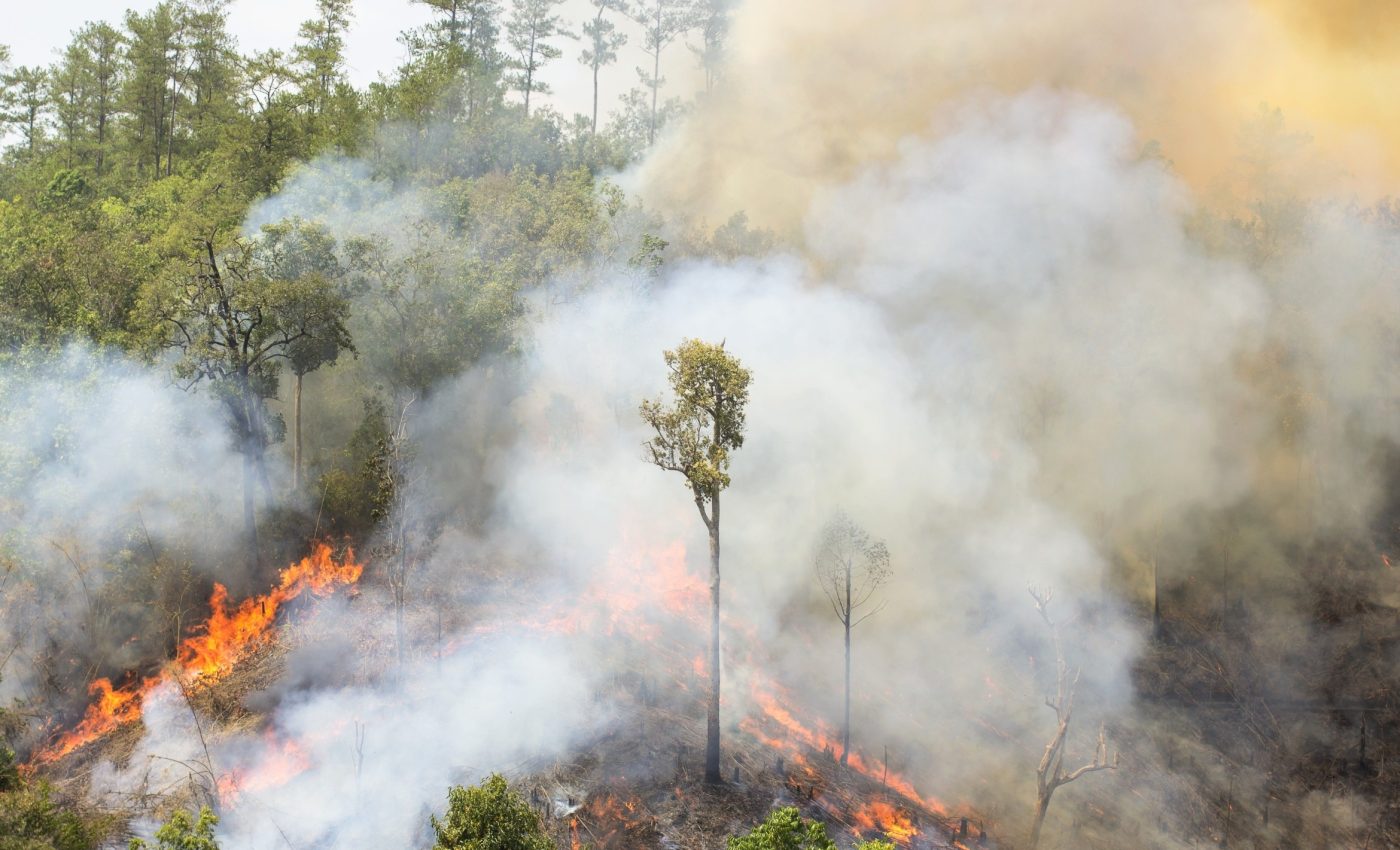
Now, the region faces a hard shift. Heat is rising, droughts are hitting more often, and the combination is pushing parts of the forest toward conditions the planet hasn’t seen for tens of millions of years.
The Amazon’s new climate squeeze

A new study warns that if society keeps pumping large amounts of greenhouse gases into the atmosphere, “hot drought” conditions could spread across the Amazon by 2100 and show up even during the wet season.
That matters because tropical forests take up more human carbon emissions than any other biome. When drought knocks that system off balance, the whole planet feels it.
Recent reports found an increase in atmospheric carbon dioxide after severe droughts in the Amazon, showing that weather in the tropics can change the planet’s carbon budget in a measurable way.
The study explains why these severe tropical droughts are reducing how much carbon dioxide the world’s forests can pull from the air.
The researchers say global warming is stretching the usual July-to-September dry season and adding hotter-than-normal temperatures on top of it.
Rise of the hypertropical forest
The research team calls this emerging climate regime the hypertropics. The work was led by the University of California, Berkeley in collaboration with an international group of experts.
“When these hot droughts occur, that’s the climate that we associate with a hypertropical forest, because it’s beyond the boundary of what we consider to be tropical forest now,” said Professor Jeff Chambers.
By 2100, hot drought conditions could occur as many as 150 days each year. The researchers noted that hot drought conditions stress trees and raise the usual tree mortality rate by 55 percent.
Since annual tree mortality runs a little over 1%, an extra 0.55% sounds small at first. Over time, it stacks up across a forest the size of a continent.
The team also expects hypertropical conditions to show up beyond the Amazon, including rainforests in western Africa and across Southeast Asia.
What happens inside a thirsty tree
Chambers and colleagues traced the damage to a tipping point in the soil. Once soil moisture drops to about one-third by volume, trees start to fail in two brutal ways.
Trees either shut down carbon capture and slowly starve, or they form air bubbles in their sap, similar to embolisms that cause strokes in humans.
“We showed that the fast-growing, low wood-density trees were more vulnerable, dying in greater numbers than high wood-density trees,” said Professor Chambers.
“That implies that secondary forests might be more vulnerable to drought-induced mortality, because secondary forests have a larger fraction of these types of trees.”
If hot, high-stress days keep increasing, the forest could shift toward species that tolerate drought better, but only if that shift can happen fast enough.
Tracking the warning signs
Professor Chambers has worked in the Amazon since his graduate school days in 1993, spending much of that time with the Instituto Nacional de Pesquisas da Amazônia (INPA) in Manaus.
Early in his career, Chambers’ research helped establish that the average age of rainforest trees 10 centimeters (4 inches) in diameter is about 180 years, which helps explain why the region holds carbon for so long. Some trees are more than 1,000 years old.
Over the years, the researchers built a close-up view of drought stress. They placed instruments on two towers about 164 feet tall at study sites north of Manaus to track temperature, humidity, sunlight at the canopy top, and soil moisture.
The oldest tower was visited in November by California Governor Gavin Newsom during his attendance at the COP30 climate summit in Belém, Brazil.
The team also installed sensors in trees to measure sap flow, leaf temperature, transpiration, and the water potential of the soil – which reflects how hard it is for trees to pull water upward.
Climate change in the Amazon
Using more than 30 years of data from the oldest plot, which had been selectively logged in the past, the team saw tree die-offs jump the year after intense droughts.
The worst losses hit fast-growing species that tend to sprout first in logged areas and have low wood density.
The researchers also compared droughts tied to El Niño in 2015 and 2023, combining data from both sites. They found a sharp threshold: when soil moisture fell below about 0.32, transpiration dropped fast and hydraulic stress rose.
“The really remarkable thing is that the threshold soil moisture content in a different plot with different trees for droughts in different years – 2015 and 2023 – were essentially the same: 0.32 and 0.33,” Chambers said. “That was really surprising to everyone.”
When heat outlasts the tree’s defenses
As drought drags on and heat stays high, trees can reach hydraulic collapse, when embolisms form inside the xylem.
“Normally, plants are pretty good at trying to compartmentalize and just say, OK, I’m willing to sacrifice that branch to keep this core piece alive,” said Chambers. “But if there are enough embolisms, the tree just dies.”
At the same time, trees can run out of food. When leaves close their pores to slow water loss, they also block carbon dioxide from entering, cutting off the supply needed to build and repair tissue.
After looking at published results from five Earth system models, the researchers concluded the forest is moving toward a hotter state with no modern match.
The experts define the hypertropics as places warmer than the 99th percentile of historical tropical climates, paired with more frequent and intense droughts.
The Amazon’s climate future
The study suggests hot drought conditions could start showing up regularly during a typical dry season 20 to 40 years from now.
By 2100, the team expects extreme hot drought days to spread through the whole year, not just the peak dry season, and to appear even in the wettest months.
Professor Chambers stressed that the bleakest future shows up when society barely cuts emissions.
“It all depends on what we do,” he said. “It’s up to us to what extent we’re actually going to create this hypertropical climate.”
“If we’re just going to emit greenhouse gasses as much as we want, without any control, then we’re going to create this hypertropical climate sooner.”
The full study was published in the journal Nature.
—–
Like what you read? Subscribe to our newsletter for engaging articles, exclusive content, and the latest updates.
Check us out on EarthSnap, a free app brought to you by Eric Ralls and Earth.com.
—–