This invasive ant species is colonizing and destroying entire buildings



 Follow Earth on Google
These invasive ants slip through gaps you barely notice. Then they appear inside light switches, invade food cupboards, and even sneak into medical equipment.
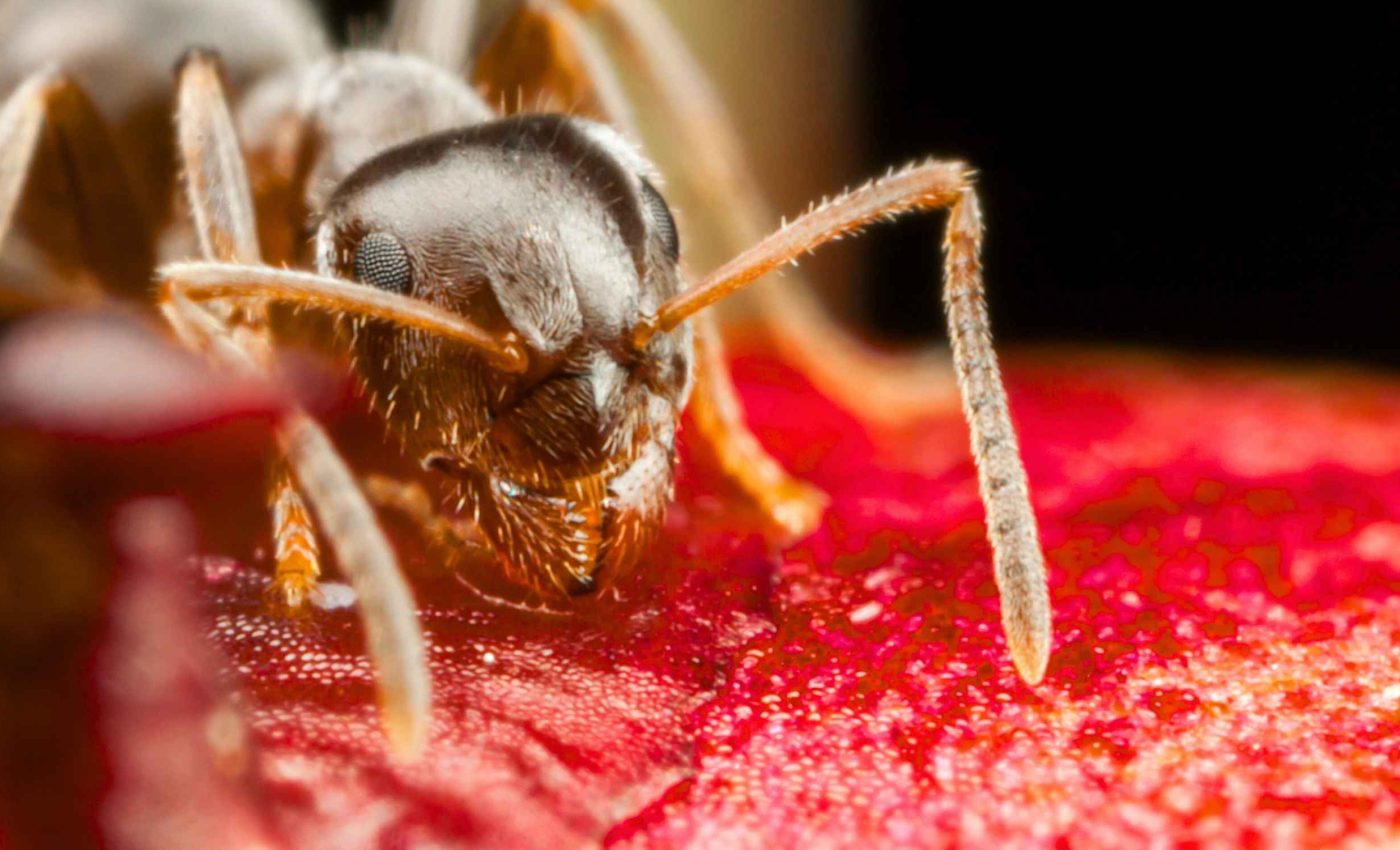
They can march through an entire apartment block, yet each worker is only about one-sixteenth of an inch (1.6 millimeters) long.

The culprit is the pharaoh ant, Monomorium pharaonis, a house pest that is now entrenched in cities on almost every continent.
Infestations can spread from basements to top floors as workers trail along pipes, wiring, and shared walls inside buildings.
Pharaoh ants have a huge footprint
The work was led by J. C. Nickerson, an entomologist at the Florida Department of Agriculture and Consumer Services (FDACS), Division of Plant Industry.
His research focuses on invasive household ants that quietly turn people’s homes, hospitals, and workplaces into sprawling insect colonies.
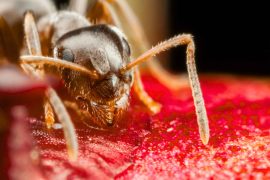
Workers are pale yellow to reddish brown, with darker abdomens and bead-like antennae that stand out under magnification.
In a global mapping study, researchers compiled more than 1,200 site records of pharaoh ants from homes, hospitals, and other structures in many countries.
The species “carries the dubious distinction of being the most difficult household ant to control,” stated Nickerson.
Turning buildings into cities
A pharaoh ant colony holds queens, winged males, workers, and all the immature stages packed into small, hidden spaces near food and moisture.
Colonies can swell into many tens of thousands of insects. The individuals share resources and coordinate movements through walls, ceilings, and electrical conduits.
Many colonies are polygynous, having several egg-laying queens instead of just one in the nest. This arrangement lets colonies replace lost queens quickly and keeps egg production going even when control efforts remove some of the reproductive females.
Ant colonies bud into new nests
Their success also depends on budding. This is a process whereby a colony splits when a few workers escort brood and sometimes a queen to a new nearby nest.
“Part of the success and persistence of this ant undoubtedly relates to the budding or splitting habits of the colonies,” stated Nickerson.
Workers follow invisible scent trails made from pheromones. These are are chemical signals that ants lay and detect with their antennae during foraging.
Those trails link dozens of tiny nests across floors and rooms, turning a whole building into a loose super-colony that functions as a single, interconnected nest.
Hospitals worry about invasive ants
Hospital staff have learned that a nest inside one wall panel rarely stays put, because interconnected nests share workers and queens that spread relentlessly through service shafts.
A national hospital survey in England reported that over one tenth of facilities were dealing with pharaoh ant infestations.
In one classic analysis, James Wetterer described pharaoh ants as the most ubiquitous household ant and particularly notorious in hospitals because workers are so small and invasive.
He highlighted their ability to move through gauze dressings and sterile packs, reaching IV lines, bandages, and other sensitive equipment.
Pharaoh ants carry pathogens
The laboratory work has shown that these ants can carry several species of pathogen, including Salmonella, Staphylococcus, and Streptococcus, on their bodies.
A Lancet case investigation documented pharaoh ants transporting bacteria between patients in hospitals, confirming the medical risks that infestations pose for vulnerable people.
Urban entomologists now rank pharaoh ants among the most serious indoor pests wherever health care and food preparation happen.
They report colonies using wiring chases, plumbing voids, and elevator shafts as highways that bypass many conventional surface sprays or crack and crevice treatments.
The long game of wiping colonies out
Conventional sprays can actually make the situation worse, because disturbed colonies react by fragmenting into multiple budding nests that then scatter deeper into the building.
That is why professional control now leans heavily on food-based baits that workers willingly carry back into the hidden nest network.
In controlled experiments, David Oi and colleagues compared two bait types containing hydramethylnon and pyriproxyfen against multiple connected pharaoh ant colonies.
Pyriproxyfen is an insect growth regulator, an insecticide that spreads through colonies and disrupts development hormones. Hydramethylnon, in contrast, killed workers and brood quickly near bait stations.
Lessons from invasive pharaoh ants
Later laboratory research using pyriproxyfen in peanut oil showed that even low concentrations gradually eliminated entire pharaoh ant colonies.
Workers kept feeding and sharing the treated food so nearly all brood and adults died within ten weeks, avoiding the sudden die off that encourages colony splitting.
Modern management guides for pharaoh ants now stress patient baiting strategies instead of quick knockdown sprays in large shared buildings.
Pest managers emphasize combining non-repellent baits, careful placement along foraging routes, and building-wide cooperation so that every floor and connected wing is treated together.
For residents, the battle with pharaoh ants can feel endless when trails keep reappearing from unseen cracks and devices.
Yet the science behind bait-based control and growth regulators shows these insects can be beaten when entire colonies are targeted slowly and systematically.
Information was published in Florida Online Journals.
—–
Like what you read? Subscribe to our newsletter for engaging articles, exclusive content, and the latest updates.
Check us out on EarthSnap, a free app brought to you by Eric Ralls and Earth.com.
—–