Lithium fever hits Africa: major deposit announced in Ivory Coast



 Follow Earth on Google
In the farm belt north of Abidjan, geologists have found lithium-bearing rocks that could change Ivory Coast’s place in the electric vehicle supply chain.
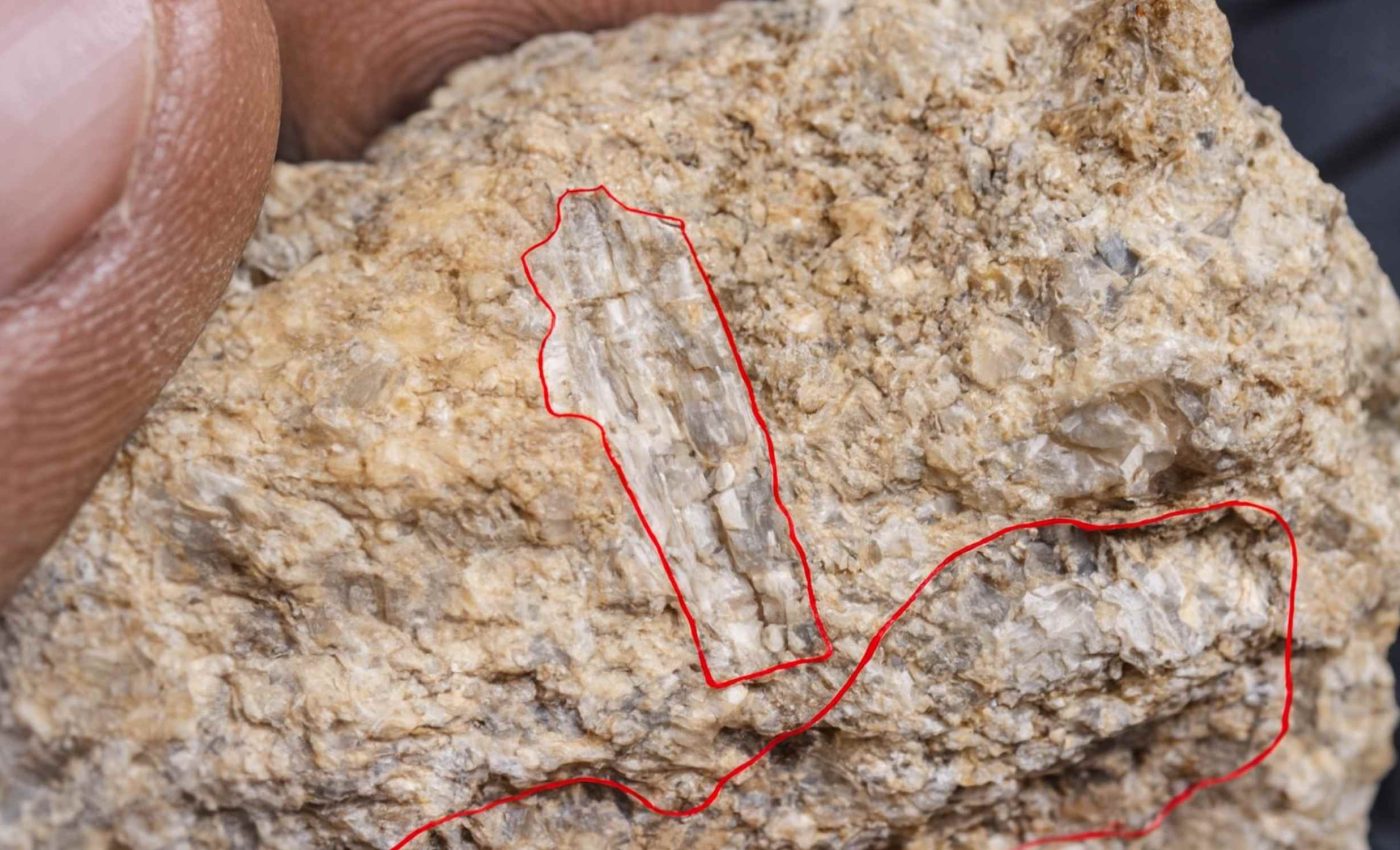
Atlantic Lithium reports that new samples of spodumene, a hard lithium-rich mineral used to make battery chemicals, have been discovered on its Agboville and Rubino exploration licenses.

Early soil sampling at Rubino outlines a lithium-rich zone roughly 1.6 miles long and 1.2 miles wide beneath thick tropical soils.
For a country that has not yet produced lithium ore, that footprint raises the possibility that a major deposit could emerge if future drilling proves enough metal in the ground.
Why lithium in Africa matters
The work was led by Mr I. Iwan Williams, a geologist with more than 30 years of mineral exploration experience at Atlantic Lithium. His work focuses on designing and overseeing lithium exploration programs across West Africa.
Across the world, lithium demand keeps climbing as nations push electrification of transport. According to a recent analysis automotive lithium-ion battery demand grew by about 65 percent in 2022 compared with 2021.
Africa already hosts many of the strongest hard-rock lithium prospects in granitic pegmatites across Ghana, Mali, Zimbabwe, and the Democratic Republic of Congo.
An African-wide review found that about 60 percent of global lithium supply now comes from hard-rock mines, mainly in these lithium-cesium-tantalum pegmatites.
Ivory Coast has largely sat on the sidelines of this rush. The new find at Agboville and Rubino gives the country a chance to join a sector that could bring jobs, export revenue, and leverage for negotiating better environmental and community standards.
Reading the rocks
Geologists walked farm roads and narrow tracks, collecting rock chips wherever pale, coarse-grained veins cut through the surrounding rock.
Laboratory assays show that several of those rocks contain more than 1 percent lithium oxide,confirming visual sightings of spodumene crystals in the hand specimen.
In many producing regions, lithium-rich pegmatite, a very coarse igneous rock packed with quartz and feldspar, supplies key battery minerals.
A technical blog explains that the most important lithium ore minerals in these rocks are spodumene and petalite, which are widely processed into battery chemicals.
Here, spodumene, a lithium-rich silicate mineral that forms elongated pale crystals, appears to be doing the heavy lifting.
Thin-section work on a Rubino sample shows that spodumene is the only significant lithium-bearing mineral in that rock, which would simplify mineral processing routes if a mine is eventually developed.
Beneath the soil, the Rubino Phase 2 survey paints a sharp geochemical picture. Lithium-in-soil values there reach 806 parts per million, far above a background level near 85 parts per million in surrounding country rock.
Lithium traces in African soil
Soil geochemists treat such patterns as clues pointing toward hidden rock bodies at depth. In this case, the strongest anomaly traces a northeast–southwest band that follows a contact between older metasedimentary rocks and younger granodiorite intrusions.
That setting matters because many West African lithium pegmatites sit along similar structural corridors, where earlier tectonic forces fractured and reworked the crust.
Mapping and aeromagnetic work in Mali’s Bougouni district, for example, has identified lithium-bearing pegmatites along sheared contacts within an ancient belt of volcanic and sedimentary rocks. A regional study describes that area as one of Africa’s important lithium-bearing provinces.
Ivory Coast’s Agboville and Rubino licenses lie on the same West African craton that hosts deposits in Ghana and Mali. If the lithium-rich soil overlies pegmatites of comparable size and grade, the area could support a future project supplying the battery industry.
So far, though, the numbers describe an exploration target rather than an ore reserve. Thousands of drill samples, collected on tight grids and analyzed in certified laboratories, would be needed before geologists could estimate how much lithium might truly be present.
From anomalies to drilling plans
The company has already sketched a path from soil grids to drill pads. It plans additional mapping, then follow-up auger programs to trace anomalies beneath the lateritic surface and narrow down the best targets.
Those auger lines are expected to pave the way for reverse circulation drilling, a high-speed drilling method that recovers rock chips from depth for geochemical testing.
Once the most promising zones are known, slower diamond drilling can collect intact cores that reveal structures, fracture patterns, and detailed mineral textures.
Location gives the Ivorian licenses an edge. The tenements span roughly 300 square miles of gently rolling farmland only about 50 miles north of Abidjan, tied to the port by paved highways and an active railway line.
Moving heavy equipment by road and rail costs far less than carving new roads through remote bush. If the project advances, that access could help cut both construction expenses and emissions linked to transporting ore and supplies.
New player in Africa’s lithium story
At present, most African lithium production still comes from large spodumene operations in other countries. Recent news coverage has highlighted Ivory Coast’s Agboville and Rubino licenses as part of a new wave of exploration that is extending the search for lithium along the West African belt.
Company leadership is keen to stress the strategic significance of the project. These encouraging results mark an exciting milestone for Atlantic Lithium’s exploration efforts in Côte d’Ivoire, where the Company aims to discover Africa’s next major lithium deposit, said Keith Muller, Chief Executive Officer of Atlantic Lithium.
Life in the license area currently revolves around rubber plantations, cacao farms, and small food plots. Any move toward mining will need to show clear benefits for local communities, along with careful management of water, soils, and land access.
For anyone watching this story unfold, an important lesson is that energy-transition metals do not start as polished chemicals in a factory.
They begin as faint geochemical signals, careful field mapping, and a handful of rock samples that together hint at how the world might power its future.
—–
Like what you read? Subscribe to our newsletter for engaging articles, exclusive content, and the latest updates.
Check us out on EarthSnap, a free app brought to you by Eric Ralls and Earth.com.
—–