Man finds treasure hoard containing twenty pounds of silver



 Follow Earth on Google
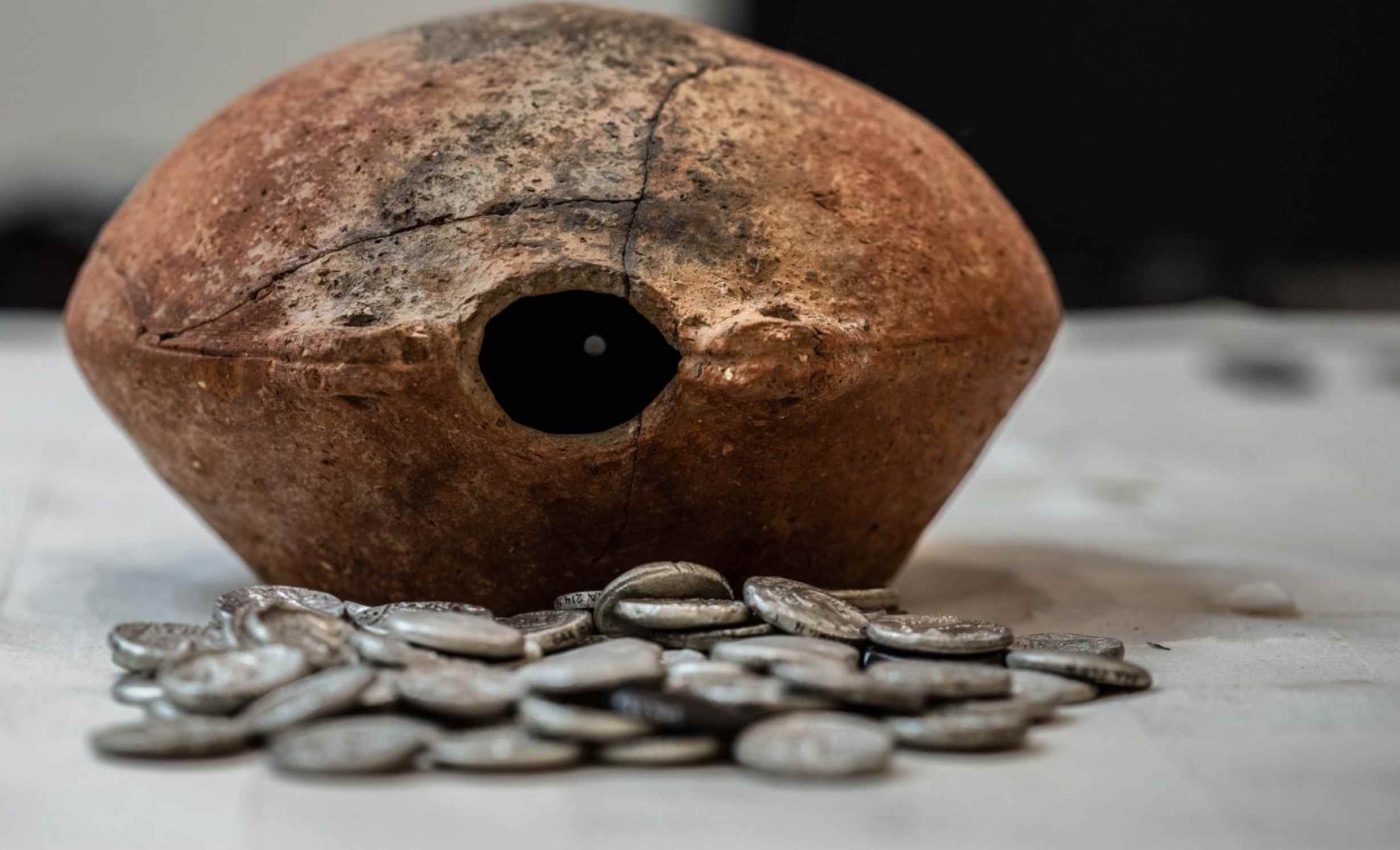
A report describes archaeologists uncovering a clay container weighing about twenty pounds. The jar, found a Mleiha, turned out to be packed with ancient silver coins that had sat hidden in the sand for more than two millennia.
A heritage entry describes how Mleiha’s rulers issued their own silver coins while borrowing images from Alexander the Great’s Greek world.

This single jar of money captures a moment when Arabia was testing how far it could stretch its reach across those older networks.
How the coins were found
The jar was first uncovered by a local Sharjah team during excavations at the pre-Islamic settlement of Mleiha. A detailed online record notes that the jar held 409 silver coins stacked tightly together.
The work was led by Dr Sabah Aboud Jasim, director general of the Sharjah Archaeology Authority (SAA). His research focuses on the archaeology of the Arabian Peninsula and the ancient trade routes that linked it to nearby worlds.
“When this heavy pottery jar was discovered, it was suspected that it would contain rare artefacts.” remarked Jasim.
Each coin weighs about three fifths of an ounce, and 387 were made in single sided molds while 22 show designs on both faces.
A smaller hoard of 309 similar coins was found in Bahrain in 1970, so the Mleiha jar is the largest stash known in the Gulf.
Mleiha coins and Greek designs
One silver tetradrachm from the hoard has a smooth front and a back that shows Zeus seated with a scepter and an eagle. The term means a large silver coin used widely in Greek markets.
Other coins show Alexander wearing the lion skin linked to Hercules on one side, with Zeus enthroned on the other.
Earlier issues carry the name Alexander written in Greek, while later ones replace it with Aramaic, a Semitic language used across the region.
The change from the Greek word Alexander to the local name Abel shows the mint moving from imitation to self confident rule.
Those small choices on each coin help track how political power and cultural identity were shifting in southeastern Arabia during the 3rd century BC.
Traders moving between India, the Gulf, and the Mediterranean needed coins that felt familiar in distant markets, so keeping Alexander’s portrait made practical sense.
Adding local names and symbols let the ruling elite of Mleiha claim ownership of the money system that kept caravans moving.
Mleiha as a crossroads of trade
Long before this jar was buried, Mleiha was a thriving oasis town in the interior of what is now the emirate of Sharjah.
Farmers tapped underground water through a falaj, an ancient irrigation channel that moves water by gravity to nearby fields.
Archaeological surveys show that by the 3rd century BC, Mleiha sat on caravan routes linking the Arabian interior with India and the Mediterranean.
Monumental tombs, palaces, and imported goods reveal a society whose wealth came from handling goods and information that passed between these distant regions.
An academic article notes that at least eighteen stamped wine jars from Rhodes have been unearthed at Mleiha, many pulled from elite graves.
These vessels, called amphora, large ceramic jars used to ship wine or oil, show that merchants dealt directly with Greek producers rather than middlemen.
A study describes a new inscription from Mleiha written in zabur, a cursive South Arabian script used for everyday messages.
Together with Aramaic texts on tombstones, it shows that people here switched languages to signal power or reach wider audiences.
Lessons from the Mleiha coins
The hoard captures how far Hellenistic culture, the blend of Greek ideas after Alexander’s empire, had spread into southeastern Arabia.
At the same time, the changing scripts and symbols on these coins preserve local beliefs that might otherwise have disappeared from the written record.
A bilingual tombstone from Mleiha names a Kingdom of Oman and helps historians see this desert city as a capital. Coins like those in the jar then help explain how that kingdom financed projects, rewarded allies, and projected its symbols outward along caravan trails.
For historians, the exact weights, symbols, and inscriptions on these coins become clues that can be measured, compared, and debated.
Questions about who controlled trade, how far a kingdom’s influence reached, and when power shifted can all be tested against this single hoard.
Researchers have scanned the jar and many of its coins in detail, turning them into 3D models. This kind of digital record keeps fragile objects safe in storage while still letting people worldwide study every scratch, misstrike, and worn edge.
—–
Like what you read? Subscribe to our newsletter for engaging articles, exclusive content, and the latest updates.
Check us out on EarthSnap, a free app brought to you by Eric Ralls and Earth.com.
—–