Mining waste in the US contains billions of dollars of precious metals



 Follow Earth on Google
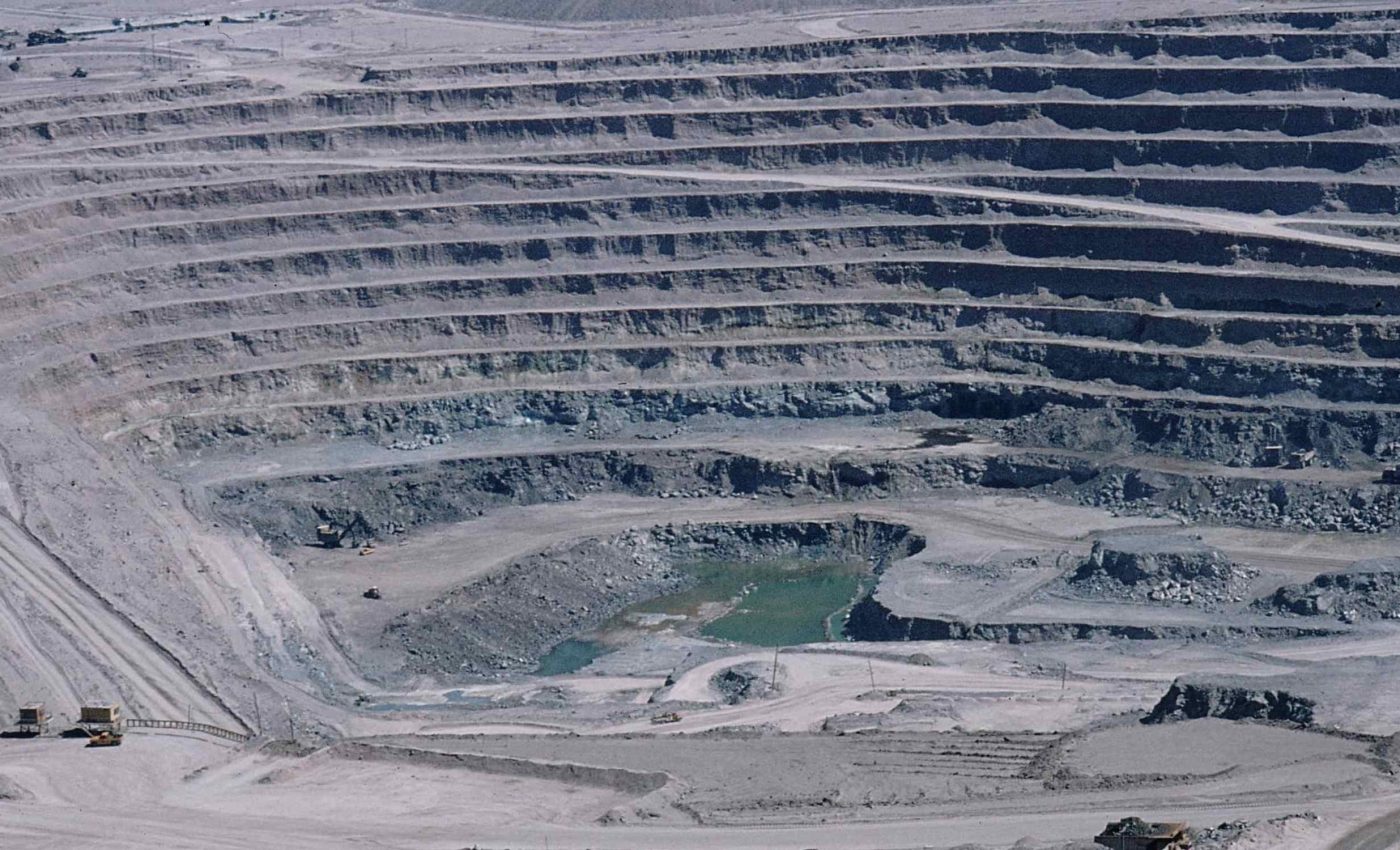
Across the United States, piles of gray rock sit beside giant open pits. These leftovers from mining look useless, yet they are loaded with metals that modern technology depends on.
A new study finds that just one year of U.S. mine waste holds enough lithium to power about 10 million electric cars, along with large amounts of other scarce metals, according to a recent analysis.

The research focuses on 54 active metal mines and shows that if companies recovered even a small share of the extra elements they already dig up, U.S. dependence on imported supplies could shrink sharply.
Tech minerals and mining waste
Most metal mines are designed to pull out one main product, such as copper or iron, from ore that contains many elements.
The rest of the rock is crushed, processed for that main metal, and treated as waste even when it contains valuable ingredients.
These overlooked elements often belong to a group called critical minerals. They are materials that are essential to modern technology but have supply chains that can be disrupted by conflict, trade fights, or sudden jumps in demand.
The work was led by Elizabeth Holley, a mining engineer at the Colorado School of Mines. Her research focuses on how to recover critical minerals from ore that mines already extract for other purposes.
Mapping the mining waste
Holley’s team pulled geochemical data from 54 active U.S. metal mines in a statistical analysis. They then used that information to estimate which elements are currently ending up in waste streams instead of being sold.
The team looked at dozens of critical elements, including cobalt, nickel, gallium, tellurium, and rare earth elements.
These rare earth elements, 17 metals used in many advanced magnets and electronics, already appear on official U.S. lists of materials that are both important and at risk.
Holley wrote that “90% recovery of by-products from existing domestic metal mining operations could meet nearly all US critical mineral needs.”
They also found that recovering only about 1% of those by-products would already cut import reliance for most of the elements studied.
Supply chain on shaky ground
Many of the metals in mine waste are used in electric vehicle motors, wind turbine magnets, solar panels, and guidance systems in military aircraft.
They also show up in tiny amounts inside phones, laptops, and other electronics that people use every day.
China currently produces around 90% of the world’s rare earths and has begun tightening export controls on some of these materials.
That concentration of power over supply has already pushed manufacturers in the United States and Europe to search for new sources and to worry about sudden shortages.
The United States now lists 60 different substances as critical minerals, including 15 rare earth elements which underscores the strategic stakes involved in these materials.
This expanding list reflects both rising demand and growing concern over geopolitical risk, the chance that political tension suddenly chokes off access to materials.
These same minerals underlie energy security and national security at the same time. A shortage in just one element can slow down new battery factories, affect satellite production, or raise costs for clean energy projects across the country.
Why mines leave value in the waste
Turning hidden metals in waste rock into useful products is technically hard. Each extra element often needs new refining steps, new equipment, and extra chemicals that add cost and complexity to an already tight operation.
Engineers call this by product recovery, extracting secondary metals that are not the mine’s main target, and it can be much less profitable than selling the main metal when prices swing.
Mines that survive on narrow profit margins are cautious about any change that might slow production or scare investors.
Some mines stand out as especially promising for this kind of shift. For example, Holley’s analysis points to zinc operations in Alaska with strong potential for germanium, a metal used in fiber optics and infrared cameras, and to Montana mines where nickel-rich by products could be worth recovering.
Cleaning up tailings
The metals in question are usually locked inside tailings, the finely ground waste rock left after ore has been processed for its main product.
These tailings are often stored behind large dams or in huge piles that must be watched and maintained for decades to prevent leaks and failures.
If more metals are stripped out, the leftover material can become more chemically stable and easier to manage.
In some cases, it could even be reused as construction aggregate instead of sitting forever as a potential environmental hazard.
By-product recovery is described as a resource efficient way to secure critical mineral supplies because it reduces waste, lowers environmental impact, and eases geopolitical risk. This approach highlights how supply stability can be just as important as the chemistry of the rock itself.
This link between cleaner waste streams and safer supplies gives by product recovery a double payoff. It improves local environmental outcomes while easing pressure on sensitive mining regions overseas.
Policies that decide whether this treasure stays buried
The team describes extra recovery from current mines as low-hanging fruit compared with building entirely new projects from scratch.
Still, she notes that companies will not gamble on new circuits and equipment unless the economics clearly work in their favor.
That is where policy comes in. The U.S. Department of Energy has launched a Mines and Metals pilot program with up to $275 million in funding to help industrial facilities pull critical materials from coal ash, mine waste, and other by-products.
This program is part of a broader plan to invest about $1 billion in critical mineral supply chains.
Targeted funding can help test new separation technologies at full scale and reduce the financial risk for early adopters.
Clear rules and long-term demand signals from government purchasing programs can also encourage mine operators to redesign their flowsheets so that critical minerals are treated as products instead of trash.
In the end, the study suggests that the United States has less of a geology problem than a decision problem.
The metals are already in the rock we are moving, and the question now is whether the country chooses to recover them or keep throwing that treasure back onto the pile.
The study is published in Science.
—–
Like what you read? Subscribe to our newsletter for engaging articles, exclusive content, and the latest updates.
Check us out on EarthSnap, a free app brought to you by Eric Ralls and Earth.com.
—–