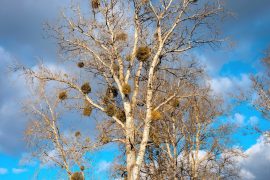
Mistletoe is known for killing trees - but is it really harmful?



 Follow Earth on Google
Mistletoe may inspire holiday traditions, but it is also often associated with damage to urban trees. New research now brings reassurance and fresh insight into western oak mistletoe across Oregon cities.
The presence of a parasitic plant in an oak’s crown often raises fears of severe damage. New surveys from seven Oregon cities paint a more nuanced picture.
Surveying the damage

Mistletoe seeds arrive through bird movement rather than wind or chance. Sticky coats help each seed cling firmly to branches.
Urban hardwoods create ideal study grounds for complex interactions between host and parasite.
Surveillance teams covered streets, parks, campuses, and green corridors by foot, bike, and car. Each crown received careful attention.
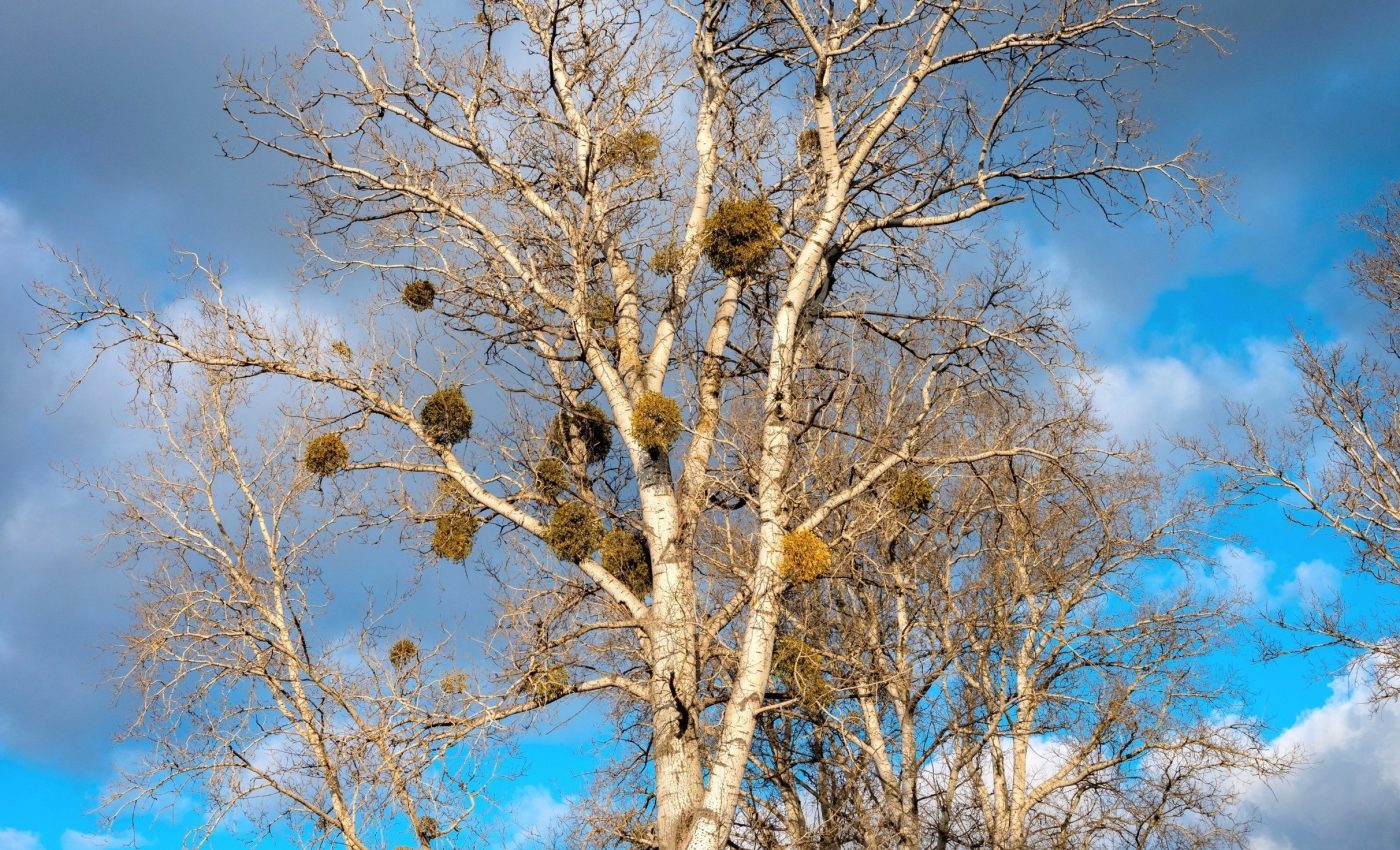
“This is the best time of year to look for mistletoe because no leaves remain on oak crowns,” said Dave Shaw, a professor in the College of Forestry at Oregon State University.
“Also, chances are it will be found in an oak tree – most other trees do not get infested. So if you seek a kiss, keep an eye out for oaks.”
Where mistletoe grows
Surveys recorded western oak mistletoe almost entirely on oak groups. Many non-native oaks appeared within each city, planted for shade, growth speed, or ornamental interest.
Mistletoe clusters were found concentrated within crowns of pin oak, northern red oak, and scarlet oak.
Occasional presence on birch or silver maple did not alter overall patterns. Sticky seeds often land on taller crowns due to bird feeding habits. Larger canopies permit more landing sites and more space for haustorial growth.
“Western oak mistletoe is probably a benefit to wildlife in urban forests,” Shaw said. “On one hand, some concern exists for amenity trees. Urban forest managers thus need assessments of host range for future planting and current management.”
How crowns respond
Urban forests rarely hold uniform age classes. Many older oaks rise above younger hardwoods. Larger crowns encourage more bird visits due to berry availability. The surveys documented strong clustering within sizeable trees.
Only a small number of trees under 10 meters showed any clusters. Those clusters were not linked to widespread decline across the Oregon study sites. Nearly all oaks retained solid structure, strong bark, and full crowns.
The findings mirror long-standing ecological descriptions of mistletoe. Birds spread seeds after feeding, clustering them in taller trees, where sticky viscin secures attachment and haustoria tap into host tissues.
No harm to sampled oaks
Survey teams noted very few declining hosts. Most infested oaks displayed strong vigor and full crowns. Moderate crown loads seldom caused noticeable stress. Overall, only one oak showed clear decline.
Long-term research in California supports similar views for moderate levels. Hot, dry periods in other regions can intensify stress. The Oregon data did not show strong negative outcomes under current conditions.
Urban diversity influences many interactions. Mistletoe fruit supports winter birds, including western bluebirds. Avian richness often increases once mistletoe presence expands across urban stands.
Fruit ripening in late fall encourages repeated bird visits, reinforcing local dispersal within oak clusters.
“The word ‘parasite’ can carry negative connotations, but mistletoe remains a remarkable and beautiful plant with centuries of cultural importance,” Shaw said. “Survey results showed no appreciable harm within sampled hosts.”
Urban planning for oak trees
Urban planning groups in Oregon face complex choices regarding oak planting. Some managers choose pruning or partial removal of clusters. Others support controlled inclusion for biodiversity gains.
Exposure levels matter for long-term planning. Oak-heavy zones may experience higher cluster loads. Mixed plantings may distribute seed contact across broader canopies.
Management approaches vary. Pruning can remove aerial shoots. Complete removal of heavily burdened oaks may be needed in rare cases.
What future research may reveal
Ongoing study can refine understanding of crown stress thresholds. Future work may reveal limits where nutrient removal causes heavier impact.
For now, the findings suggest there is little cause for concern at moderate mistletoe levels
Ultimately, the study shows that urban oaks and mistletoe form stable relationships more often than harmful ones.
Moderate mistletoe loads may not warrant concern. Urban environments can support richer wildlife communities when mistletoe persists in healthy balance.
The study is published in the journal Northwest Science.
—–
Like what you read? Subscribe to our newsletter for engaging articles, exclusive content, and the latest updates.
Check us out on EarthSnap, a free app brought to you by Eric Ralls and Earth.com.
—–