'Monster stars' are far more common in the universe than we thought



 Follow Earth on Google
Stars have long raised big questions for astronomers, especially when they look at some of the brightest objects in space and wonder how they formed so fast.
These objects are quasars, powered by supermassive black holes that already existed less than a billion years after the Big Bang.

Normal stars growing and merging cannot build black holes that heavy in such a short amount of time. The puzzle pushed scientists to look for a more dramatic origin story.
One idea was that the first generation of stars included “monster stars” weighing between 1,000 and 10,000 times the mass of our sun and existed in the early universe. Until recently, those giants were just a theory with no clear proof.
Galaxy chemistry breaks expectations
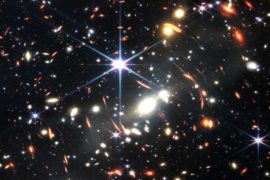
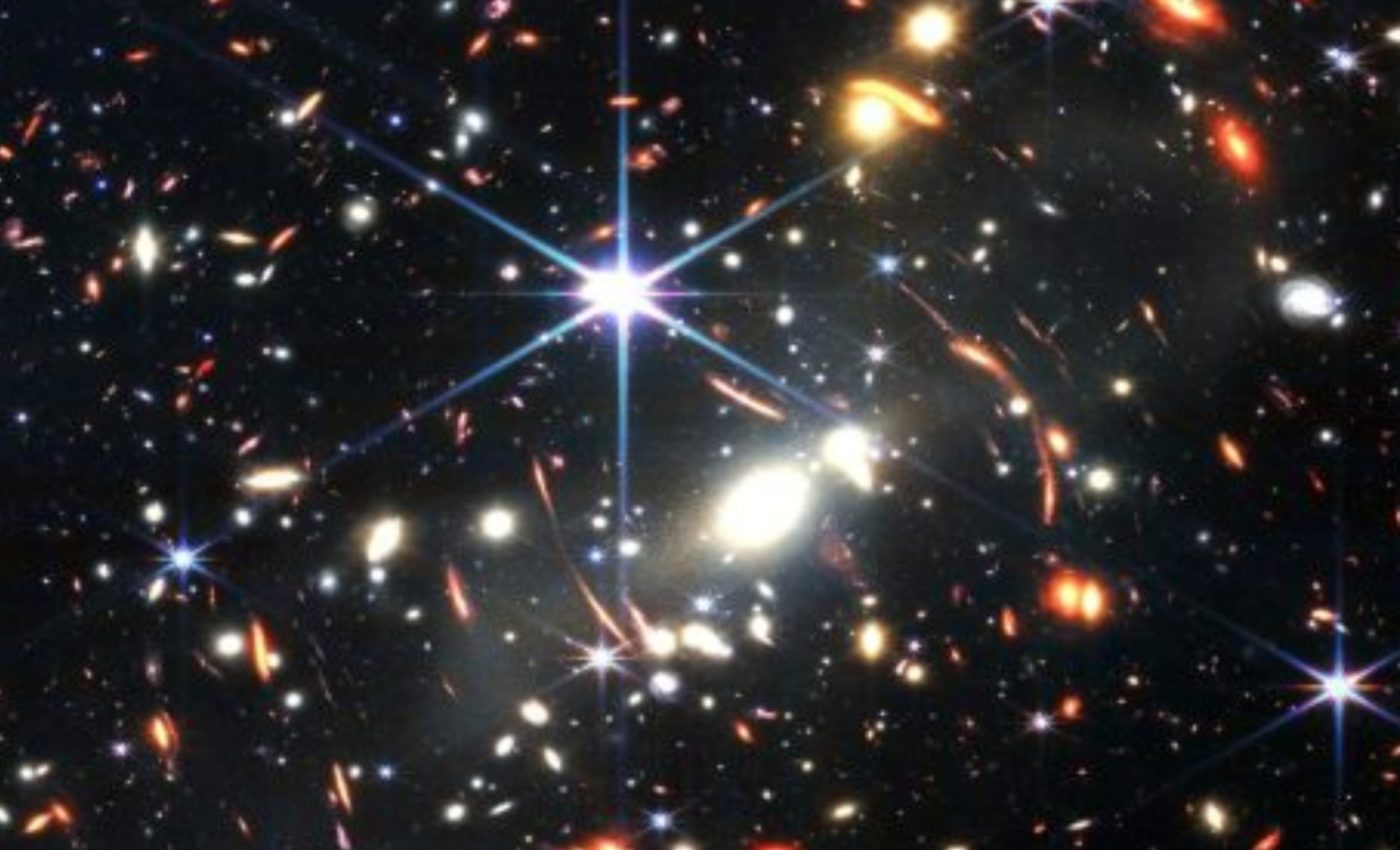
Using the James Webb Space Telescope (JWST), an international team turned to a remote galaxy known as GS 3073. Light from this system has traveled for billions of years, carrying a record of the gases inside it.
A study led by researchers at the University of Portsmouth in England and the Center for Astrophysics, Harvard and Smithsonian (CfA) in the United States found that this galaxy shows an extreme pattern in its elements that ordinary stars cannot explain.
In 2022, some of the same team had already argued in Nature that supermassive stars could form in rare, turbulent streams of cold gas in the young universe. Those giants could then create the kind of bright quasars seen at very early times.
The latest discovery helps solve a 20-year cosmic mystery by providing the first observational evidence, through GS 3073, that these monster stars exist.
“These cosmic giants would have burned brilliantly for a brief time before collapsing into massive black holes, leaving behind the chemical signatures we can detect billions of years later,” said Dr. Daniel Whalen from the University of Portsmouth’s Institute of Cosmology and Gravitation.
“A bit like dinosaurs on Earth – they were enormous and they had short lives, living for just a quarter of a million years – a cosmic blink of an eye.”
A fingerprint of monster stars
Chemical abundances act like a cosmic fingerprint, and the pattern in GS 3073 is unlike anything ordinary stars can produce.
“Its extreme nitrogen matches only one kind of source we know of – primordial stars thousands of times more massive than our sun,” said Devesh Nandal from the CfA’s Institute for Theory and Computation.
“This tells us the first generation of stars included truly supermassive objects that helped shape the early galaxies and may have seeded today’s supermassive black holes.”
How monster stars evolve
To test that picture, the researchers built detailed models of how such enormous stars would live and die. In the models, the stars burn helium in their cores and create carbon. That carbon then moves outward into a surrounding region where hydrogen is burning.
There, carbon combines with hydrogen through the carbon/nitrogen/oxygen (CNO) cycle, producing large amounts of nitrogen. Convection spreads that nitrogen throughout the star, and over time the outer layers are shed into space.
The process continues for millions of years during the star’s helium-burning phase. Over time, it creates the nitrogen excess observed in GS 3073 – a nitrogen-to-oxygen ratio of 0.46 that is far higher than can be explained by any known type of star or stellar explosion.
From titans to black holes
The same models show what happens when these giants reach the end of their lives. Instead of exploding as classic supernovae, they collapse directly into massive black holes weighing thousands of solar masses.
That kind of direct collapse gives the universe a head start on building the supermassive black holes that sit in the centers of large galaxies today.
GS 3073 itself hosts an actively feeding black hole at its center. That object could be the leftover core of one of the supermassive first stars that enriched the galaxy in nitrogen.
If that link is confirmed, it would connect the chemical fingerprint in the gas to the formation of the central black hole in a single story.
The study also finds that the nitrogen signal appears only for a narrow range of starting star masses. Stars smaller than 1,000 solar masses or larger than 10,000 solar masses fail to match the observed pattern, suggesting a “sweet spot” for this kind of enrichment.
Tracing the universe’s first stars
These results give astronomers a fresh look at the universe’s first few hundred million years, known as the “cosmic Dark Ages.” This was when the first stars lit up and began turning simple gas into the elements we see today.
Monster stars, if they were common enough, would have helped set the pace for how quickly young galaxies lit up and how fast heavy elements spread.
The team expects more help from JWST as its surveys of the distant universe continue. The researchers predict that JWST will find more galaxies with similar nitrogen excesses as it continues surveying the early universe.
Each new discovery would strengthen the case for these ultra-massive first stars and sharpen the picture of how the earliest black holes and galaxies grew.
The full study was published in the journal The Astrophysical Journal Letters.
Image Credit: NASA, ESA, CSA, and STScI
—–
Like what you read? Subscribe to our newsletter for engaging articles, exclusive content, and the latest updates.
Check us out on EarthSnap, a free app brought to you by Eric Ralls and Earth.com.
—–