Mysterious pandemic is wiping out sea urchins worldwide



 Follow Earth on Google
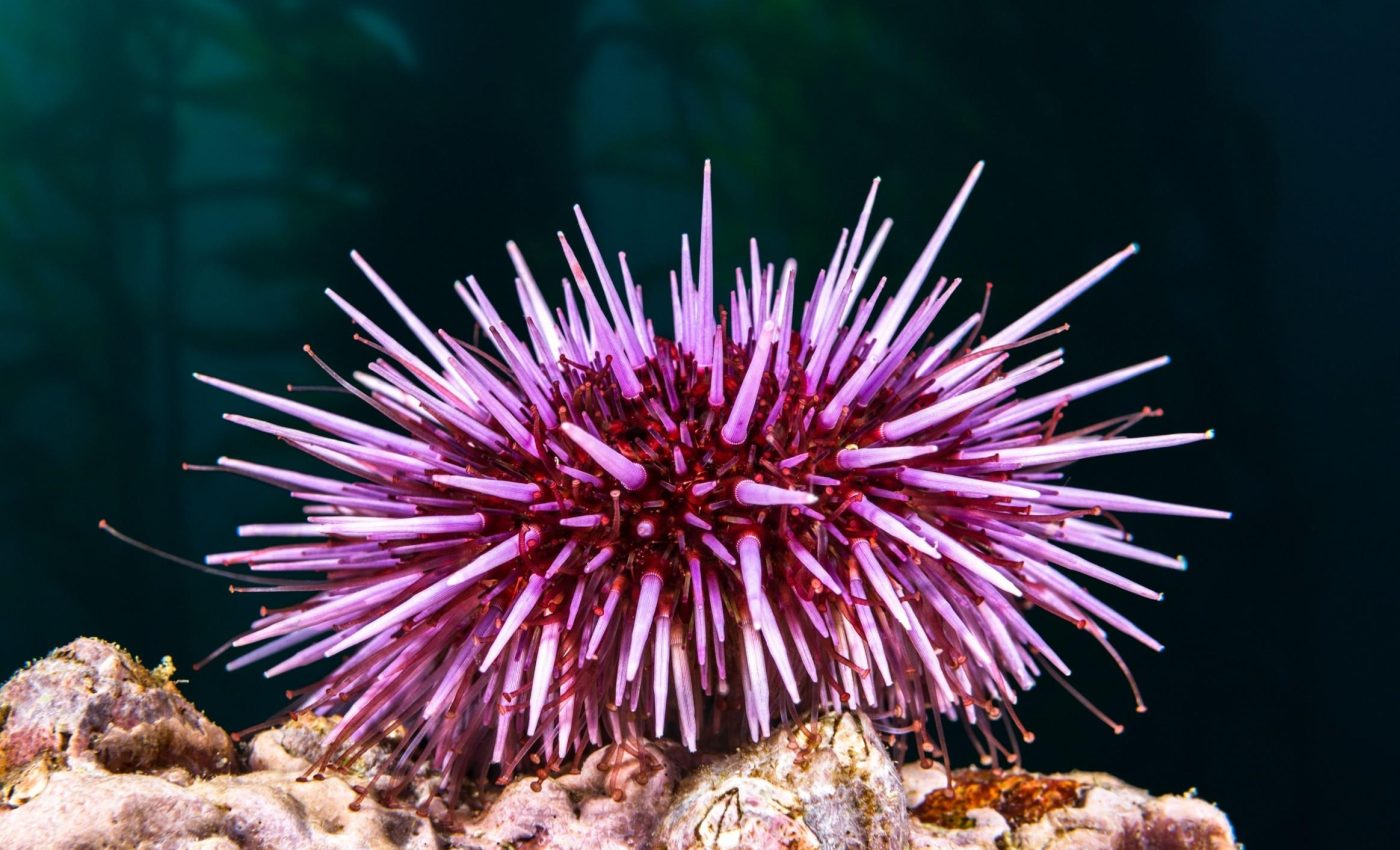
Sea urchins are small, but their impact is outsized. By grazing down fast-growing seaweeds, they help keep rocky reefs open for corals, crustose algae, and a wide web of marine life.
When urchins thrive, reefs can stay balanced. When they vanish – or overrun – entire seascapes can flip.

In the Canary Islands, the long-spined sea urchin Diadema africanum has long swung between those extremes, booming when predators are scarce and carving reefs into barrens. Now, the pendulum has snapped the other way.
A fast-moving, still-unidentified disease has swept through the region, driving D. africanum to historic lows.
At the same time, related species were dying off across oceans worldwide, setting the stage for one of the most dramatic ecological collapses the islands’ reefs have seen in decades.
Sea urchins shape reef fate
The genus Diadema includes eight tropical and subtropical species, among them D. africanum, once common on rocky reefs off West Africa, the Azores, and the Canaries at depths of 16-66 feet.
In the islands, warming seas and predator overfishing helped fuel urchin booms from the 1960s onward, triggering recurring “urchin barrens.” Control efforts between 2005 and 2019 never fully solved the problem.
Then, in February 2022, everything flipped. A research team led by Iván Cano, a doctoral student at the University of La Laguna, began seeing mass die-offs of sea urchins near La Palma and La Gomera.
Over months, mortality spread eastward across the archipelago. Sick urchins moved sluggishly and erratically, stopped responding to touch, shed spines and tissue, and died.
The team recognized the pattern: comparable events struck in 2008 and 2018, killing an estimated 90-93 percent of local urchins off parts of the Canaries and Madeira.
Those earlier crashes, however, were followed by surprisingly rapid rebounds. Not this time. A second wave in 2023 compounded the damage.
Measuring a reef disaster
To measure the scale of loss, the researchers surveyed 76 sites across the seven main islands from summer 2022 through summer 2025, benchmarking against historical counts.
They also canvassed professional divers for sighting trends at their usual sites, comparing 2018–2021 with 2023.
In addition, the team captured larvae with settlement traps at four sites on eastern Tenerife during the September 2023 spawning peak and counted new juveniles at the same locations in January 2024.
“Our analyses showed that the current abundance of D. africanum across the Canary Islands is at an all-time low, with several populations nearing local extinction,” said Cano.
“Moreover, the 2022-2023 mass mortality event affected the entire population of the species across the archipelago. For example, since 2021 there has been a 74 percent decrease in La Palma and a 99.7 percent decrease in Tenerife.”
The reproductive signal was just as stark. On Tenerife’s east coast, larval catches were negligible, and no early juveniles turned up in shallow rocky habitats. Together, those findings indicate that effective reproduction has largely ceased there.
Sea urchin larvae fail to appear
“Reports from elsewhere suggest that the 2022-2023 die-off in the Canary Islands was another step in a broader marine pandemic, with serious consequences for these key reef grazers,” Cano said. Yet the culprit remains unconfirmed.
“We don’t yet know for certain which pathogen is causing these die-offs. Mass mortality events of Diadema elsewhere in the world have been linked to scuticociliate ciliates in the genus Philaster, a kind of single-celled parasitic organisms.”
Past Canary Islands die-offs were associated with amoebae such as Neoparamoeba branchiphila and followed unusual southern swells – a coincidence the team noted again in 2022.
“Previous die-offs in the Canary Islands were associated with amoebae such as Neoparamoeba branchiphila and followed episodes of strong southern swells and unusual wave activity, similar to what we saw again in 2022,” noted Cano.
“Without a confirmed identification, we cannot say whether the agent arrived from the Caribbean by currents or shipping, or whether climate change is to blame.”
Signs of a marine pandemic
Sea urchins sit at the fulcrum of many rocky reef ecosystems. When abundant, D. africanum can overgraze kelps and turf algae, suppressing biodiversity.
When scarce, seaweeds can rebound, altering light, chemistry, and habitat structure for fish and invertebrates.
The sudden collapse of a dominant grazer also ripples up food webs, depriving predators of a key prey item. With larval supply apparently failing at key sites, recovery may stall, locking some reefs into new states that could persist for years.
Given that the die-off coincides with similar events across the Caribbean, Mediterranean, Red Sea, Sea of Oman, and western Indian Ocean, the Canary crisis looks less like an isolated outbreak and more like a pandemic.
That global context makes rapid pathogen identification urgent. It calls for diagnostic sampling during active mortality, molecular screening for ciliates and amoebae, and environmental DNA surveys to track the spread.
Parallel work on oceanography – storms, currents, and temperature spikes – could clarify whether unusual swell events and warming waters are acting as triggers or accelerants.
Food webs feel the loss
For now, the team voices cautious optimism that Southeast Asian and Australian Diadema populations appear unaffected – yet.
“We aren’t yet sure how this pandemic will evolve,” Cano said. “So far, it seems to have not spread to other Diadema populations in Southeast Asia and Australia. But we cannot rule out the possibility that the disease will reappear and potentially spread further.”
If earlier Canarian crashes are any guide, some reefs may recover – provided larvae return and juveniles survive. But the 2022–2023 event differs in one crucial way: a near-system-wide collapse with signs of reproductive failure at core sites.
That raises the stakes for targeted protections of remnant pockets. It also underscores the need for temporary harvest and predator-removal moratoria where appropriate, along with fast-track research to pin down the pathogen and its pathways.
A keystone grazer has gone missing across much of the archipelago. Whether the Canaries’ reefs tip into new algal regimes or rebound toward balance may hinge on how quickly science, management, and ocean conditions can align in the months ahead.
The study is published in the journal Frontiers in Marine Science.
—–
Like what you read? Subscribe to our newsletter for engaging articles, exclusive content, and the latest updates.
Check us out on EarthSnap, a free app brought to you by Eric Ralls and Earth.com.
—–