New tree species was hiding in plain sight for over 40 years, and now it's almost extinct



 Follow Earth on Google
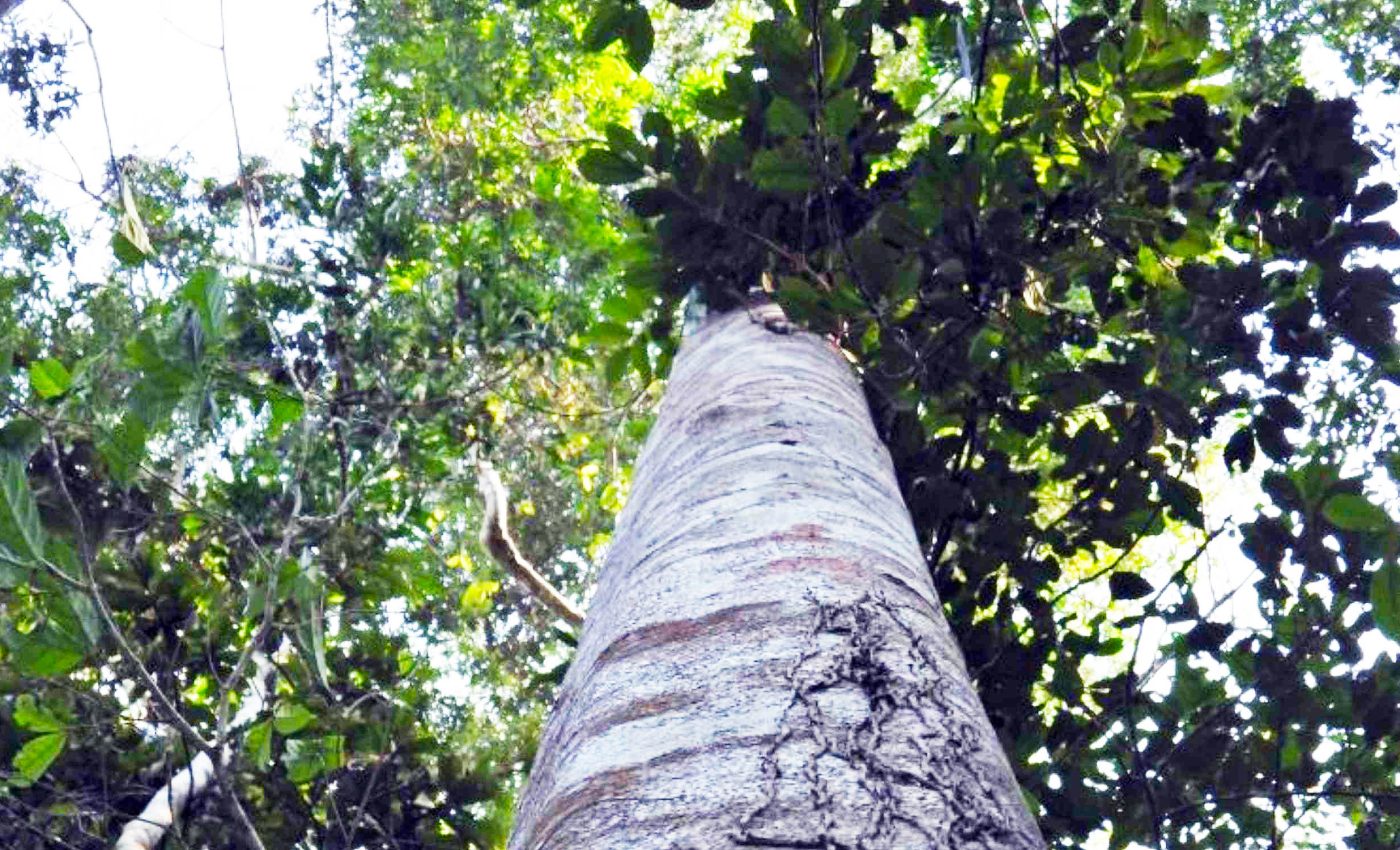
In a protected corner of the Peruvian Amazon, scientists have finally named a giant tree that hid in plain sight for 40 years. The species, now called Drypetes oliveri, towers to about 115 feet and may exist only in a handful of giant individuals.
Each of those trees stands in the Tambopata National Reserve of southeastern Peru, inside intact lowland rainforest. For such a huge organism, its world is tiny, and its future already looks fragile.
Discovering Drypetes oliveri

The formal discovery was led by botanist Rodolfo Vásquez Martínez, who has spent decades cataloging Peru’s tropical trees. His work focuses on finding new species and understanding how they fit into Amazon forests.
Oliver Phillips, a tropical ecology professor, has spent his career running long-term measurements of Amazonian forests.
He leads an international profile of researchers who track how forest carbon and biodiversity respond to human-driven climate change.
Naming a species after a scientist is more than compliment; it ties the tree’s story to a person who helped make its discovery possible.
In this case, the name recognizes Phillips’s role in building the long-running plot network that first hinted something unusual was growing at Tambopata.
Why nobody saw Drypetes oliveri
About forty years ago, the botanist Alwyn Gentry sampled leaves from an unusual tree inside one of his permanent plots at Tambopata.
He suspected it was an undescribed species, yet with only a handful of fallen leaves he could not prove that idea.
To name a new tree, botanists need flowers or fruits, because many unrelated species share very similar leaves.
Those structures usually grow in the canopy, the sunlit layer of treetops that can tower more than 100 feet above the ground.
In 2023, Rodolfo Vásquez, Rocío Rojas, and Abel Monteagudo found a fruiting tree at Tambopata whose crown drew macaws and howler monkeys to branches.
Rojas tasted the fallen pulp, noticed a peppery-flavor typical of the genus Drypetes, and the leaves finally matched Gentry’s long-stored sample.
Details and description
A formal description shows that Drypetes oliveri is dioecious, with separate male and female trees, and carries a crown above the surrounding forest.
Its trunk reaches roughly 22 inches across, with buttress roots that run several feet along the base and brace the tree on wet soil.
The tree grows in upland rainforest on high, clay-rich river terraces in Tambopata, where the ground stays firm even during heavy rains.
So far it appears endemic, found naturally in only one small region, with all known trees standing within a few miles of each other.
Its fruits are egg-shaped, with a dense, velvety brown fuzz, each a little over an inch long and holding a single hard seed.
Animals that chew through that bitter skin probably move the seeds, giving this species a small but important role in the wider forest community.
Drypetes belong to a mostly Old World group of trees, so its relatives are more common in Africa and Asia than in South America.
Many species in this group have thick bark and spicy fruits, signals that discourage some plant-eating animals but still attract fruit-eating specialists.
A forest full of rarities
A continent-wide tree inventory estimated that the Amazon holds around 390 billion trees belonging to roughly 16,000 species.
The same work showed that about 227 common species make up half of all those trees, leaving thousands of species with tiny, vulnerable populations.
Long running measurements from forest plots show that Amazon forests have absorbed billions of tons of carbon dioxide but this uptake is weakening.
Ecologists describe such a system as a carbon sink, a natural storehouse that takes in more carbon than it releases to the air.
Lessons from Drypetes oliveri
Because only four trees are known and they occupy less than 10 square miles of habitat, the species meets criteria for extinction risk.
Botanists have treated it as Endangered on the Red List of threatened species, a system that ranks how close species are to extinction.
In the Madre de Dios region, satellite-based mapping shows that gold mining has stripped tens of thousands of acres of forest.
The same operations leave pits filled with water laced with mercury, harming fish and communities that depend on those rivers.
Road building and new trade routes connect once isolated forests to distant markets, making it easier to clear trees for ranches or farms.
Hotter, drier dry seasons also fuel more forest fires, sending smoke across southern Amazonia for weeks at a time.
The survival of this newly-described giant over the next forty years will depend on decisions about mining, roads, fire, and protection.
—–
Like what you read? Subscribe to our newsletter for engaging articles, exclusive content, and the latest updates.
Check us out on EarthSnap, a free app brought to you by Eric Ralls and Earth.com.
—–