NOAA finds a 'golden orb' of unknown origin on a deep ocean expedition



 Follow Earth on Google
Far off the coast of Alaska, a camera on a robot submersible swept over a dark, rocky slope two miles beneath the ocean’s surface. On the screen, the crew saw a smooth, shiny object that stood out against the muddy seafloor: a “golden orb” resting on the rock in the vehicle’s path.
In a place with no sunlight, near-freezing water, and intense pressure, most animals look pale, flattened, or strangely shaped. This object did not fit those patterns, and the team could not match it to any familiar deep-sea creature as they watched the live video.
Seascape Alaska 5 mission

The mystery turned up during Seascape Alaska 5, a mission run by NOAA Ocean Exploration to survey little-known seafloor between Kodiak and Seward, Alaska.
The team uses remotely operated vehicles (ROVs) that travel through waters deeper than 656 feet (200 meters) and can reach depths of up to 19,658 feet (6,000 meters), mapping habitats where corals, sponges, fishes, and chemosynthetic communities live.
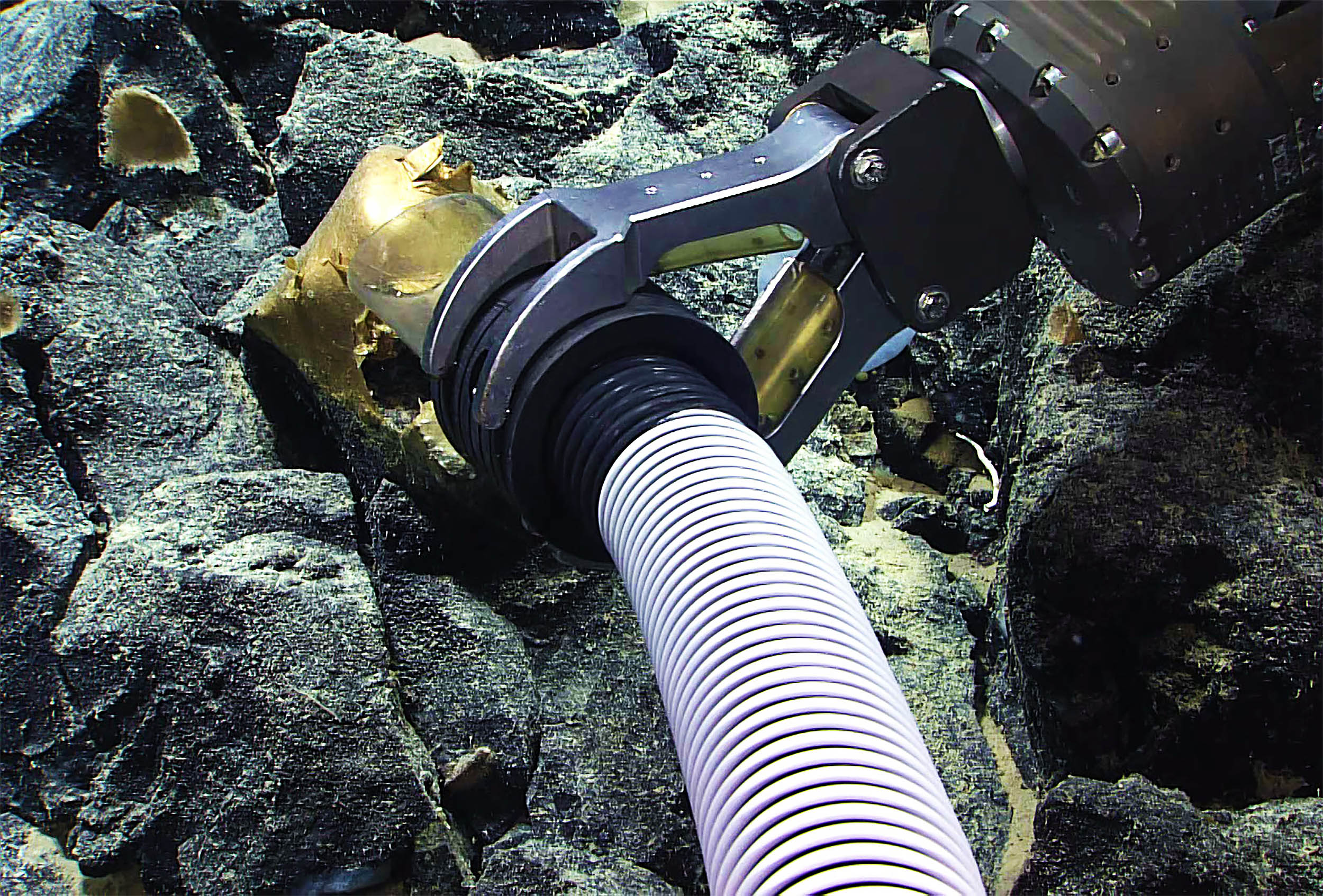
On one of those descents, the ROV moved slowly over the area and came upon a shimmering golden orb firmly attached to a rocky base, with a gaping hole on one side.
A researcher watching the live feed, reported by the Miami Herald, remarked, “Something tried to get in… or to get out.”
The ROV, equipped with a robotic arm, then carefully vacuumed a series of odd discs from the nearby sea wall, using tools that let scientists handle such finds while they remained in the control room.
Golden orb discovery reactions
In the room full of screens and joysticks, the mood mixed curiosity with a bit of nervous humor. One team member said, “I just hope when we poke it, something doesn’t decide to come out,” a reaction that matched the strange sight on the monitors.
NOAA Ocean Exploration’s expedition coordinator, Sam Candio, watched along with the rest of the crew and later described the moment with a simple line: “Isn’t the deep sea so delightfully strange?”
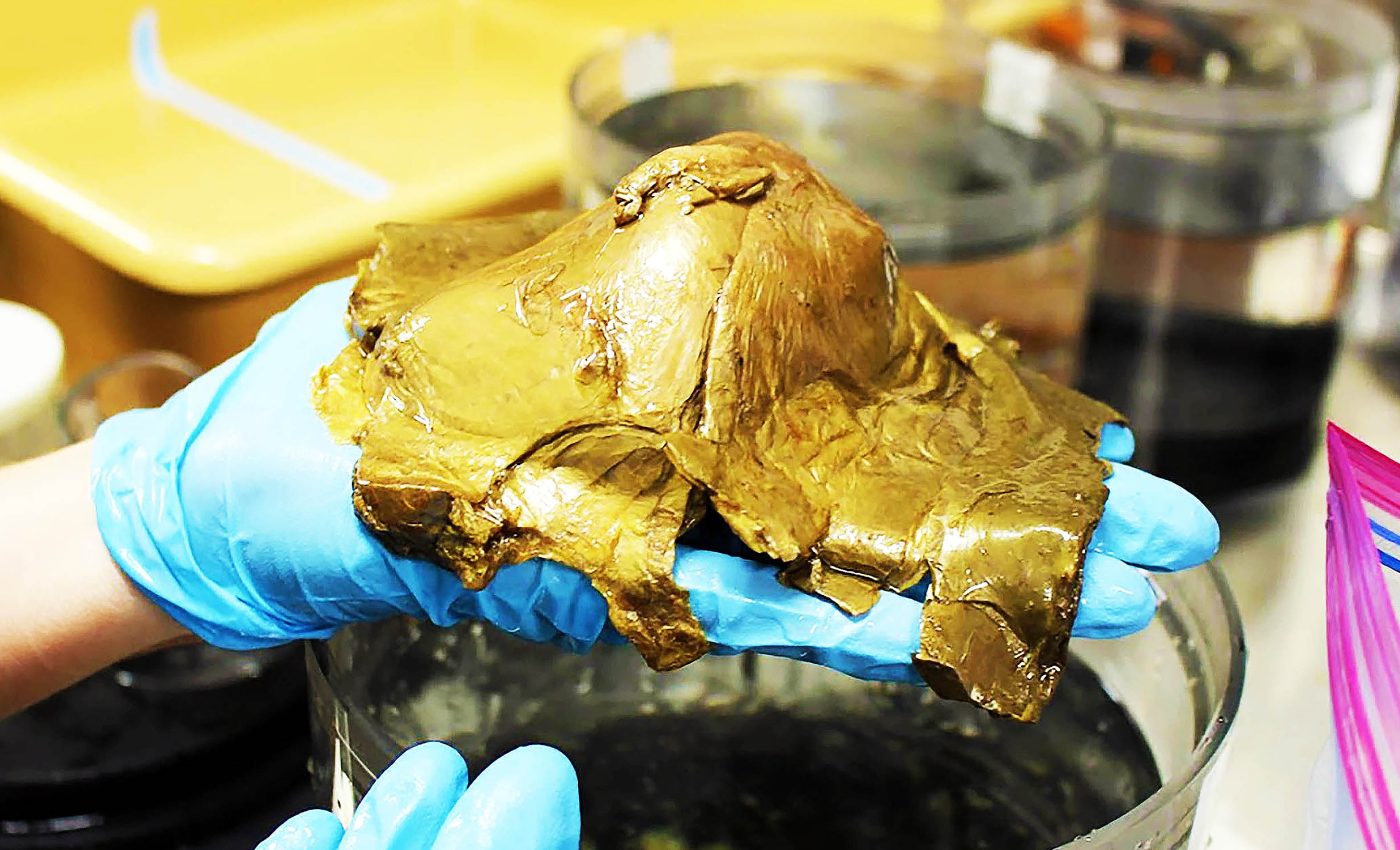
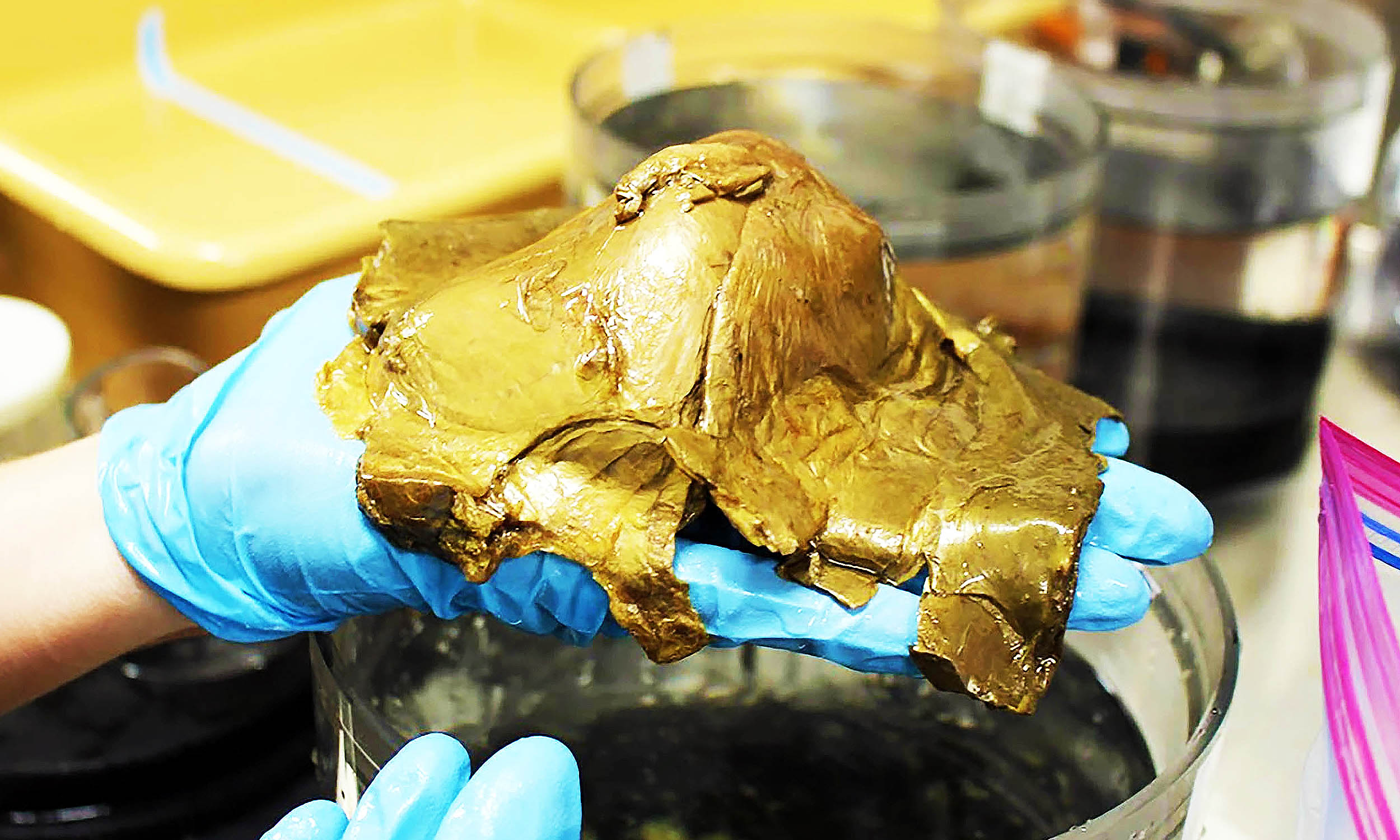
The team used the ROV’s arm to collect the “golden orb” and bring it onto the ship. Tests on board showed that it is biological in origin, although the researchers have not yet been able to identify what kind of organism it belongs to.
Early theories about the golden orb
Once the specimen reached the ship’s lab space, the guessing began in earnest. Some scientists suggested that it could be the shell of an unknown sea creature, possibly an egg casing with an unusually reflective surface, while others wondered if it might be the remains of a new sponge species.
Marine biologist Lucy Woodall, from the University of Exeter, has pointed out that the hole in the object could be damage that built up over time, and that close study of its structure could reveal new insights into deep-sea life.
At the National Oceanography Centre in Southampton, Tammy Horton considers the object a potential new species and notes that discovering unknown organisms in the deep ocean is not unusual.
She expects that further genetic analysis will help clarify where this specimen fits on the tree of life.
Taking it into the laboratory
Egg cases protect developing embryos from predators and harsh conditions, and in deep water they may need tougher walls than those near the surface.
Sponges are simple animals that pump water through their bodies to capture food particles, sometimes building skeletons that appear smooth or glassy when seen up close.
To reach a firm conclusion, Candio and the wider team plan to study the sample with more advanced tools than they can carry at sea.
“We likely won’t learn more until we are able to get it into a laboratory setting where we can continue to pull from the collective expertise of the scientific community with more sophisticated tools than we are able to maintain on the ship,” Candio explained.
“While somewhat humbling to be stumped by this finding, it serves as a reminder of how little we know about our own planet and how much is left to learn and appreciate about our ocean.”
Mapping the ocean floor
Seascape Alaska 5 is part of a larger effort to understand ecosystems that most people will never visit in person.
The expedition focuses on deep-sea coral and sponge habitats, fish habitats, and chemosynthetic communities, where microbes and animals use chemical energy from the seafloor instead of sunlight to survive.
The project uses telepresence technology so that the experience is not limited to the scientists on board. With an internet connection, students, families, and other viewers can join live streams of the ROV’s journeys.
Participants can follow the camera as it moves across the seafloor and seeing discoveries, including the golden object, at the same time as the crew.
Lessons from the golden orb
This kind of work demonstrates how new observations can change what we think we know about the deep ocean.
People often say that we know more about the Moon’s surface than the deep parts of our own planet. This unexplained object, caught clearly on a high-definition video feed, is one example of how deep-sea environments can still surprise scientists.
The investigation of the golden orb is still underway, and scientists are waiting for results from more detailed analysis to learn whether it turns out to be an unknown species, an unusual life stage of a known organism, or something entirely different.
“New species have the potential to reveal new sources for medical therapies and vaccines, food, energy, and other societal benefits and knowledge,” Candio explained.
“Collectively, the data and information gathered during this expedition will help us close gaps in our understanding of this part of the planet, so we can better manage and protect it,” she concluded.
Special thanks to NOAA Ocean Exploration and the Seascape Alaska 5 mission.
—–
Like what you read? Subscribe to our newsletter for engaging articles, exclusive content, and the latest updates.
Check us out on EarthSnap, a free app brought to you by Eric Ralls and Earth.com.
—–