Over 100 Roman warhorses found buried alongside an unknown man



 Follow Earth on Google
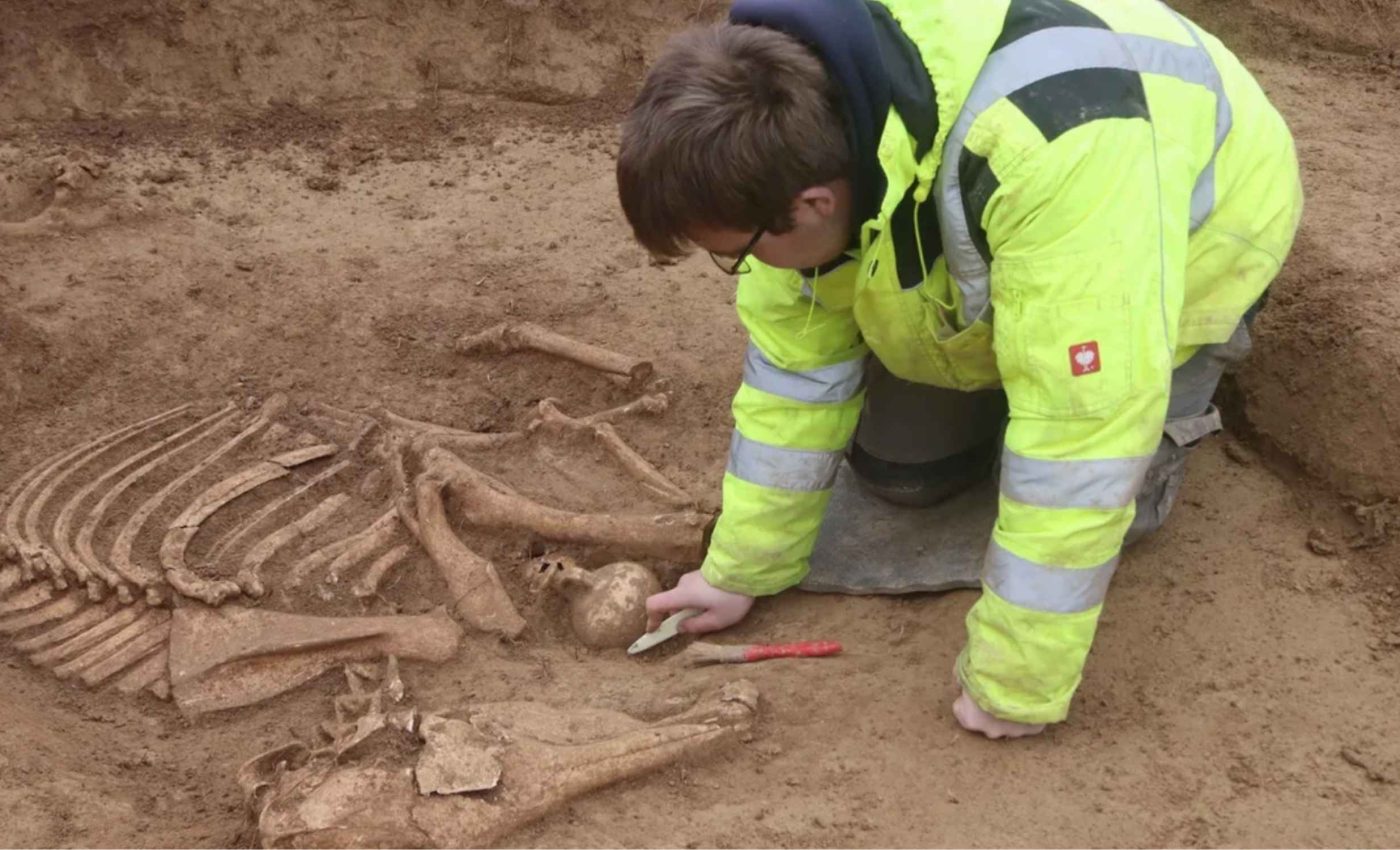
Archaeologists in Stuttgart, Germany, have uncovered a Roman era cemetery where more than 100 warhorses lie in carefully arranged graves.
In the same patch of ground, they also found a single man buried among the animals. These animal and human remains open a window onto how Rome handled its military dead and its social outcasts at the edge of empire.

The questions now bubbling up from the soil are as much about emotions and belonging as they are about tactics or empire building.
Roman warhorse graveyard
The work was led by Sarah Roth, an archaeologist at the State Office for Monument Preservation in the Stuttgart Regional Council.
Her research focuses on how Roman military sites reshaped everyday life across this part of Germany.
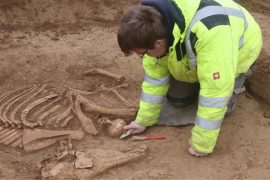
Construction for a new housing project in the Bad Cannstatt district exposed the first bones when trenches sliced through ancient soil.
Builders in the 1920s had already uncovered scattered Roman warhorse remains nearby, but only this rescue dig showed that the ground concealed a full cemetery.
Excavations have now revealed the skeletons of more than one hundred horses that lived and died while Rome controlled this frontier zone.
They served in an elite ala, a Roman cavalry unit of specialist horsemen recruited from across the provinces.
The cemetery lay between the cavalry fort and the civilian town, roughly a quarter mile from the garrison and slightly nearer to the settlement.
Its known area is about 240 by 260 feet, a compact field where rows of horse graves rarely cut into one another.
Workers at the site recorded shallow pits where complete horses were laid on their sides, legs tucked or stretched straight.
Markers probably once stood above many burials because the graves sit close together yet seldom cut into one another.
How the Romans treated warhorses
Dating of the site relied on radiocarbon dating, a technique that measures radioactive carbon in bone to estimate how long ago an organism died.
Those tests place the Bad Cannstatt horses in the second century, when Roman troops were consolidating their control along the northern frontier here.
Cavalry units like this one needed far more animals than riders, because horses wore out under packs, training, and routine patrols.
Archaeozoological work at a Roman supply center in northeastern Spain shows farms breeding horses and cattle specifically for the army.
“The horses do not all appear to have died at the same time,” said Roth. That pattern points to animals being buried gradually as their working lives ended, not as victims of one disaster.
“When a horse was too injured or exhausted to keep serving but could still walk, soldiers led it straight to this cemetery and killed on site to avoid having to transport the heavy carcass,” said Roth.
Beloved horse, rejected man
Among the many plain horse graves, one burial caught excavators’ attention immediately. A single animal lay on its side with two jugs and an oil lamp near its legs, objects more often seen in human graves.
“Of the approximately 100 horses we were able to examine, only one had received grave goods,” said Roth.
That rare gesture suggests a powerful emotional bond between one soldier and his mount, strong enough to bend usual practice.
A very different story emerges from the lone human skeleton uncovered within the horse cemetery.
This adult man lay face down with no grave goods, even though a regular burial ground for people lay nearby.
Roman custom usually gave citizens and soldiers formal funerals along roads or inside planned cemeteries rather than hiding them in animal pits.
Burying this man anonymously among dead horses suggests that many in the community saw him as an outsider who did not deserve ordinary honors.
What the bones can still tell us
Zooarchaeologists, specialists who study animal bones from archaeological sites, now have an unusually large collection of Roman warhorses from one place and one time.
Measurements of limb bones and teeth can reveal the animals’ heights, builds, and workloads, while wear marks help trace use in saddle or harness.
Large comparative projects have already shown that horse skeletons from across the empire map clear differences in size and build between regions.
One major biometric thesis on Roman equids pulled together data from dozens of sites to chart those trends.
Genetic work is now adding its own layer of detail to that picture. A recent analysis of horse DNA from Roman sites north of the Alps found high genetic diversity and many imported bloodlines.
Isotopic studies, which track chemical signatures in tooth enamel to work out where an animal grew up, can distinguish local from nonlocal horses.
One detailed investigation shows cavalry horses came from elsewhere while village animals stayed local, a contrast that tests at Bad Cannstatt could explore.
—–
Like what you read? Subscribe to our newsletter for engaging articles, exclusive content, and the latest updates.
Check us out on EarthSnap, a free app brought to you by Eric Ralls and Earth.com.
—–